

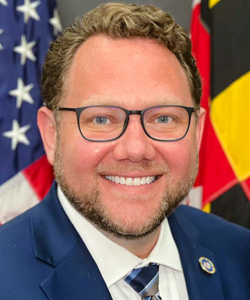
Photo of Nic Kipke
R Maryland House of Delegates · District 31

Del. Nic Kipke

Compare
Total votes
13,141
all sessions
Attendance
96%
520 missed
Near the chamber average
With party
94%
of cast votes
Lower than 89% of chamber peers
Bipartisan score
3%
crosses aisle rarely
Higher than 87% of chamber peers
Sponsored
1,132
bills & resolutions
Higher than 76% of chamber peers
Committees
4
assignments
1,132 bills and resolutions

Sponsored bills

Total
1,132
Primary
766
Co-sponsor
366
This page
1,132
matching current filters
Primary HB 374
Signed into law · Maryland House of Delegates · Lead sponsor
State Acupuncture Board - Revisions

Maddy summaryHB 374 revises Maryland's acupuncture licensing rules to clarify that "manual therapies" (like acupressure) are included under licensed acupuncture practice. It requires the State Acupuncture Board to provide proof of license renewal instead of issuing physical renewal certificates. The bill also explicitly prohibits employers from hiring unlicensed practitioners and bans aiding or abetting unauthorized acupuncture practice. These changes directly affect licensed acupuncturists, their employers, and individuals seeking acupuncture services in Maryland. The revisions aim to modernize licensing procedures while strengthening enforcement against unlicensed activity.

Signed into law Apr 28, 2026 0 co-sponsors
Primary HB 338
Signed into law · Maryland House of Delegates · Lead sponsor
Department of General Services - Maryland Capitol Police - Statewide Jurisdiction

Maddy summaryHB 338 expands the jurisdiction of the Maryland Capitol Police (a unit within the Department of General Services) to cover all state-owned or leased buildings and the surrounding area up to 2,000 feet (previously 1,000 feet). It grants the Capitol Police statewide authority to enforce criminal laws and traffic regulations, with a requirement to notify specific local law enforcement agencies after enforcement actions. This change directly affects the Capitol Police by broadening their operational scope and impacts local police departments that must receive notifications. The bill does not alter the Capitol Police's structure or staffing but clarifies their jurisdictional boundaries under state law.

Signed into law Apr 28, 2026 0 co-sponsors
Primary HB 377
Signed into law · Maryland House of Delegates · Lead sponsor
Physician Assistants and Midwives - Parity With Other Health Care Practitioners

Maddy summaryHB 377 expands the scope of practice for physician assistants (PAs) in Maryland by adding them to specific healthcare roles that previously required physicians or other practitioners. The bill allows PAs to certify incapacity for treatment decisions, participate in guardianship petitions for disabled persons, and order infirmary care for pregnant inmates - previously limited to physicians or nurse practitioners. It also requires the Maryland Department of Health to cover PA examinations for emergency evaluees and adds PAs to the Statewide Advisory Commission on Immunization. These changes aim to create parity by treating PAs as equivalent to other licensed healthcare providers in key clinical and administrative processes.

Signed into law Apr 28, 2026 0 co-sponsors
Primary HB 698
Signed into law · Maryland House of Delegates · Lead sponsor
State Board of Morticians and Funeral Directors – Board Operations and Regulation of Crematories and Reduction Facilities

Maddy summaryHB 698 transfers regulatory authority for crematories and "reduction facilities" (natural organic reduction of human remains) from the Office of Cemetery Oversight to the State Board of Morticians, Funeral Directors, and Crematories. The bill renames the board to explicitly include crematories, alters procedures for removing board members, and changes quorum requirements to allow action with a simple majority vote. This transfer affects cremation and reduction facility operators by shifting their oversight to the new board, while also updating related code sections in Maryland’s Business Regulation and Health Occupations articles. The bill makes organizational and procedural changes without introducing new operational requirements for these facilities.

Signed into law Apr 28, 2026 0 co-sponsors
Primary HB 672
Signed into law · Maryland House of Delegates · Lead sponsor
Public Health - Maryland Pediatric Cancer Fund - Entities Eligible for Grants

Maddy summaryHB 672 amends the Maryland Pediatric Cancer Fund to specify that only nonprofit hospitals, educational institutions, and other nonprofit organizations may receive grants for pediatric cancer research, removing previous eligibility for physicians, laboratories, and individuals. The bill requires grant funds to be used exclusively for direct research costs, prohibiting use for administrative overhead or community-based services. It also mandates annual reporting to the General Assembly on fund administration, promotional efforts, and detailed fund usage.

Signed into law Apr 28, 2026 0 co-sponsors
Primary HB 1094
Signed into law · Maryland House of Delegates · Lead sponsor
Health Insurance - Graduate-Level Clinical Interns - Required Reimbursement

Maddy summaryHB 1094 requires Maryland health insurers to reimburse individuals for services provided by graduate-level clinical interns in counseling, social work, and psychology under specific conditions. It applies to insureds covered by policies meeting Maryland’s jurisdictional requirements (e.g., issued in-state or covering Maryland residents). Reimbursement is mandated only when interns work under direct supervision of licensed professionals at outpatient facilities and services are billed by the supervising clinician. The bill amends existing insurance codes to ensure coverage for these supervised intern services, directly affecting insurers, interns, and patients seeking mental health care.

Signed into law Apr 14, 2026 0 co-sponsors
Primary HB 1002
Signed into law · Maryland House of Delegates · Lead sponsor
Nursing Facilities - Involuntary Discharge or Transfer

Maddy summaryHB 1002 prohibits nursing facilities from involuntarily discharging or transferring residents to temporary housing (like hotels) without confirmation from the receiving facility that it can accept the resident. It requires facilities to provide residents with clear written notices at least 10 days before a discharge or transfer, including the reason, new location, and contact information for hearings. The bill also bans facilities from discharging Medicaid-eligible residents solely because they qualify for Medicaid benefits, and mandates that post-discharge plans include specific care details. These changes aim to protect residents' rights and ensure smoother transitions during involuntary moves.

Signed into law Apr 14, 2026 0 co-sponsors
Primary HB 838
Signed into law · Maryland House of Delegates · Lead sponsor
State Board of Pharmacy - Prescriber-Pharmacist Agreements

Maddy summaryHB 838 repeals a requirement that prescribers submit prescriber-pharmacist agreements to their regulating health board. Instead, it allows pharmacists (with specific qualifications, registrations, and training) to directly enter agreements authorizing them to treat opioid use disorder using controlled substances. A key provision requires pharmacists to check the Prescription Drug Monitoring Program (PDMP) for relevant patient data before starting or changing such therapy. This bill directly affects pharmacists, prescribers, and patients with opioid use disorder by expanding pharmacists' role in medication management under defined safeguards.

Signed into law Apr 14, 2026 0 co-sponsors
Primary HB 747
Signed into law · Maryland House of Delegates · Lead sponsor
Oversight Committee on Quality of Care in Nursing Homes and Assisted Living Facilities – Membership

Maddy summaryHB 747 changes the membership structure of Maryland's Oversight Committee on Quality of Care in Nursing Homes and Assisted Living Facilities. The bill reduces the number of House-appointed members from two to one and removes specific agency representatives, while adding three industry representatives from the assisted living sector (categorized by facility size: 1-4, 5-9, and 10+ residents). This committee directly affects nursing homes, assisted living facilities, and their residents by shaping oversight of care quality standards. The bill takes effect October 1, 2026, and modifies existing law without altering the committee's core purpose.

Signed into law Apr 14, 2026 0 co-sponsors
Primary HB 322
Signed into law · Maryland House of Delegates · Lead sponsor
Maryland Health Care Commission - Membership

Maddy summaryHB 322 changes the membership structure of Maryland's Health Care Commission. It reduces the number of non-healthcare-related members from nine to eight and adds a required hospital representative (defined in state law) to the seven provider-focused seats. The bill also revises geographic requirements, mandating four members from large-population counties (instead of five) and specifying representation from the Eastern Shore, western counties, and Southern Maryland. These changes take effect October 1, 2026, aiming to adjust the commission's composition to better reflect healthcare provider perspectives.

Signed into law Apr 14, 2026 0 co-sponsors
Showing 31 to 40 of 1,132 bills
Previous 1 … 3 4 5 … 114 Next