

Maddy summaryHB 1050 requires petitioners seeking domestic violence protective orders in Maryland to provide specific, detailed information about the respondent's firearms when filing their petition. This directly affects domestic violence victims and their legal representatives who must now include details like firearm make/model, location, access points (e.g., car, home), and the respondent’s habits regarding firearms. Key provisions mandate petitioners disclose the respondent’s firearm possession status, location of weapons, whether firearms are kept in a vehicle (including license plate), and related habits like hunting or shooting range visits. The bill amends existing family law statutes to integrate these requirements into the petition process, without changing when firearms must be surrendered. It aims to improve court awareness of firearm risks during domestic violence cases.
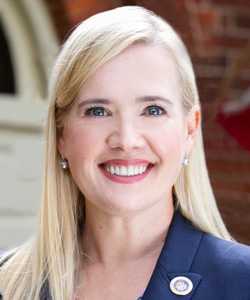
Del. Dana Jones
Sponsored bills
Maddy summaryHB 709 allows Maryland counties to adopt local laws requiring landlords to have a valid "good cause" reason (like nonpayment or lease violations) to evict tenants or refuse lease renewals, rather than allowing no-cause evictions. If a county adopts such a law, landlords must disclose in writing whether they are subject to it and provide specific ownership details (including property counts) using forms developed by the state Office of Tenant and Landlord Affairs. The bill also mandates that landlords include this disclosure in leases and court filings related to evictions. This applies only to tenants and landlords in counties that choose to implement these local protections, not statewide.
Maddy summaryHB 863 amends Maryland's library standards to clarify that programming (such as events or workshops) is a required service libraries must provide to all patrons. It updates sections 4-142(a) for school libraries and 23-102.1(b) for public libraries to explicitly include "programming" and "programs" in the list of services, while reinforcing prohibitions against removing materials due to the creator's background, views, or partisan/ideological reasons. The bill directly affects public libraries and school library media programs across Maryland, requiring them to maintain inclusive programming and avoid censorship based on content. It takes effect July 1, 2025.
Maddy summaryHB 499 (Expungement Reform Act of 2025) changes Maryland’s expungement process to make it easier for people with certain misdemeanor convictions to clear their records. It reduces waiting periods after completing a sentence (removing the previous 3-year limit for some offenses), expands eligibility to include more misdemeanor convictions, and requires courts to confirm restitution payments are made or unpayable before expungement. The bill also prohibits the Maryland Judiciary Case Search system from referencing expunged records. These changes directly affect individuals with eligible misdemeanor convictions who have completed their sentences.
Maddy summaryHB 1431 restricts federal immigration enforcement agencies from accessing Maryland state and local government databases without a valid warrant. It requires state/local law enforcement agencies, DMV, and other government units to deny federal requests for personal information, photos, or facial recognition data unless accompanied by a federal or Maryland court warrant. The bill also mandates annual reporting to the legislature on all such federal requests received, including how many were denied or granted with warrants. This directly affects Maryland state agencies, local governments, and federal immigration officers seeking access to these databases.
Maddy summaryHB 524 adds a new member to Maryland's State Board of Education, requiring one of the 14 regular board positions to be filled by an early childhood development professional with extensive experience in child care operations and curriculum. This member must be appointed by the Governor (with Senate consent) from a list of three qualified candidates provided by the Office of Child Care Advisory Council. The bill directly affects the State Board of Education, which sets K-12 education policy, and early childhood professionals who meet the specified qualifications. It does not change voting rights but ensures the board includes expertise in early childhood development.
Maddy summaryHB 613 requires Maryland courts to remove identifying information (like names, addresses, or phone numbers) from court documents in sexual assault cases, unless a judge finds "good cause" to disclose it. It specifically protects victims of sexual assault (defined as alleged victims of certain crimes under Maryland's Criminal Law Article) by mandating redaction of their personal details from all filings, including existing case documents, upon written request. The law also requires the Supreme Court of Maryland to establish rules for implementing this redaction process. This applies to both new court filings and existing cases in criminal or juvenile delinquency proceedings involving sexual assault. The bill takes effect October 1, 2025.
Maddy summaryHB 629, the "Stop Silencing Survivors Act," creates legal immunity for individuals who in good faith disclose information about alleged sexually assaultive behavior. It directly affects survivors, witnesses, and others reporting such allegations (e.g., in workplaces, schools, or community settings) by shielding them from civil liability for truthful disclosures. Key provisions include presuming good faith unless proven otherwise with clear evidence of actual malice or intentional false information, and requiring courts to award attorney fees to those successfully defending such disclosures. The bill defines "sexually assaultive behavior" to include specific criminal offenses under Maryland law and equivalent out-of-state or federal laws. It takes effect October 1, 2025.
Maddy summaryHB 456 extends the time victims have to file civil lawsuits for nonsexual child abuse or neglect. It allows claims to be filed up to 20 years after the victim turns 18, or 3 years after the abuser is convicted of a related crime (like child neglect or physical injury). The bill also caps noneconomic damages at $1.5 million per claimant against a single defendant for cases that would have been barred before October 2025. This affects victims seeking compensation and defendants (including government entities) facing liability. The law specifically excludes sexual abuse cases from these provisions.
Maddy summaryHB 597 updates Maryland's funding formula for public libraries by increasing per-resident allocations for the State Library Resource Center and regional resource centers starting in fiscal year 2025. Specifically, it raises the State Library Resource Center's funding to $2.07 per resident for 2025-2026, then gradually increases to $2.52 annually after 2031. For regional centers, it sets new annual rates of $9.59 per resident for 2025, $9.79 for 2026, and $9.99 per resident annually after 2027. These changes, codified in Sections 23-205(c) and (d) of the Maryland Annotated Code, directly affect all public libraries using state funding for operations and capital expenses. The bill modifies existing funding calculations without altering library services or eligibility.