

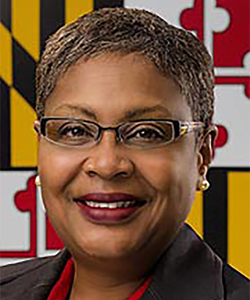
Photo of Debra Davis
D Maryland House · District 28 On the 2026 ballot

Rep. Debra Davis

Compare
Total votes
5,595
all sessions
Attendance
96%
245 missed
Near the chamber average
With party
99%
of cast votes
Near the chamber average
Bipartisan score
0%
crosses aisle rarely
Near the chamber average
Sponsored
147
bills & resolutions
Lower than 95% of chamber peers
Committees
2
assignments
147 bills and resolutions

Sponsored bills

Total
147
Primary
147
Co-sponsor
0
This page
147
matching current filters
Primary HB 930
Signed into law · Maryland House · Lead sponsor
Public Health Abortion Grant Program - Establishment

Maddy summaryHB 930 establishes Maryland's Public Health Abortion Grant Program to improve access to abortion care by redirecting excess funds from health insurance coverage. It requires insurance carriers in Maryland to transfer 90% of unused funds from their abortion coverage accounts (after covering patient costs) into a new special fund. This fund will support abortion clinical services, particularly where federal funding is restricted, benefiting individuals seeking abortion care in Maryland. The program mandates annual reporting by insurers and transfers existing excess funds starting in 2025.

Signed into law May 13, 2025 0 co-sponsors
Primary HB 774
Signed into law · Maryland House · Lead sponsor
Higher Education - Hunger-Free Campus Grant Program - Alterations

Maddy summaryHB 774 modifies Maryland's Hunger-Free Campus Grant Program to increase annual funding from $150,000 (2023-2026) to $225,000 (starting 2027) and adjusts eligibility requirements. It requires public 4-year colleges and regional centers to meet specific campus food security standards (like establishing hunger task forces, food pantries, and meal-sharing programs), while 2-year colleges have simplified requirements excluding meal-sharing and campus retailer options. The bill mandates that institutions receiving grants provide at least $25,000 in matching funds (cash or in-kind) to support program goals. This directly affects Maryland's public colleges and universities, aiming to address student hunger through sustainable campus-based food access initiatives.

Signed into law May 6, 2025 0 co-sponsors
Primary HB 1121
Signed into law · Maryland House · Lead sponsor
Child Care Scholarship Program - Youth Transitioning From Foster Placement to Successful Adulthood Program - Establishment

Maddy summaryHB 1121 establishes a temporary pilot program to help foster youth aged 16-22 access childcare subsidies. It directly affects youth who were in state foster care at age 18 or older, removing specific barriers like proof of employment, parental information, or parental authorization from the application process. The program, running from 2026-2028, requires the Department to track subsidy usage monthly and report annually to the legislature on progress. It aims to simplify access to childcare support during critical transitions to adulthood. The bill does not change subsidy amounts but streamlines eligibility for this specific group.

Signed into law May 6, 2025 0 co-sponsors
Primary HB 853
Signed into law · Maryland House · Lead sponsor
Postconviction Review - Procedure to Reduce Duration of Sentence (Maryland Second Look Act)

Maddy summaryHB 853 (Maryland Second Look Act) allows individuals serving prison sentences of 20+ years to petition courts for sentence reduction under specific conditions. To qualify, petitioners must have served at least 20 years and wait 5 years after any prior petition, with a maximum of three petitions total. Courts must hold hearings considering factors like rehabilitation, victim input, the individual’s age at the offense, and safety risks, and must publicly state their reasons for granting or denying relief. The law applies retroactively to eligible individuals already serving long sentences.

Signed into law Apr 22, 2025 0 co-sponsors
Primary HB 446
Signed into law · Maryland House · Lead sponsor
Natural Resources - Invasive Blue Catfish Pilot Program

Maddy summaryHB 446 creates a new commercial fishing license specifically for harvesting blue and flathead catfish using trotlines in the Chesapeake Bay. It directly affects licensed commercial fishers by allowing them to fish in the main stem of the Chesapeake Bay south of the Chesapeake Bay Bridge, a location previously restricted by Department regulations. The bill prohibits the Department of Natural Resources from banning this activity within that area while requiring license holders to pay a $15 annual fee for a one-year license. This establishes a permanent regulatory framework for targeted commercial fishing of these species, rather than implementing a temporary pilot program.

Signed into law Apr 22, 2025 0 co-sponsors
Primary HB 911
Passed · Maryland House · Lead sponsor
Real Property - Landlord and Tenant - Family Child Care Homes

Maddy summaryHB 911 allows landlords to charge a security deposit of up to two months' rent if a tenant operates a family child care home (caring for up to eight children) on the property. It prohibits landlords from unreasonably restricting or banning such homes in single- or multifamily rentals (excluding owner-occupied small units or condo/co-op rules), requires tenants to notify landlords 30 days in advance, and mandates providing insurance certificates naming the landlord as an additional insured. Landlords are also shielded from civil liability for issues related to the tenant’s child care operations. The bill applies to residential leases starting October 1, 2025, and does not override local zoning laws.

Passed Apr 4, 2025 0 co-sponsors
Primary HB 303
Passed · Maryland House · Lead sponsor
Real Property - Regulation of Common Ownership Community Managers

Maddy summaryHB 303 creates a State Board of Common Ownership Community Managers within the Maryland Department of Labor to license and regulate professionals managing residential common ownership communities (like condominiums, cooperatives, and homeowners associations). It requires community managers to hold licenses, mandates that communities register with the Board under certain conditions, and requires contracts for management services to include specific provisions. The bill also imposes duties on contracting parties to maintain fidelity bonds or theft insurance and establishes a special fund to cover the Board’s operational costs. These changes directly affect community managers, property owners, and management companies operating in Maryland’s residential common ownership communities.

Passed Mar 19, 2025 0 co-sponsors
Primary HB 1198
Passed · Maryland House · Lead sponsor
Correctional Services - Comprehensive Rehabilitative Prerelease Services - Female Incarcerated Individuals (The Monica Cooper Prerelease Act)

Maddy summaryHB 1198, the Monica Cooper Prerelease Act, requires Maryland to establish a dedicated prerelease facility for female incarcerated individuals in Baltimore City (on at least 3 acres) by 2027. The facility must serve women with low violence/escape risk and satisfactory behavior, offering evidence-based programs like education, vocational training, trauma-informed healthcare, and family reunification support. It mandates the Department of Public Safety to provide comprehensive rehabilitative services - including help with public health benefits applications - and report progress to lawmakers by 2026. This bill directly affects female inmates eligible for prerelease status, aiming to reduce recidivism through gender-responsive reentry planning.

Passed Mar 17, 2025 0 co-sponsors
Primary HB 781
Passed · Maryland House · Lead sponsor
Election Law - Polling Place Procedures - Voting by Elderly Voters and Voters With Disabilities (Accessible and Expedited Voting Act of Maryland)

Maddy summaryHB 781, the "Accessible and Expedited Voting Act of Maryland," requires the State Board of Elections to create guidelines for local election boards to accommodate elderly voters (65+) and voters with disabilities at all early voting centers and polling places. Key provisions include establishing dedicated expedited voting lines, clear signage, priority seating, and specific plans for high-traffic locations. Local boards must implement these guidelines, collect real-time feedback from affected voters during elections, and make immediate process adjustments. The law takes effect for the 2026 statewide primary election, with annual reports to the legislature on implementation effectiveness and voter feedback.

Passed Mar 17, 2025 0 co-sponsors
Primary HB 1366
died · Maryland House · Lead sponsor
Health Insurance - Testing for Ovarian and Cervical Cancers - Required Coverage and Prohibited Cost Sharing

Maddy summaryHB 1366 requires Maryland health insurance plans to cover cervical Pap tests for all individuals and ovarian cancer surveillance tests (CA-125, ultrasound, or pelvic exams) for those with specific risk factors, such as a family history of ovarian cancer or BRCA gene mutations. It prohibits insurers from charging copayments, coinsurance, or deductibles for these tests, except in high-deductible health plans where the plan's standard deductible still applies. The law applies to all health insurers and health maintenance organizations providing coverage in Maryland and takes effect January 1, 2026. This directly affects individuals seeking preventive cancer screenings, particularly those at higher risk for ovarian cancer.

died Mar 12, 2025 0 co-sponsors
Showing 31 to 40 of 147 bills
Previous 1 3 4 5 15 Next