

Maddy summaryThis Maryland bill updates the continuing education rules for certified dialysis technicians to require 3 hours of approved training instead of the previous 3-hour requirement. It directly affects dialysis technicians in the state who need to renew their professional certificates every two years. The law mandates that renewing technicians must complete at least 16 hours of practical work and the updated 3 hours of continuing education before their license expires. This change ensures technicians stay current with industry standards while maintaining the existing requirement for an active national certification.
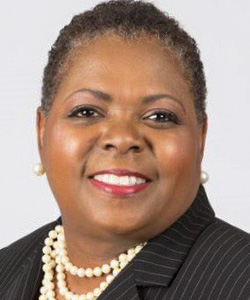
Del. Jamila Woods
Sponsored bills
Maddy summaryThis bill officially renames the State Advisory Council on Quality Care at the End of Life to the State Advisory Council on Serious Illness Care in Maryland. The change updates the council's title in state laws and modifies the form used for Medical Orders for Life-Sustaining Treatment to reflect the new name. While the bill does not alter the council's existing duties, membership composition, or operational rules, it ensures all official references to the group use the updated terminology. The legislation takes effect on October 1, 2024, and applies to the state's health and aging departments as well as other relevant agencies.
Maddy summaryThis bill updates Maryland's Opioid Restitution Fund by creating a formal process for how money from the fund is distributed to local communities. It requires the state health department to share its funding decisions with an advisory council and to publish those decisions online for public transparency. The legislation also mandates that at least 25% of the fund's money each year goes to community-based recovery organizations. Additionally, the bill clarifies which specific programs, such as overdose prevention and treatment services, are eligible for funding and establishes new reporting rules for local governments that receive these funds.
Maddy summaryThis Maryland bill creates a pathway for dentists trained outside the United States and Canada to obtain a limited license to practice, specifically to serve adults in public health clinics and federally qualified health centers. To qualify, applicants must hold a foreign dental degree, complete a two-year pediatric dentistry residency and fellowship, and commit to providing care for at least two years to Medicaid, uninsured, or indigent patients. The legislation requires approval from local health officials and the University of Maryland Dental School Dean, and it restricts these dentists to working only at the specific facility where they have a contractual obligation. Once the two-year service period is completed, eligible practitioners can apply for a full general dental license by passing additional state and national exams.
Maddy summaryHB 1092 requires the Maryland 9-1-1 Board to create training standards for public safety answering point personnel that include high-quality telecommunications cardiopulmonary resuscitation instruction. This training must follow current national emergency care guidelines, cover recognition protocols for out-of-hospital cardiac arrest, and teach compression-only CPR techniques. The bill also updates the 9-1-1 Trust Fund to allow money from this source to pay for these specific CPR training costs. These changes aim to better equip 9-1-1 operators to provide life-saving guidance during cardiac emergencies.
Maddy summaryThis bill establishes the Maryland Emergency Department Wait Time Reduction Commission within the state's Institute for Emergency Medical Services Systems to address long wait times in hospital emergency rooms. The commission will be composed of representatives from health agencies, hospitals, patient advocates, and various medical professionals who will work together to assess current services and develop strategies for improvement. Key provisions include creating standardized operational protocols, implementing advanced technology solutions, and launching training programs to enhance efficiency and patient care. Additionally, the commission is authorized to request data from healthcare entities and requires these entities to sign agreements allowing the sharing of necessary information to monitor performance.
Maddy summaryThis bill expands Maryland's Right to Try Act to include individualized investigational treatments, such as gene therapies and personalized vaccines, for patients with life-threatening or severely debilitating illnesses rather than only those with terminal conditions. It allows manufacturers to charge patients for these treatments and removes previous restrictions on profiting from them, while also permitting health insurance carriers and government agencies to cover the costs. The law requires a detailed informed consent process that outlines available alternatives, potential risks, and the possibility that the treatment could hasten death, and it clarifies that patients remain liable for expenses unless covered by law or contract.
Maddy summaryThis Maryland law, known as the Gun Industry Accountability Act of 2024, allows the state and private individuals to sue firearm companies for creating public nuisances if they knowingly sell or market products that cause harm to the public. The bill requires these industry members to implement strict controls to prevent sales to prohibited persons, such as convicted felons or straw purchasers, and to stop the theft or loss of firearms. Violations of these rules can lead to civil lawsuits seeking monetary damages, court orders to stop specific practices, and legal fees, without requiring proof that the company intended to break the law. Additionally, the act directs the Attorney General to study whether the state can legally require gun manufacturers to pay for the costs of crime prevention and victim compensation.
Maddy summaryThis bill, known as the Safe Sleep Act of 2024, requires hospitals in Maryland to provide specific safety instructions to parents before discharging newborns. The law mandates that hospitals offer both oral and written guidance on creating a safe sleep environment, avoiding shaken baby syndrome, and managing infant crying, which may include instructional videos. Additionally, hospitals must ask parents about their home sleep arrangements, inform them of the risks associated with unsafe sleeping, and have them sign a form confirming they received this information. If a parent cannot currently provide a safe sleep setup, the hospital must supply a list of local resources to help them obtain necessary items like a crib. The Maryland Department of Health is also tasked with creating and updating a statewide list of resources available to parents by January 1, 2025.
Maddy summaryThis bill directs the Maryland Department of Health to form a group of stakeholders to study whether the qualifications for the executive director of the State Board of Nursing should change. The workgroup will examine how well the Board currently functions, compare the current requirements with those of other state health boards, and review qualifications used by other nursing boards. By December 1, 2024, the group must submit a report with its findings and any recommendations to the state legislature. The bill does not immediately change the job requirements but instead creates a process to review them before the current rules expire.