

Maddy summaryHB 1082 establishes Maryland’s State-Based Health Insurance Subsidies Program to help residents pay for health insurance if federal advance premium tax credits (which reduce insurance costs) decrease. The program would provide direct subsidies to Maryland individuals affected by such federal changes, specifically targeting fiscal years 2026 and 2027. It uses existing funding from the Maryland Health Benefit Exchange Fund, which includes state-designated money, federal waiver funds, and other sources, to cover these subsidies without requiring new taxes. The bill amends Maryland’s insurance code to formally create this program and outlines how the state will administer it through the Health Benefit Exchange. This policy change directly affects Maryland residents purchasing individual health insurance plans who might face higher costs due to reduced federal support.
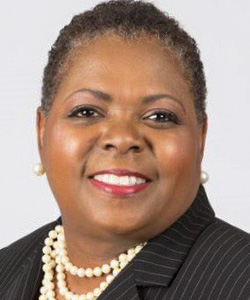
Del. Jamila Woods
Sponsored bills
Maddy summaryHB 731 establishes the Maryland Connectivity Coalition to coordinate wildlife protection efforts, creates a Wildlife Connectivity Fund for habitat projects, and requires the State Highway Administration to include wildlife data in transportation planning. It directly affects the State Highway Administration, county planners, and wildlife conservation efforts by mandating that counties consider habitat connectivity when updating local plans. Key provisions include prioritizing highway crossings in high-collision areas and locations dividing habitats of threatened/endangered species. The bill aims to reduce vehicle-wildlife collisions and protect species from habitat fragmentation through coordinated planning and funding.
Maddy summaryHB 783 requires health professionals renewing certain licenses (such as physicians, nurses, and social workers) to complete training on both implicit bias and structural racism as part of their first license renewal after April 1, 2026. The training must be approved by Maryland's Cultural and Linguistic Health Care Professional Competency Program, replacing prior requirements that only mandated implicit bias training. This change updates Maryland law to explicitly include structural racism - a system of institutional inequalities based on race - in the training standards for health occupation licenses. The bill applies to license renewals under the Health Occupations Article and amends related sections of Maryland's code to reflect this new requirement.
Maddy summaryHB 506, the Chesapeake Bay Legacy Act, creates the Maryland Leaders in Environmentally Engaged Farming (LEEF) Program to reduce nutrients in the Chesapeake Bay watershed through voluntary farm conservation practices. The bill establishes a special fund for the program, redefines "healthy soils" for existing soil programs, and exempts certain fishing license holders from needing food establishment licenses. Key provisions include tiered recognition for farms adopting conservation practices, requirements for the Department of Environment to authorize water quality trading credits, and new rules for fisheries management and aquaculture leases. The bill directly affects Maryland farmers, state environmental agencies, and fishing industry participants by changing how conservation incentives and regulations are implemented.
Maddy summaryHB 962 addresses pediatric hospital overstay cases where children under 22 remain hospitalized after being medically cleared for discharge. It requires hospitals to place these patients in the least restrictive setting possible, allowing concurrent exploration of both in-state and out-of-state placement options. The bill establishes a Pediatric Hospital Overstay Coordinator within the Governor’s Office for Children to oversee this process and mandates a state study on residential treatment center and respite facility rates. This law directly affects hospitals, pediatric patients, and state agencies like the Department of Health and Human Services.
Maddy summaryHB 428 prohibits medical providers from placing liens on owner-occupied homes for unpaid medical debt. It requires courts to specify if a money judgment involves medical debt and mandates including the defendant’s primary residence address in such complaints. The bill adds a new provision (§ 14-203.1) stating that liens on homes where owners live cannot be created for medical debt, and courts must remove such illegal liens while potentially awarding damages. This applies prospectively from October 1, 2025, directly affecting Maryland homeowners and medical providers seeking debt collection.
Maddy summaryHB 1045 updates Maryland's health insurance and family planning laws to align with current federal standards. It specifically expands the definition of "family planning providers" to include those who lost federal Title X funding due to service scope (like abortion access or referrals), ensuring Medicaid continues reimbursing them for services. The bill requires the Maryland Medical Assistance Program to maintain access to family planning services for these providers by establishing similar requirements to other providers and prohibiting restrictions on services within a provider's scope of practice. It also clarifies that the Maryland Insurance Commissioner and Civil Rights Commission share enforcement authority over health insurance discrimination.
Maddy summaryHB 681 changes Maryland law to require courts to send child support calculation details and orders to the Child Support Administration after establishing a payment order. It modifies license suspension rules by mandating written notice to parents (obligors) before suspension, including their right to request an investigation for inaccurate arrears, employment impact, or undue hardship. The bill also establishes a process for administrative appeals and requires reinstatement of licenses once payments are made, a payment agreement is met, or hardship grounds are verified. This directly affects parents who owe child support and streamlines communication between courts, child support agencies, and the Motor Vehicle Administration.
Maddy summaryHB 277 requires new construction and specific renovations to include water bottle filling stations - defined as fixtures for filling personal water bottles (at least 10 inches tall) that may combine with drinking fountains - starting October 1, 2025. It mandates these stations in all new buildings requiring drinking fountains under plumbing codes, when replacing existing drinking fountains in renovations, and when renovations require new drinking fountains. The Maryland Department of Labor must create implementing regulations, and the law applies only to projects under contract after July 1, 2025. This affects building developers, contractors, and public facilities subject to plumbing code requirements.
Maddy summaryHB 930 establishes Maryland's Public Health Abortion Grant Program to improve access to abortion care by redirecting excess funds from health insurance coverage. It requires insurance carriers in Maryland to transfer 90% of unused funds from their abortion coverage accounts (after covering patient costs) into a new special fund. This fund will support abortion clinical services, particularly where federal funding is restricted, benefiting individuals seeking abortion care in Maryland. The program mandates annual reporting by insurers and transfers existing excess funds starting in 2025.