

Maddy summaryHB 853 creates a State Board of Common Ownership Community Managers within Maryland’s Department of Labor to license and regulate professionals managing residential communities. It directly affects condominiums, cooperatives, and homeowners associations (excluding timeshares) by requiring community managers to hold licenses, mandating community registration under certain conditions, and requiring contracts to include fidelity bonds or theft insurance. Key provisions include setting licensing standards, specifying required contract terms for management services, and establishing a dedicated fund to cover board operations. The bill aims to standardize oversight for community management services across Maryland’s residential communities.
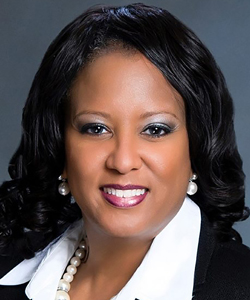
Del. Andrea Harrison
Sponsored bills
Maddy summaryThis bill requires recipients of Maryland state and local government funding to report annually to the Comptroller on how they use those funds, including details about any contractors or subcontractors they hire. Entities receiving payments for providing goods or services must also include this information on their income tax returns, such as the number of employees, work locations, and whether contractors are certified minority businesses. The Comptroller will then compile this data and submit a summary report to the General Assembly each year, showing the percentage of in-state versus out-of-state contractors, average employee counts, and the share of minority business enterprises. These reporting requirements apply to state, county, and municipal government units as well as individuals and corporations that receive public funding.
Maddy summaryHB 636 modifies Maryland's ethics rules to allow members of the General Assembly, candidates for the Assembly, and newly elected members to earn income from state or local government jobs under specific exemptions. It creates four categories of allowable income: educational instruction, merit-system positions, human services roles, or logical career transitions from prior employment. The Joint Ethics Committee must approve these exemptions, while certain existing relationships or post-term employment meeting education/licensure requirements remain excluded. This bill directly affects legislators' ability to hold outside public-sector jobs without violating current ethics prohibitions.
Maddy summaryThis bill creates a state income tax credit for Maryland residents aged 77 and older to help reduce their tax burden. Eligible taxpayers must have federal adjusted gross income below $175,000 for individuals or $250,000 for couples filing jointly. The credit amount increases with age, ranging from 25% of the state income tax for those turning 77 to a full 100% credit for those aged 80 and older. The bill applies to taxable years beginning after December 31, 2025, and prevents taxpayers from claiming both this credit and another existing senior tax credit in the same year.
Maddy summaryHB 935 requires Maryland to establish a dedicated prerelease facility for female incarcerated individuals, directly affecting women eligible for prerelease programs at the Maryland Correctional Institution for Women. The bill mandates a separate facility meeting specific criteria: at least 3 acres, not within 1 mile of other prisons, and designed to house 1.25 times the 2024 prerelease-eligible population. It requires the Department of Public Safety and Correctional Services to provide comprehensive rehabilitative services (including gender-responsive programming) and report progress to legislative committees by a specified deadline. The facility must operate by June 1, 2023, with the Department of General Services directing procurement for its construction.
Maddy summaryHB 924, the "Safe Kids Act," creates a new civil legal remedy allowing parents or legal guardians of minors depicted in or exposed to child exploitation material to sue online platforms directly. It prohibits platforms from knowingly distributing such material - including AI-generated images defined as "computer-generated" under the law - and requires them to remove it. The bill updates definitions to explicitly include AI-created images in child pornography laws and increases the age threshold for victims in certain criminal cases. This allows civil lawsuits for damages (including attorney fees) without needing prior criminal convictions, targeting platforms that facilitate distribution rather than just criminalizing possession.
Maddy summaryHB 488 establishes the geographic boundaries for Maryland's eight congressional districts for the 2026 elections. It specifies exact county and election district portions, using census tract data to define district lines where precincts are split, based on boundaries as they existed on January 13, 2026. This bill directly affects voters in Maryland's congressional districts by determining which communities are grouped together for electing U.S. Representatives. It replaces previous election law sections (8-702 through 8-709) and clarifies that certain districting rules apply only to state legislative districts, not congressional ones.
Maddy summaryHB 155 requires all Maryland law enforcement agencies to adopt policies prohibiting officers from wearing face coverings (like opaque masks or helmets) during routine duties, with specific exceptions. The Maryland Police Training and Standards Commission must create a model policy emphasizing transparency and excluding religious items, medical masks, or safety gear (such as helmets for motorcycle operations). Officers violating this rule face potential fines or loss of civil immunity, but exceptions cover religious garments, medical protection, and occupational safety needs. The law takes effect October 1, 2026.
Maddy summaryHB 1292 requires health insurance carriers in Maryland to maintain an updated online "provider directory" (replacing the previous "network directory" term to align with federal law). The bill mandates that carriers make this directory available online with a clear search function and include specific details for each provider, such as specialty, office locations, contact information, and whether they accept new patients. Carriers must verify and update the directory regularly, ensuring it accurately reflects participating providers and facilities. This directly affects health insurance companies and their members (enrollees) by improving access to current provider information.
Maddy summaryHB 1380 requires Maryland hospitals providing obstetrical services and freestanding birthing centers to meet minimum perinatal care standards as a condition of licensure. The bill mandates the Maryland Department of Health to adopt regulations establishing these standards, which must meet or exceed existing Maryland Perinatal System Standards. Hospitals and birthing centers must comply with these standards to maintain their operating licenses. The law amends specific sections of Maryland's Health Code (19-319 and 19-3B-03) to implement this requirement, effective October 1, 2025.