

Maddy summaryHB 1309 establishes a Commission to study racial disparities in Maryland’s criminal justice system, directly affecting African American, Hispanic, and other non-White individuals who experience disproportionate treatment. The Commission, composed of legislative leaders, public defenders, prosecutors, court officials, and community advocates, will examine disparities in policing, arrests, sentencing, and data collection. It will specifically assess cumulative impacts of disparate practices, mandatory minimums (including firearm offenses), and propose reforms like race-neutral risk assessments and expanded judicial discretion. The Commission must make recommendations by 2028, focusing on systemic changes to improve transparency and reduce racial inequities without implementing new laws itself.
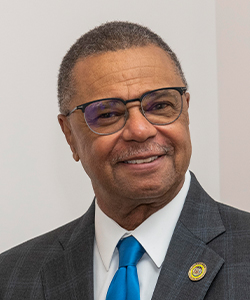
Del. Marvin Holmes
Sponsored bills
Maddy summaryHB 524 designates September as African Heritage Month in Maryland by requiring the Governor to annually issue a proclamation recognizing African Americans' contributions to the state. The bill directs the Governor to urge educational and cultural organizations to host programs and activities during this month. It updates Maryland's legal code (specifically renumbering sections in Article 7 of the General Provisions) to include this requirement, effective July 1, 2026. This is a procedural recognition measure with no new funding or regulatory changes.
Maddy summaryHB 1291 requires the Maryland Department of Health to create procedures ensuring seniors aged 65+ who received in-home services within the past six months can temporarily continue care during service lapses caused by departmental errors. The bill mandates that temporary service continuation (up to 52 days or 1,248 hours) begin immediately upon service interruption and cover only previously approved services. It prohibits the department from altering existing appeal rights or billing recipients for services provided during this temporary period. The law applies specifically to seniors facing administrative or technical errors in their Medicaid coverage, ensuring uninterrupted care without financial burden. The bill takes effect October 1, 2026.
Maddy summaryHB 1405 restricts campaign finance activities for candidates running for specific state offices (including Governor, Lieutenant Governor, Attorney General, Comptroller, Treasurer, and General Assembly members) and their representatives during regular legislative sessions. The bill prohibits them from receiving new contributions, holding fundraisers, soliciting donations, or using un-deposited funds during sessions, with exceptions for activities related to their own federal/local election campaigns, gubernatorial fundraising during election years, and pre-session electronic contributions. Violations would result in civil penalties directed to the state's Fair Campaign Financing Fund. The law takes effect October 1, 2026.
Maddy summaryHB 1522 removes a legal exemption that previously protected vehicle rental companies from liability for traffic violations captured by traffic control signal or speed monitoring systems. The bill repeals specific sections of Maryland law (21-202.1 and 21-809) that excluded rental companies and special plate holders from receiving citations for red-light running or speeding violations recorded by these systems. As a result, rental companies will now be directly liable for such violations, facing the same civil penalties as individual vehicle owners. This change affects all vehicle rental companies operating in Maryland, requiring them to address violations recorded by municipal or state monitoring systems. The bill takes effect October 1, 2026.
Maddy summaryHB 1477 establishes Maryland's Ibogaine Clinical Research Grant Program to fund clinical trials on ibogaine - a naturally occurring compound from the iboga plant - for treating opioid use disorder and other neurological conditions. The program, administered by the Maryland Department of Health in consultation with the Department of Veterans and Military Families, awards up to three annual grants to eligible research institutions in Maryland that meet specific criteria (including expertise in neurological disorders and substance use treatment) and require matching funds equal to the grant amount. Funding comes from $500,000 annually (fiscal years 2028-2030) in the Opioid Restitution Fund, with recipients required to conduct FDA-overseen trials and submit quarterly progress and financial reports. The bill aligns with the "Veterans Mental Health Innovations Act" title but does not restrict trials to veterans, focusing instead on broader neurological and opioid use disorder research.
Maddy summaryHB 897 (the "Lower Bills and Local Power Act of 2026") requires electric companies operating high-voltage transmission lines (>69,000 volts) in Maryland to join regional transmission organizations. It mandates new application details for certain utility projects, creates a Solar and Energy Storage Market Stabilization Program within the Maryland Energy Administration, and redirects funds from the Maryland Strategic Energy Investment Fund to provide refunds or credits to residential electricity customers. The bill also requires studies on siting transmission lines and battery storage systems within existing rights-of-way and sets deadlines for the Public Service Commission to review project certificates. These provisions directly affect electric utilities, the Public Service Commission, and residential electricity customers through cost adjustments.
Maddy summaryHB 990 extends the deadline for solar energy systems to be placed in service from January 1, 2028, to January 1, 2031, to qualify for Maryland's Small Solar Energy Generating System Incentive Program. It also doubles the total in-state generating capacity cap for systems between 20 kilowatts and 5 megawatts - from 270 megawatts to 540 megawatts. This directly affects solar developers and property owners installing systems in this size range, particularly those on rooftops, parking canopies, brownfields, or industrial sites. The changes aim to support broader solar adoption by providing more time for installation and increasing available capacity under the program.
Maddy summaryHB 841 requires condo and homeowners association (HOA) boards to allow unit owners to comment during meetings, including at least one annual meeting with an open agenda where owners can discuss any issue. It mandates developers to appoint board members for new condos without established boards and requires HOAs to maintain financial records. The bill also sets minimum notice requirements for meetings and ensures owners can vote once they provide updated contact information. These changes update Maryland’s property law to increase transparency and owner participation in community governance.
Maddy summaryHB 955 modifies Maryland law to require independent election conduct (for ballot counting and results) in condominium and homeowners association board elections **only when the number of candidates exceeds the number of open positions**. Previously, this requirement applied automatically; the bill narrows it to competitive elections. It defines "independent parties" as individuals not running for office, avoiding conflicts of interest, and excludes property management representatives unless the association owns the management. This directly affects condo and HOA members participating in or organizing board elections under these specific conditions.