

Maddy summaryHB 941 requires the Governor to include at least $5 million annually in the state budget for the University of Maryland Eastern Shore (UMES) starting in fiscal year 2027, continuing until a total of $321,181,312 is appropriated. This addresses a historical funding disparity identified by the state legislature, where UMES (as Maryland’s 1890 land-grant institution) received less per-student state funding than UM College Park (the 1862 land-grant institution) from 1987-2020. Funds must be supplemental to existing appropriations and can be used for infrastructure, faculty, scholarships, or other institutional needs identified by UMES. The bill aims to fully remedy the $321 million shortfall over time through mandatory annual appropriations.
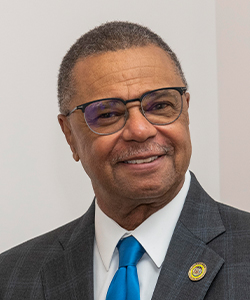
Del. Marvin Holmes
Sponsored bills
Maddy summaryHB 294 establishes a 17-member Task Force on Common Ownership Communities to study issues affecting condos, co-ops, and homeowner associations (HOAs) in Maryland. The Task Force will examine education needs for board members and residents, the feasibility of statewide dispute resolution services, potential licensing for community managers, and best practices for governance and elections. It must submit findings and recommendations to the Governor and General Assembly by December 31, 2026, before the bill expires on June 30, 2027. This bill directly affects common ownership community boards, residents, and managers by initiating a formal review of their operational challenges.
Maddy summaryThis bill limits local governments to allowing no more than 10 cents per paper carryout bag charged by retailers. It applies to all counties and municipalities that have enacted laws requiring or permitting such fees. Retailers, including stores and restaurants, would be restricted to charging this maximum fee under local ordinances. The law takes effect October 1, 2025.
Maddy summaryHB 846, the Transportation Access and Revenue Act, requires businesses providing short-term vehicle rentals and peer-to-peer car sharing to collect sales tax on these services. It directs 45% of the tax revenue from these services to the Transportation Trust Fund (for roads and transit projects) and the remainder to a coastal conservation fund. The bill also mandates that sales tax revenue from electricity used to charge electric vehicles at public charging stations (not under residential rates) be allocated to the Transportation Trust Fund. This changes how certain transportation-related tax revenue is distributed, affecting car-sharing companies, rental businesses, and electric vehicle charging providers.
Maddy summaryHB 958, the Maryland Railway Safety Act of 2025, establishes new safety requirements for railroad operations in Maryland. It mandates a minimum two-person crew for freight trains (excluding hostler/utility service), prohibits blocking grade crossings for more than five minutes, and limits train length to 8,500 feet on main or branch lines. The bill also requires railroads to report hazardous material transportation data to the Commissioner of Labor and Industry (for emergency agencies only, not the public) and mandates installation of wayside detectors on tracks designated Class IV or higher by federal standards. Violations carry civil fines up to $25,000 per incident.
Maddy summaryHB 973, the Better Buildings Act of 2025, requires new buildings and major renovations (costing 50%+ of a structure's replacement value) in Maryland to meet all space heating, water heating, and laundry demands without fossil fuels. It mandates energy conservation standards and requires buildings to be "electric- and solar-ready," meaning they must have sufficient electrical capacity, wiring, and physical space for future installation of electric appliances and solar panels. The bill amends Maryland law to adopt these standards through the Department of Labor, aligning with but allowing stricter energy efficiency requirements than the International Energy Conservation Code. This directly affects developers, builders, and property owners constructing or significantly renovating buildings in Maryland.
Maddy summaryHB 630, the Maryland Phone-Free Schools Act, requires all Maryland county school boards to create and implement policies by the 2026-2027 school year that limit student cell phone use during instructional time (excluding lunch). The policy must prohibit phone use and require secure storage, ban social media apps during school hours, and include disciplinary measures like warnings for first violations. Exceptions allow phone use for students with IEPs/504 plans, health monitoring, emergencies, or for educational purposes directed by staff. The bill directly affects public school students and county boards of education across Maryland.
Maddy summaryHB 560 makes it a misdemeanor to falsely claim ownership or possession of residential property with intent to defraud others. Property owners can file a sworn affidavit with a sheriff to request removal of someone they believe is fraudulently occupying their property, though law enforcement must allow the occupant to prove lawful possession. Violations carry escalating penalties: up to 90 days in jail or a $500 fine for a first offense, increasing to 1 year or $2,500 for subsequent offenses within two years. The bill clarifies it does not replace existing legal eviction processes under Maryland’s Real Property Article.
Maddy summaryHB 557 establishes a formal Bill of Rights for residential owners in Maryland condominiums, co-ops, and homeowners associations (HOAs). It guarantees specific rights including: annual budget delivery with assessment notices, secret ballot voting for board elections, access to community facilities at reasonable rates (no more than half the cost charged to non-owners), and advance notice of meetings with agendas. The bill directly affects all unit owners in these common ownership communities by requiring governing bodies to follow these transparency and fairness standards. These provisions aim to standardize governance practices across Maryland's residential communities without altering existing legal structures.
Maddy summaryHB 558 requires Maryland counties to establish local commissions that resolve disputes in common ownership communities, such as condominiums, cooperatives, and homeowners associations (excluding timeshares). These commissions will handle specific conflicts between residents and community governing bodies, including fee enforcement, maintenance issues, election procedures, or improper budget decisions. The bill defines "common ownership communities" and sets standards for commission membership (requiring at least some community owners) and scope (excluding title disputes or assessment collections). It creates a new state framework under Maryland law, mandating that counties comply with these requirements if they establish such commissions. This law applies to all counties choosing to implement this dispute resolution mechanism.