

Maddy summaryHB 608 requires Maryland county school boards to grant temporary school admission to students when parents or guardians cannot immediately provide proof of required immunizations. This temporary enrollment lasts up to 60 days, during which parents must schedule an appointment with a health provider or local health department to obtain immunizations, reconstruct lost records, or get evidence of age-appropriate immunity. Parents must then submit proof of the immunization on the next school day following the appointment. The bill directly affects public school students and their families in Maryland, balancing school safety with practical barriers to documentation.
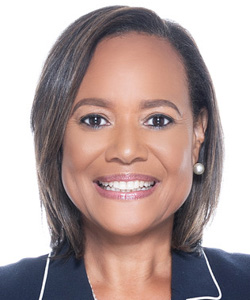
Del. Kym Taylor
Sponsored bills
Maddy summaryHB 696 eliminates citizenship requirements for members of certain Maryland state boards, committees, commissions, task forces, and workgroups. It replaces these requirements with a mandate that appointees should reflect the "full diversity of the State to the extent practicable." The bill affects multiple state entities across health, environment, labor, and other sectors by changing appointment rules in over 20 specific code sections. This policy change directly impacts who can be appointed to these bodies, prioritizing diversity considerations over citizenship status.
Maddy summaryHB 665 requires Maryland's Medicaid program (Maryland Medical Assistance Program) and certain health insurers to cover annual behavioral health wellness visits starting July 1, 2026. These visits, defined as clinical assessments to identify potential psychiatric or substance use disorders, must be covered regardless of whether a diagnosis is made. Insurers must reimburse providers for these visits at the same rate as visits resulting in a diagnosis. The bill applies to Medicaid recipients and health plans operating in Maryland, effective January 1, 2026, for new or renewed policies.
Maddy summaryHB 630, the Maryland Phone-Free Schools Act, requires all Maryland county school boards to create and implement policies by the 2026-2027 school year that limit student cell phone use during instructional time (excluding lunch). The policy must prohibit phone use and require secure storage, ban social media apps during school hours, and include disciplinary measures like warnings for first violations. Exceptions allow phone use for students with IEPs/504 plans, health monitoring, emergencies, or for educational purposes directed by staff. The bill directly affects public school students and county boards of education across Maryland.
Maddy summaryHB 711 requires Maryland's Office of Cemetery Oversight to study the environmental and public health impacts of deathcare practices, in collaboration with the Departments of Health, Labor, and Environment. The study will examine nine specific methods - including embalming, traditional burials, cremation, water cremation, and body composting - to assess their effects on land use, soil/water quality, air emissions, worker/community health, costs, and regulatory processes. It mandates site visits, data collection from other states, and input from industry groups, environmental organizations, and diverse communities. The Office must submit an interim report by December 2025 and a final report by July 2026, which will include findings and policy recommendations for sustainable deathcare options. This bill does not change current laws but sets the stage for future regulatory or policy decisions based on the study's results.
Maddy summaryHB 724 establishes the Commission on Abandoned and Neglected Maryland Cemeteries within the Office of Cemetery Oversight. The commission will identify neglected cemeteries statewide, create a searchable database of abandoned sites, and develop guidelines for repairing and maintaining burial grounds - particularly focusing on historically significant African American cemeteries. It will also provide support to descendants seeking to preserve these sites and coordinate with local governments and developers to protect burial lands. The bill directly affects Maryland cemeteries, their descendants, local jurisdictions, and entities involved in cemetery preservation.
Maddy summaryHB 677 allows Maryland courts to admit certain out-of-court statements made by vulnerable adult victims or witnesses in criminal trials, specifically for cases involving assault, sexual offenses, financial crimes, or abuse against vulnerable adults. It directly affects vulnerable adults aged 68+ or those lacking physical/mental capacity to meet daily needs. The bill requires courts to hold an evaluation hearing to assess the statement’s trustworthiness, considering factors like the adult’s cognitive ability, whether the statement was spontaneous, and context of the statement. This applies only to statements not covered by other evidence rules and mandates that prosecutors notify defendants 20 days before trial if such statements will be used.
Maddy summaryHB 606 requires real estate professionals - such as developers, builders, brokers, and agents - to report the final sale price of new homes sold in Maryland into a Multiple Listing Service (MLS) or similar public database within 30 days of the sale. This applies specifically to new home sales and directly affects those selling new properties. The key provision mandates that final sale prices, not initial listings, be entered into existing MLS systems used by real estate professionals. The bill takes effect October 1, 2025, aiming to increase transparency in new home pricing data without creating new reporting systems.
Maddy summaryHB 635 requires police officers to document the specific reason for every traffic stop (e.g., speeding, broken taillight) on the citation or police report. It limits enforcement of certain vehicle law violations (like expired registration) to "secondary" actions only - officers must first stop a driver for a primary violation (e.g., speeding) before citing a secondary issue. If an officer fails to document the reason or violates the secondary enforcement rule, evidence from the stop may be excluded in court, and the officer could face administrative discipline. This bill directly affects police procedures during traffic stops and the admissibility of evidence in legal cases.
Maddy summaryHB 381, the "Healing Our Scars Act," requires Maryland's Medicaid program (Maryland Medical Assistance Program) and certain health insurers, HMOs, and managed care organizations to cover aesthetic services and restorative care for victims of domestic violence starting January 1, 2026. The bill applies specifically to services treating physical injuries caused by domestic violence, as defined in Maryland law (including injuries from current or former spouses or cohabitants), and mandates coverage only when a licensed physician determines the care is medically necessary. It amends existing health and insurance laws to include this requirement, applying to all relevant health benefit plans issued, delivered, or renewed in Maryland on or after January 1, 2026. The law aims to address physical injuries sustained in domestic violence cases by expanding access to necessary medical and cosmetic recovery services.