

Maddy summaryHB 763 requires Maryland public and qualifying nonpublic schools to include age-appropriate material about human and sex trafficking awareness and prevention in health curricula for students in grades 6 through 8. This amendment to existing education law builds upon current sexual abuse and assault prevention programs by adding specific content about trafficking. The law mandates that this material be taught by trained instructors and integrated into standard health education. The policy change applies to all schools participating in the Nonpublic Schools Textbook and Technology Grants Program, effective July 1, 2025.
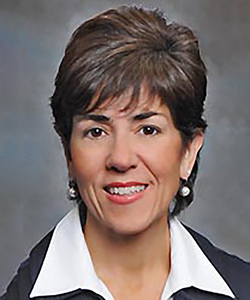
Del. Mary Lehman
Sponsored bills
Maddy summaryHB 368 designates May as "Maryland Native Plant Month" by requiring the Governor to annually issue a proclamation recognizing the environmental benefits of native plants. The bill directs the Governor to urge educational organizations, environmental groups, and businesses to host events and activities during this month. It does not create new programs or funding but formally establishes this annual observance through a simple legislative change to Maryland state law. This commemorative measure affects the Governor’s annual actions and encourages voluntary participation from relevant organizations.
Maddy summaryHB 802 designates the Purple Pitcherplant (Sarracenia purpurea) as Maryland's official state carnivorous plant. The bill amends Maryland's state code by adding this designation to Section 7-302 of the Annotated Code of Maryland. This is a ceremonial designation with no new regulations, funding, or direct impact on any individuals or groups. The change takes effect October 1, 2025.
Maddy summaryHB 385 requires businesses in Maryland using digital point-of-sale systems that automatically prompt customers to leave a tip to: (1) clearly disclose who receives the tip (e.g., employees or the business), and (2) set the default tip amount to $0. This applies to restaurants, bars, and similar service businesses processing card payments. Violating these requirements would be considered an unfair, deceptive, or abusive trade practice under Maryland law, subject to enforcement by the Division of Consumer Protection. The law takes effect October 1, 2025, with the new requirements applying starting January 1, 2026.
Maddy summaryHB 592 prohibits individuals under a court-ordered assisted outpatient treatment program from possessing regulated firearms, rifles, or shotguns. It directly affects people subject to such court orders under Maryland's Health-General Article. The bill requires courts to report these cases through a secure data portal to the FBI's NICS background check system. This adds a new category to existing firearm prohibitions, aligning court-ordered treatment with background check requirements.
Maddy summaryHB 609 modifies Maryland's legislative scholarship programs to exempt students planning to complete the Real Property Appraiser Qualification Criteria program from standard exam requirements. It specifically allows senatorial and delegate scholarships to cover costs for the Practical Applications of Real Estate Appraisal Program (administered by the Appraisal Foundation). This change directly affects students pursuing real estate appraisal licensure who would otherwise need to meet typical scholarship exam rules. The bill amends Sections 18-402(4) and 18-405(b)(3) of the Maryland Annotated Code to include this program under eligible scholarship uses.
Maddy summaryHB 1254 establishes a state program to provide funding to Maryland public and nonpublic schools participating in the federal child nutrition program's community eligibility provision. The program covers the difference between federal paid and free meal reimbursement rates, helping schools avoid financial shortfalls when serving more students at no cost. The State Department of Education will distribute funds based on poverty concentration and geographic diversity in school districts. The state will appropriate $10 million annually starting in fiscal year 2027 to support this program.
Maddy summaryHB 912 requires Maryland colleges and universities to train instructors on federal disability laws (the Americans with Disabilities Act and Section 504 of the Rehabilitation Act) and how to provide academic accommodations for students with disabilities. New instructors must complete this training before teaching, and current instructors must do so by October 1, 2026. The Maryland Higher Education Commission will develop a model training program for institutions to adopt. This law applies to all higher education institutions in Maryland, except those already offering training that meets the required standards.
Maddy summaryThis bill requires all Maryland public and private colleges and universities to adopt and enforce specific policies addressing racial, ethnic, and religious harassment, violence, and intimidation. Key provisions include mandating annual staff training on responding to hate incidents, creating anonymous complaint systems, publishing clear rules for campus expression, and holding yearly meetings with student organizations to discuss these policies. Institutions must also recognize the top five demographic groups most affected by hate crimes in Maryland based on annual state data. These requirements apply directly to all higher education institutions in Maryland, their students, faculty, and staff.
Maddy summaryHB 1496 requires new multifamily housing buildings and certain significant renovations to include electric vehicle (EV) charging infrastructure. Specifically, it mandates that new buildings with separate parking per unit must include either one fully installed EV charging space or one "EV-ready" space (with wiring capacity for future installation). For common parking areas, developers must provide one EVSE-installed space per 25 units, plus increasing percentages of EV-ready spaces (10% by 2025, 20% by 2031, 30% by 2036) for new projects. This applies to multifamily housing subject to the International Residential Code, directly affecting developers and builders of new residential properties in Maryland. The bill defines technical terms like "EV-ready" to ensure consistent implementation.