

Maddy summaryHB 1144 would bar individuals alleged to have committed assault or caused bodily injury to transit staff or passengers from using Maryland's state public transit services or stations for set periods. First offenses trigger a 30-day exclusion, second offenses 180 days, and third offenses or weapon use result in a lifetime ban. State officials can adjust these exclusion periods, and violators face trespassing charges under existing law. The bill applies specifically to incidents occurring on transit vehicles or at transit stations, taking effect October 1, 2025.
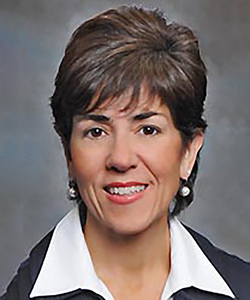
Del. Mary Lehman
Sponsored bills
Maddy summaryHB 1367 requires lead testing professionals to submit verified reports of test results to the Department, property owners, and tenants, and prohibits property owners from using related parties for these inspections. It imposes a civil penalty of up to $50,000 per day for anyone who falsifies information in these required reports. The law applies directly to lead inspectors, testing professionals, and property owners who employ them. Violations are treated as separate offenses for each day the false report remains in effect. The bill amends Maryland’s lead inspection laws to strengthen accountability for false documentation, effective October 1, 2025.
Maddy summaryHB 1 requires Maryland's Department of Transportation to create and implement training for transportation sector employees (including those at transit stations, airports, ports, and rest stops) on identifying and reporting suspected human trafficking. Employers must certify employees have completed the training by January 1, 2026, and establish reporting procedures to local agencies and trafficking prevention policies. The bill also protects employees and employers from liability for good-faith reports or responses to suspected trafficking incidents. Additionally, it mandates bilingual safety announcements about trafficking resources at transportation hubs.
Maddy summaryHB 1296 establishes a pilot program to test using treated wastewater for groundwater recharge in Maryland. The bill authorizes the Department of the Environment to review and permit demonstration facilities that treat reclaimed water to strict quality standards (including PFAS limits and pathogen reduction) for testing groundwater augmentation. It directly affects water treatment facilities and localities facing anticipated groundwater issues like saltwater intrusion or land subsidence within the next 25 years. The program requires facilities to prove they address specific groundwater problems, meet federal and state water quality standards, and undergo testing before permits are issued. This is strictly a testing phase for feasibility, not permanent implementation.
Maddy summaryHB 731 establishes the Maryland Connectivity Coalition to coordinate wildlife protection efforts, creates a Wildlife Connectivity Fund for habitat projects, and requires the State Highway Administration to include wildlife data in transportation planning. It directly affects the State Highway Administration, county planners, and wildlife conservation efforts by mandating that counties consider habitat connectivity when updating local plans. Key provisions include prioritizing highway crossings in high-collision areas and locations dividing habitats of threatened/endangered species. The bill aims to reduce vehicle-wildlife collisions and protect species from habitat fragmentation through coordinated planning and funding.
Maddy summaryHB 489 requires the Maryland Department of Labor to study building code requirements for single-staircase buildings (those with only one exit staircase) across Maryland and other U.S. states. The study must analyze safety factors like fire department response, water supply, and compliance with modern codes, while assessing impacts on housing costs and development feasibility for buildings up to six stories. It will consult fire safety experts and firefighter unions before making recommendations to potentially change building codes to allow such construction. The Department must submit findings and recommendations to the Governor and legislature by December 1, 2025, aiming to inform policies that could increase affordable housing supply.
Maddy summaryHB 755 prohibits cooperative housing corporations, condominium associations, and homeowners associations in Maryland from requiring sensitive personal information as a condition for accessing shared recreational areas like pools, playgrounds, or game rooms. The bill defines "sensitive information" as Social Security numbers, tax IDs, birth certificates, racial/ethnic origin, citizenship status, or religious beliefs - excluding government-issued photo IDs like driver’s licenses. It directly affects community associations and their members, unit occupants, and their guests or children who use common recreational spaces. The law takes effect October 1, 2025, ensuring residents cannot be denied access based on disclosure of the listed sensitive data.
Maddy summaryHB 527 requires the Maryland Transit Administration to provide three months of free rides on the Purple Line for residents living within a quarter-mile of the tracks, and free advertising space on Purple Line vehicles and stations for businesses within the same quarter-mile radius. The program would begin when Purple Line service starts and last for three months, applying to all qualifying residents and businesses near the transit line. It takes effect October 1, 2025, and directly affects local residents and small businesses adjacent to the Purple Line corridor. The bill creates a temporary incentive to encourage ridership and support nearby commercial activity during the initial service period.
Maddy summaryHB 9 clarifies key terms for Maryland's Food System Resiliency Council, defining "healthy food priority areas" as predominantly lower-income neighborhoods with limited access to affordable healthy food, and "wasted food" to include donations, composting, animal feed, and other management methods. The bill updates reporting requirements for the Council, removing outdated mandates and adjusting ongoing reporting obligations. It directs the Council to address food insecurity (especially post-pandemic), develop equity-focused policies to eliminate racial disparities and food deserts, and create a strategic plan to boost local food production and procurement. The Council must collaborate with affected communities and food organizations, with reports to the General Assembly. This bill primarily affects the Council, local food organizations, and residents in underserved food-access areas.
Maddy summaryHB 506, the Chesapeake Bay Legacy Act, creates the Maryland Leaders in Environmentally Engaged Farming (LEEF) Program to reduce nutrients in the Chesapeake Bay watershed through voluntary farm conservation practices. The bill establishes a special fund for the program, redefines "healthy soils" for existing soil programs, and exempts certain fishing license holders from needing food establishment licenses. Key provisions include tiered recognition for farms adopting conservation practices, requirements for the Department of Environment to authorize water quality trading credits, and new rules for fisheries management and aquaculture leases. The bill directly affects Maryland farmers, state environmental agencies, and fishing industry participants by changing how conservation incentives and regulations are implemented.