

Maddy summaryHB 845 creates a framework for Maryland to establish six community-based overdose and infectious disease prevention programs, approved by the Maryland Department of Health and located in areas with high drug use incidence (two urban, two suburban, two rural). These programs provide supervised consumption sites with health professionals, sterile drug supplies, overdose response (including naloxone), referrals to treatment and testing for HIV/hepatitis, and education on safe drug use and disposal. The bill allows programs to bill insurance for covered services, accept donations/grants, and prohibits arrests or penalties for individuals using these services. It also requires programs to coordinate with existing health services and maintain security while operating within specified locations.
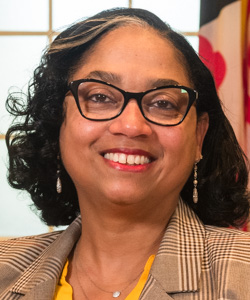
Del. Joseline Peña-Melnyk
Sponsored bills
Maddy summaryHB 1014, the "Fair Share for Maryland Act of 2025," makes significant changes to Maryland's tax code affecting residents, businesses, and estates. It adjusts estate tax calculations to maintain Maryland's tax rate despite potential federal changes, imposes a business transportation fee on corporations and pass-through entities, and expands eligibility for the earned income tax credit by lowering income thresholds for individuals without qualifying children. The bill also requires annual inflation adjustments for tax credit phase-out amounts, limits net operating loss deductions, and modifies child tax credit eligibility. These changes directly impact Maryland taxpayers, businesses, and families relying on state tax credits.
Maddy summaryHB 387 imposes an excise tax on firearms dealers' gross receipts from firearm sales within Maryland and to Maryland residents. The tax revenue will fund three existing state programs: the Coordinated Community Supports Partnership Fund (Education), the Maryland Trauma Physician Services Fund (Health), and the Maryland Violence Intervention and Prevention Program Fund (Public Safety). The bill creates new tax provisions under "Title 7.7" in the Tax-General Article to collect and distribute these funds, replacing previous language in multiple code sections. This directly affects firearms dealers through the new tax obligation and directs funding to community safety and health programs. The policy change is a concrete tax mechanism for reallocating firearm sales revenue to specific public safety initiatives.
Maddy summaryHB 488 requires Maryland's State Department of Education to collect and publish detailed discipline data for all public schools, broken down by student characteristics including race, ethnicity, gender, disability status, socioeconomic status, and English language proficiency. The data must be available as an electronic spreadsheet on the Department's website at the state, school system, and individual school levels. The bill also mandates annual reporting on schools with high suspension rates for specific student groups to identify potential disparities in discipline. This policy increases transparency around school discipline practices without changing disciplinary procedures.
Maddy summaryHB 232 establishes Maryland's Beverage Container Recycling Refund and Litter Reduction Program. It requires beverage producers to register, pay fees, and join a stewardship organization to manage recycling, while mandating that containers sold in Maryland display refund information and that retail prices include the refund value (with limited exceptions). Retailers must include refund details on sales receipts, and local governments can create redemption facilities to help meet state recycling targets. The program aims to increase beverage container recycling, reduce litter, and fund public water refill stations through a new grant program, directly affecting producers, retailers, and consumers.
Maddy summaryHB 523 requires every Maryland county board of education to investigate and report on the root causes of student absenteeism and expulsions. Specifically, boards must examine factors like a student's home situation, family vacations, health issues (mental, physical, or substance use), school environment, and whether the student provides care or translation for family members. Starting January 1, 2026, each county must submit quarterly reports for 10 years to state legislative committees and local representatives detailing these findings. The bill directly affects all county school boards and aims to identify systemic issues impacting student attendance and discipline.
Maddy summaryHB 495 requires Maryland schools with existing antidiscrimination policies to update those policies to include specific information, such as reporting options for sexual violence, school contact details, investigation processes, victim resources, and medical facility locations. It mandates that policies be written in plain, age-appropriate language, printed for readability, available in common languages spoken by students/staff (5%+ of population), and accessible via oral interpretation for less common languages. Schools must distribute policies annually through handbooks, email, campus postings, and websites, and provide mandatory training to students at the start of each school year and to employees within four weeks of hire. This applies to all public/private K-12 schools, preK programs receiving state funding, and colleges in Maryland.
Maddy summaryHB 630, the Maryland Phone-Free Schools Act, requires all Maryland county school boards to create and implement policies by the 2026-2027 school year that limit student cell phone use during instructional time (excluding lunch). The policy must prohibit phone use and require secure storage, ban social media apps during school hours, and include disciplinary measures like warnings for first violations. Exceptions allow phone use for students with IEPs/504 plans, health monitoring, emergencies, or for educational purposes directed by staff. The bill directly affects public school students and county boards of education across Maryland.
Maddy summaryHB 612 establishes Maryland's Lifesaver Schools Program, which recognizes public schools that provide specific health and safety training to students and staff. To qualify, schools must offer evidence-based first aid training, mental health support programs, schoolwide mental health assemblies, and professional development opportunities for staff during school hours. Schools must also maintain online resources for mental health support and host community outreach events, with recognition requiring reapplication every four years. The program, administered by the Maryland Department of Education, takes effect July 1, 2025.
Maddy summaryHB 804 requires condominium and cooperative housing communities (common ownership communities) with four or more dwelling units to create a smoking policy for all common areas like hallways, elevators, and entrances. The policy must be at least as strict as existing state or local smoking laws and must clearly state where smoking is allowed or banned, how to report violations, and any penalties. Crucially, the bill protects residents' rights to smoke inside their own units, regardless of the policy. It does not override stricter local smoking rules that communities might already have in place. The law takes effect October 1, 2025.