

Maddy summaryHB 1080 modifies Maryland's income tax code to align with recent federal changes. It adds three specific types of income to Maryland taxable income: capital gains from qualified opportunity funds (previously excluded federally), certain foreign business income, and interest excluded under federal law. This affects Maryland taxpayers and corporations that earn these specific income types, requiring them to include these amounts in their state tax calculations. The changes take effect for taxable years beginning after December 31, 2025, with the full implementation starting July 1, 2026.
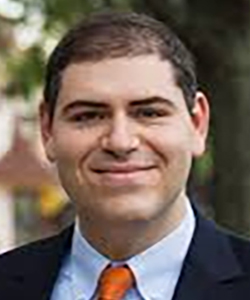
Rep. Jared Solomon
Sponsored bills
Maddy summaryHB 197 creates a new excise tax on firearms, accessories, and ammunition sales by dealers in Maryland. The tax applies to all retail sales within the state, with revenue distributed to five specific community safety programs: 26% to violence prevention, 26% to trauma care, 20% to community support, 20% to survivor services, and 8% to the University of Maryland Medical System. The bill directs funds to supplement existing programs rather than replace them. This tax targets firearms dealers as the direct taxpayers, with revenue funding state-level safety initiatives.
Maddy summaryHB 1 limits how investor-owned electric, gas, and combined gas/electric utility companies in Maryland can pass certain costs to customers through their rates. It prohibits rate recovery for most employee bonuses (except for pre-2025 contracts or union-covered employees) and caps supervisor compensation above 110% of the Public Service Commission Chair’s annual salary. The bill also requires utility boards to adopt written policies limiting spending on entertainment, office renovations, transportation (including private jets), and performance incentives, with policies submitted to the Public Service Commission for review. These rules apply specifically to investor-owned utility companies and aim to prevent ratepayers from funding certain executive or operational costs.
Maddy summaryHB 562, the "Maintenance of Effort Modernization Act," updates Maryland's method for calculating annual inflation adjustments in local school funding. It replaces the current formula with a new standard that uses the lesser of three measures: the Consumer Price Index for the Washington Metropolitan Area, a government spending index, or 5%, with 0% if neither index rises. This change requires county governments and Baltimore City to adjust their annual local school funding appropriations based on this new inflation metric, starting July 1, 2026. The bill directly affects all Maryland counties and Baltimore City, which are responsible for maintaining local school funding levels.
Maddy summaryHB 935 requires Maryland to establish a dedicated prerelease facility for female incarcerated individuals, directly affecting women eligible for prerelease programs at the Maryland Correctional Institution for Women. The bill mandates a separate facility meeting specific criteria: at least 3 acres, not within 1 mile of other prisons, and designed to house 1.25 times the 2024 prerelease-eligible population. It requires the Department of Public Safety and Correctional Services to provide comprehensive rehabilitative services (including gender-responsive programming) and report progress to legislative committees by a specified deadline. The facility must operate by June 1, 2023, with the Department of General Services directing procurement for its construction.
Maddy summaryHB 488 establishes the geographic boundaries for Maryland's eight congressional districts for the 2026 elections. It specifies exact county and election district portions, using census tract data to define district lines where precincts are split, based on boundaries as they existed on January 13, 2026. This bill directly affects voters in Maryland's congressional districts by determining which communities are grouped together for electing U.S. Representatives. It replaces previous election law sections (8-702 through 8-709) and clarifies that certain districting rules apply only to state legislative districts, not congressional ones.
Maddy summaryHB 559 revises how Maryland distributes highway user revenue funds for capital grants to Baltimore City, counties, and municipalities. It changes the percentage allocations from the Gasoline and Motor Vehicle Revenue Account across specific fiscal years: Baltimore City’s share increases to 12.2% for 2026-2027 (down to 9.5% after 2028), counties’ share rises to 4.8% for 2026-2027 (then 3.7%), and municipalities’ share grows to 3.0% for 2026-2027 (then 2.4%). These adjustments apply to funds calculated annually based on highway user revenues like fuel taxes and vehicle registration fees. The bill directly affects local governments receiving these state-funded transportation grants.
Maddy summaryHB 331 establishes Maryland's Beverage Container Recycling Refund and Litter Reduction Program. It requires beverage producers to register, pay fees, and join a stewardship organization to manage recycling, mandates that all redeemable containers display refund information, and requires retailers to include the container's refund value in prices. Consumers receive refunds when returning containers to designated redemption facilities, while local governments can operate facilities to earn credits toward recycling targets. The bill also creates a grant program to fund public water fountains and refill stations, aiming to reduce litter and increase recycling rates.
Maddy summaryHB 641 establishes a three-county pilot program to test curbside voting in Maryland, directly affecting voters with mobility challenges and local election officials implementing the program. The bill requires the State Board to select one county each with small, medium, and large voter populations to test curbside voting at designated locations outside early voting centers or polling places. Key provisions mandate that locations must prioritize accessibility for historically disenfranchised communities, proximity to voters, and public transportation access, while ensuring ballot secrecy and allowing voters to complete ballots without assistance unless requested. The pilot program requires voting systems to accommodate curbside voting and specifies that election officials must set boundaries to prevent campaigning near curbside locations. This pilot will run during early voting and election days at designated sites, with implementation starting at least six months before each statewide primary election.
Maddy summaryHB 506 establishes the Transformational Project Financing Program under Maryland's Economic Development Corporation. It allows local governments (political subdivisions) to apply for designation of specific areas as "State-supported development districts" to fund major development projects. The key mechanism redirects property tax revenue from increased property values ("tax increment") within these districts into a dedicated fund, rather than the general municipal budget, for approved projects. Priority areas include sustainable communities, transit-oriented developments, and designated enterprise zones. This program modifies existing law to create a structured process for economic development financing through tax increment funding.