

Maddy summaryHB 641 establishes a three-county pilot program to test curbside voting in Maryland, directly affecting voters with mobility challenges and local election officials implementing the program. The bill requires the State Board to select one county each with small, medium, and large voter populations to test curbside voting at designated locations outside early voting centers or polling places. Key provisions mandate that locations must prioritize accessibility for historically disenfranchised communities, proximity to voters, and public transportation access, while ensuring ballot secrecy and allowing voters to complete ballots without assistance unless requested. The pilot program requires voting systems to accommodate curbside voting and specifies that election officials must set boundaries to prevent campaigning near curbside locations. This pilot will run during early voting and election days at designated sites, with implementation starting at least six months before each statewide primary election.
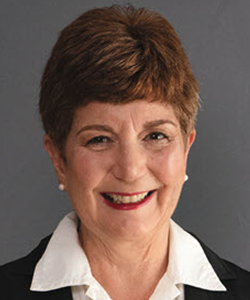
Del. Linda Foley
Sponsored bills
Maddy summaryThis bill establishes a three-year pilot program to create a statewide network of free financial empowerment centers across Maryland, targeting residents seeking assistance with personal financial management. Each center will provide one-on-one counseling on increasing savings, reducing debt, accessing banking services, and improving credit scores, with materials available in English, Spanish, and other required languages. The Comptroller’s Office will administer the program, requiring counselors to complete training meeting established standards, and the state will fund it through budget appropriations for fiscal years 2028 and 2029. The program will run from October 1, 2026, through September 30, 2029, after which it will automatically end without further legislative action.
Maddy summaryHB 572 authorizes Maryland’s Attorney General to sue large fossil fuel companies (with over $1 billion in market capitalization involved in extracting or processing coal, oil, or gas) for unlawful conduct contributing to climate change, including fraud or deception. It creates the Climate Crimes Accountability Fund, financed by settlements or judgments from these lawsuits, to pay for programs addressing specific climate harms like flooding, extreme heat, drought, and waterborne pathogens. The fund is a special, non-lapsing account managed by the state, with interest earnings automatically added to it. All money must directly support climate harm prevention, mitigation, or repair efforts as defined in the bill.
Maddy summaryHB 155 requires all Maryland law enforcement agencies to adopt policies prohibiting officers from wearing face coverings (like opaque masks or helmets) during routine duties, with specific exceptions. The Maryland Police Training and Standards Commission must create a model policy emphasizing transparency and excluding religious items, medical masks, or safety gear (such as helmets for motorcycle operations). Officers violating this rule face potential fines or loss of civil immunity, but exceptions cover religious garments, medical protection, and occupational safety needs. The law takes effect October 1, 2026.
Maddy summaryHB 551 repeals specific sections of Maryland's Criminal Law that prohibited certain drug paraphernalia and controlled paraphernalia. It removes prohibitions related to items like syringes, packaging materials, and cutting agents used with controlled substances (excluding cannabis). The bill directly affects individuals who might possess these items under current law, as the repeal eliminates criminal penalties for such possession. This change modifies Maryland's legal definitions and prohibitions regarding drug paraphernalia by deleting the referenced sections from the Annotated Code.
Maddy summaryHB 167 bans the State of Maryland from purchasing gasoline-powered leaf blowers starting July 1, 2026, and prohibits their use by the State or its contractors on state-owned land beginning January 1, 2031. The bill directly affects state agencies and contractors managing state property, requiring them to comply with local government standards that are at least as strict as the bill’s requirements. Exceptions include wildfire suppression, prescribed burns, firefighting, and emergency response activities. The law does not override stricter local regulations but ensures state operations follow local environmental standards for leaf blowers. The bill takes effect July 1, 2026.
Maddy summaryHB 43 requires Maryland state government agencies to spend at least 50% of their total budget for print and digital advertising contracts directly with qualifying local news organizations. It defines "local news organizations" as entities publishing regular local content, employing Maryland-based staff, and meeting specific transparency criteria (like disclosing ownership or mission focus). The rule excludes advertising for tourism promotion or employee recruitment and applies to all state units starting October 1, 2026. This policy directly affects state agencies managing advertising contracts and aims to support local news outlets through government spending.
Maddy summaryHB 345, the "Affordable Solar Act," creates new rules for solar energy systems in Maryland. It allows homeowners to install portable solar systems (max 1,200 watts) without utility approval or fees, while establishing two new credit types: SRECs for smaller residential systems and SREC-IIs for larger distributed or utility-scale projects (over 5MW). The bill requires utilities to procure specific SREC-II credits and redirects certain fees into new escrow accounts instead of the Strategic Energy Investment Fund. These changes directly affect residential solar users, utilities, and solar developers by altering renewable energy compliance standards and financial mechanisms.
Maddy summaryHB 137 establishes specific qualifications for individuals appointed by Maryland courts to conduct child custody evaluations. It directly affects courts and professionals serving as custody evaluators, requiring them to meet strict licensing, training, and experience standards. Key provisions mandate that evaluators must hold valid licenses in certain fields (like psychiatry, psychology, or clinical social work), complete court-approved training, maintain continuing education, and demonstrate expertise in areas including domestic violence, child abuse, trauma, and family dynamics. The bill takes effect July 1, 2026, with limited waivers allowed for court employees with 14+ years of prior experience.
Maddy summaryHB 500, the Procurement Reform Act of 2025, streamlines Maryland state government purchasing by transferring key authority from the Secretary of General Services to the Chief Procurement Officer. It adjusts dollar thresholds requiring public notice or reporting for procurements, modifies small business preference programs (including expanding eligibility for small business reserves), and adds new requirements for contractors to submit workforce diversity plans for contracts over $500,000. The bill also creates a procurement preference for businesses certified for "good labor practices" and mandates that certain agencies establish working groups to address procurement issues. These changes directly affect state agencies, contractors (especially small businesses), and the Office of Small, Minority, and Women Business Affairs, which gains oversight of new workforce diversity rules.