

Maddy summaryHB 350, the "Voting Rights Act of 2026," applies to local elections in Maryland counties and cities, protecting the voting rights of racial, ethnic, and language minority groups. It prohibits election methods that weaken the voting power of these groups, preventing them from electing preferred candidates or influencing election outcomes. Courts will determine violations by examining past election patterns and federal voting rights standards, rather than requiring proof of discriminatory intent. If a violation is found, courts can order remedies like changing election systems, but must respect existing statewide election practices.
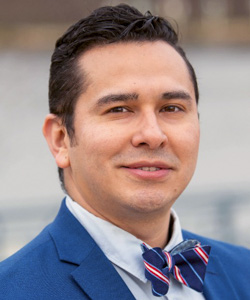
Del. Gabriel Moreno
Sponsored bills
Maddy summaryHB 796 redefines "recycling" in Maryland law to exclude specific chemical processes that convert plastic waste into fuel or feedstock. It directly affects companies or entities planning to build new facilities using these methods. The bill prohibits constructing such facilities through processes like pyrolysis, gasification, methanolysis, hydropyrolysis, or enzymatic breakdown, as defined by the state Department. The law takes effect October 1, 2026.
Maddy summaryThis Maryland bill allows taxpayers to subtract up to $1,000 from their state income tax when donating food or cash specifically designated for food purchases to qualified charitable organizations. The law defines eligible recipients as food banks, homeless shelters, domestic violence shelters, religious groups, and other registered charities that provide free food to people in need. To claim this benefit, taxpayers must list the recipient organization's name and provide proof of the donation's value on their income tax return. The Comptroller will create regulations to establish registration criteria for these organizations, and the bill includes a requirement for a report by January 1, 2029, on whether donations have increased since the law took effect. The provision applies to taxable years beginning after December 31, 2025, and automatically expires on June 30, 2029.
Maddy summaryHB 779 requires state and local projects funded with state money (at a specified cost threshold) to follow new riverine siting and design criteria aimed at reducing flood risks from rivers. It directs the Coast Smart Council to establish these criteria by specific dates and review them periodically, with updates under certain conditions. The bill creates a new "Part VII" in Maryland law specifically for riverine criteria, separate from existing coastal flooding rules. This applies directly to public infrastructure projects like roads, buildings, or utilities financed with state funds, focusing on resilience against river flooding.
Maddy summaryHB 530 establishes a task force to study using artificial intelligence to proactively review audio and video recordings from special education buses, aiming to enhance student safety. The task force, composed of state education officials, transportation representatives, disability advocates, and parents, will examine AI tools, privacy concerns, costs, and best practices from other states. It will analyze current recording systems, investigate incidents like abuse or harassment, and evaluate implementation feasibility for special education bus safety. The task force must report findings and recommendations to Maryland lawmakers by December 1, 2026, with the bill expiring June 30, 2027.
Maddy summaryHB 541 requires all Maryland public schools to provide free menstrual hygiene products (tampons or sanitary napkins) in women’s restrooms at no cost to students. Each county board of education must install dispensers in at least two women’s restrooms at middle/high schools by October 2022 (and all by August 2025) and in at least one restroom at elementary schools by October 2022. Schools must regularly restock these dispensers to ensure availability, with the state reimbursing counties for installation and product costs through a $500,000 fiscal year 2023 appropriation. The law applies directly to public school students and county education boards, taking effect July 1, 2026.
Maddy summaryHB 659 adds a new member position to Maryland's State Board of Education, requiring the Governor to appoint an early childhood development professional with extensive experience in child care operations and curriculum development. This member must be selected from a list of three candidates provided by the Office of Child Care Advisory Council. The bill directly affects the State Board's composition and ensures representation from early childhood education professionals, who will attend executive sessions but cannot vote on personnel appeals. The appointment process requires the Department to notify licensed child care providers of vacancies, and the position takes effect July 1, 2026.
Maddy summaryHB 488 establishes the geographic boundaries for Maryland's eight congressional districts for the 2026 elections. It specifies exact county and election district portions, using census tract data to define district lines where precincts are split, based on boundaries as they existed on January 13, 2026. This bill directly affects voters in Maryland's congressional districts by determining which communities are grouped together for electing U.S. Representatives. It replaces previous election law sections (8-702 through 8-709) and clarifies that certain districting rules apply only to state legislative districts, not congressional ones.
Maddy summaryHB 331 establishes Maryland's Beverage Container Recycling Refund and Litter Reduction Program. It requires beverage producers to register, pay fees, and join a stewardship organization to manage recycling, mandates that all redeemable containers display refund information, and requires retailers to include the container's refund value in prices. Consumers receive refunds when returning containers to designated redemption facilities, while local governments can operate facilities to earn credits toward recycling targets. The bill also creates a grant program to fund public water fountains and refill stations, aiming to reduce litter and increase recycling rates.
Maddy summaryThis bill establishes a three-year pilot program to create a statewide network of free financial empowerment centers across Maryland, targeting residents seeking assistance with personal financial management. Each center will provide one-on-one counseling on increasing savings, reducing debt, accessing banking services, and improving credit scores, with materials available in English, Spanish, and other required languages. The Comptroller’s Office will administer the program, requiring counselors to complete training meeting established standards, and the state will fund it through budget appropriations for fiscal years 2028 and 2029. The program will run from October 1, 2026, through September 30, 2029, after which it will automatically end without further legislative action.