

Maddy summaryHB 1097 establishes a 10-member workgroup to examine mail-in ballot accessibility, specifically focusing on the impact of requiring paper returns on voters with disabilities. The workgroup includes election officials, disability advocates (like Common Cause Maryland and the National Federation of the Blind), and experts in voting accessibility, security, and cybersecurity. It must assess current processes, research accessible alternatives from other jurisdictions, and evaluate options considering security, privacy, cost, and potential discrimination. The group must report findings and recommendations to the Governor and legislature by December 31, 2025, with the bill expiring June 30, 2026.
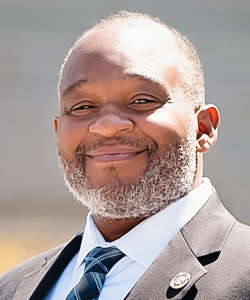
Del. Gary Simmons
Sponsored bills
Maddy summaryHB 926 amends Maryland law to expand the definition of "health care provider" in malpractice claims. It specifically adds "an employee, agent, or contractor of a hospital who is licensed, certified, registered, or otherwise authorized to render health care services in Maryland" to the existing list of covered entities. This change directly affects hospital staff (like nurses or technicians working under contract) who would now be individually liable in malpractice lawsuits, not just the hospital itself. The bill takes effect October 1, 2025, and does not alter other aspects of malpractice law.
Maddy summaryHB 1003 requires anyone seeking to relocate human remains from a burial site to first obtain approval from the Office of Cemetery Oversight before requesting authorization from a State’s Attorney. This replaces the previous requirement to publish a newspaper notice, instead mandating documentation of Oversight approval for permanent relocations. The bill also establishes procedures for temporary relocations (requiring later Oversight approval), sets standards for reinterment in approved locations, and directs fines/fees to the Cemetery Oversight Fund. It directly affects individuals, families, or entities moving remains from burial sites, including cemeteries and unmarked sites.
Maddy summaryHB 696 eliminates citizenship requirements for members of certain Maryland state boards, committees, commissions, task forces, and workgroups. It replaces these requirements with a mandate that appointees should reflect the "full diversity of the State to the extent practicable." The bill affects multiple state entities across health, environment, labor, and other sectors by changing appointment rules in over 20 specific code sections. This policy change directly impacts who can be appointed to these bodies, prioritizing diversity considerations over citizenship status.
Maddy summaryHB 488 requires Maryland's State Department of Education to collect and publish detailed discipline data for all public schools, broken down by student characteristics including race, ethnicity, gender, disability status, socioeconomic status, and English language proficiency. The data must be available as an electronic spreadsheet on the Department's website at the state, school system, and individual school levels. The bill also mandates annual reporting on schools with high suspension rates for specific student groups to identify potential disparities in discipline. This policy increases transparency around school discipline practices without changing disciplinary procedures.
Maddy summaryHB 665 requires Maryland's Medicaid program (Maryland Medical Assistance Program) and certain health insurers to cover annual behavioral health wellness visits starting July 1, 2026. These visits, defined as clinical assessments to identify potential psychiatric or substance use disorders, must be covered regardless of whether a diagnosis is made. Insurers must reimburse providers for these visits at the same rate as visits resulting in a diagnosis. The bill applies to Medicaid recipients and health plans operating in Maryland, effective January 1, 2026, for new or renewed policies.
Maddy summaryHB 711 requires Maryland's Office of Cemetery Oversight to study the environmental and public health impacts of deathcare practices, in collaboration with the Departments of Health, Labor, and Environment. The study will examine nine specific methods - including embalming, traditional burials, cremation, water cremation, and body composting - to assess their effects on land use, soil/water quality, air emissions, worker/community health, costs, and regulatory processes. It mandates site visits, data collection from other states, and input from industry groups, environmental organizations, and diverse communities. The Office must submit an interim report by December 2025 and a final report by July 2026, which will include findings and policy recommendations for sustainable deathcare options. This bill does not change current laws but sets the stage for future regulatory or policy decisions based on the study's results.
Maddy summaryHB 724 establishes the Commission on Abandoned and Neglected Maryland Cemeteries within the Office of Cemetery Oversight. The commission will identify neglected cemeteries statewide, create a searchable database of abandoned sites, and develop guidelines for repairing and maintaining burial grounds - particularly focusing on historically significant African American cemeteries. It will also provide support to descendants seeking to preserve these sites and coordinate with local governments and developers to protect burial lands. The bill directly affects Maryland cemeteries, their descendants, local jurisdictions, and entities involved in cemetery preservation.
Maddy summaryHB 534 creates the Interstate Dental and Dental Hygiene Licensure Compact, allowing dentists and dental hygienists licensed in Maryland to practice in other participating states without reapplying for separate licenses. The bill establishes a Commission to oversee the compact, requiring all participating states to accept the same national licensing exam (ADEX) and share disciplinary records to ensure public safety. It specifically benefits military personnel and their spouses by eliminating fees and expediting licensure during relocations. The compact also eliminates duplicate paperwork and costs for licensees moving between states, streamlining access to dental care across participating jurisdictions.
Maddy summaryHB 392 allows fair housing testers working for approved programs (federal, state, local governments, or qualified nonprofits) to legally record oral communications during housing tests to gather evidence of discrimination. It specifically permits recording only when the tester is a party to the conversation and the purpose is to document potential fair housing violations under federal, state, or local law. Evidence obtained this way can only be used to enforce fair housing laws - not in other legal proceedings. The bill amends Maryland’s electronic surveillance laws to create this limited exception, effective October 1, 2025.