

Maddy summaryHB 350, the "Voting Rights Act of 2026," applies to local elections in Maryland counties and cities, protecting the voting rights of racial, ethnic, and language minority groups. It prohibits election methods that weaken the voting power of these groups, preventing them from electing preferred candidates or influencing election outcomes. Courts will determine violations by examining past election patterns and federal voting rights standards, rather than requiring proof of discriminatory intent. If a violation is found, courts can order remedies like changing election systems, but must respect existing statewide election practices.
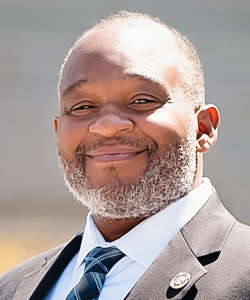
Del. Gary Simmons
Sponsored bills
Maddy summaryHB 636 modifies Maryland's ethics rules to allow members of the General Assembly, candidates for the Assembly, and newly elected members to earn income from state or local government jobs under specific exemptions. It creates four categories of allowable income: educational instruction, merit-system positions, human services roles, or logical career transitions from prior employment. The Joint Ethics Committee must approve these exemptions, while certain existing relationships or post-term employment meeting education/licensure requirements remain excluded. This bill directly affects legislators' ability to hold outside public-sector jobs without violating current ethics prohibitions.
Maddy summaryHB 863 reclassifies the theft of a firearm as a felony under Maryland law, previously treated as a lower-level offense. It establishes felony penalties based on the firearm's value: up to 5 years in prison or a $10,000 fine for theft valued at $1,500-$25,000, up to 10 years for $25,000-$100,000, and up to 20 years for $100,000 or more. Convicted individuals must also return the firearm or pay its value to the owner. The bill directly affects anyone who steals a firearm or knowingly possesses stolen firearms, raising penalties for these offenses under Section 7-104 of Maryland’s Criminal Law.
Maddy summaryHB 935 requires Maryland to establish a dedicated prerelease facility for female incarcerated individuals, directly affecting women eligible for prerelease programs at the Maryland Correctional Institution for Women. The bill mandates a separate facility meeting specific criteria: at least 3 acres, not within 1 mile of other prisons, and designed to house 1.25 times the 2024 prerelease-eligible population. It requires the Department of Public Safety and Correctional Services to provide comprehensive rehabilitative services (including gender-responsive programming) and report progress to legislative committees by a specified deadline. The facility must operate by June 1, 2023, with the Department of General Services directing procurement for its construction.
Maddy summaryHB 873 increases prison sentences for drivers who cause death through extreme carelessness while operating a vehicle or vessel. For a first offense, the maximum sentence rises from 10 to 20 years; for repeat offenses, it increases from 15 to 30 years. The bill does not change fines, which remain up to $5,000 for first offenses and $10,000 for repeat offenses. This law affects a very limited number of cases, as only about 30 people were incarcerated for this specific offense in Maryland during fiscal 2025, making its overall impact minimal.
Maddy summaryHB 819 establishes a commission to examine Maryland's expungement laws, which allow individuals to clear criminal records from public records. The commission includes 12 members - such as two people with criminal records currently ineligible for expungement, state officials, public defenders, and experts in employment and reentry - to review current processes, compare them with other states, and develop a new system that would streamline eligibility and expand access. It must submit a report to the Maryland General Assembly by December 31, 2027, outlining findings and recommendations. The bill expires on June 30, 2028, requiring the commission to complete its work within two years.
Maddy summaryHB 740 requires every public school in Maryland to hire a full-time, state-licensed therapist who provides mental health services during school hours. This directly affects all public schools and their students, mandating access to licensed mental health support as part of school-based services. The bill specifies therapists must be certified by the State Board of Professional Counselors and Therapists and replaces existing language in the education code. It takes effect July 1, 2026.
Maddy summaryHB 530 establishes a task force to study using artificial intelligence to proactively review audio and video recordings from special education buses, aiming to enhance student safety. The task force, composed of state education officials, transportation representatives, disability advocates, and parents, will examine AI tools, privacy concerns, costs, and best practices from other states. It will analyze current recording systems, investigate incidents like abuse or harassment, and evaluate implementation feasibility for special education bus safety. The task force must report findings and recommendations to Maryland lawmakers by December 1, 2026, with the bill expiring June 30, 2027.
Maddy summaryHB 488 establishes the geographic boundaries for Maryland's eight congressional districts for the 2026 elections. It specifies exact county and election district portions, using census tract data to define district lines where precincts are split, based on boundaries as they existed on January 13, 2026. This bill directly affects voters in Maryland's congressional districts by determining which communities are grouped together for electing U.S. Representatives. It replaces previous election law sections (8-702 through 8-709) and clarifies that certain districting rules apply only to state legislative districts, not congressional ones.
Maddy summaryHB 695 establishes the Green and Renewable Energy Efficiency for Nonprofits (GREEN) Loan Program to provide no-interest loans to 501(c)(3) nonprofit organizations in Maryland. The program, managed by the Maryland Clean Energy Center, funds the planning, purchase, and installation of qualifying renewable energy systems (like solar panels) and energy efficiency improvements (such as HVAC upgrades or window replacements). Eligible projects must support Maryland’s environmental and greenhouse gas reduction goals. The program is funded through a new special nonlapsing loan fund, with interest earnings reinvested into the fund.