

Maddy summaryHB 868, nicknamed "Granny's Law," allows personal representatives (executors) to petition courts to interpret wills regarding health-related legacies based on the decedent’s intent to address health equity. It applies when a will leaves money to health providers or charities but doesn’t explicitly require it for health equity, even if the decedent lived with health equity interests. The bill creates a rebuttable presumption that such legacies must address health equity unless proven otherwise, and requires beneficiaries to show how the legacy was used for that purpose within three years. It also lets courts defer to personal representatives who include specific language in wills authorizing them to act without court approval for health equity efforts. The law applies retroactively to wills probated after a certain date.
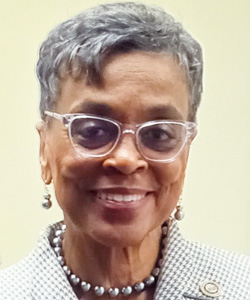
Rep. Cheryl Pasteur
Sponsored bills
Maddy summaryHB 55 allows individuals with completed misdemeanor or felony sentences to petition courts for expungement (clearing criminal records) at any time if they demonstrate "good cause." Courts must consider factors like the crime's nature, the person's rehabilitation, public safety risk, and how the conviction impacts employment, housing, and education. If denied, the decision cannot be appealed, and the person cannot reapply for five years for the same conviction. This bill directly affects people with past convictions seeking to improve their job prospects, housing options, and access to public assistance.
Maddy summaryHB 981 requires Maryland's State Department of Education to evaluate how public schools use artificial intelligence (AI) tools. The bill mandates a survey sent to all school districts by August 2025, asking about AI policies for students (including age, disability, and language needs), current AI tools used for learning, infrastructure readiness, and support needs. The Department of Information Technology must assist by reviewing available AI systems for educational use, analyzing their cost-benefit and pedagogical value, and assessing potential statewide implementation. The evaluation will result in an interim report by January 2026 and a final report by December 2026, directly affecting all Maryland public school systems.
Maddy summaryHB 1105 requires child care centers, youth-serving organizations, schools, and contracting agencies to collect specific information from applicants for roles involving direct contact with minors. Applicants must provide contact details for recent employers (especially those involving minors), sign consent forms for releasing records about boundary-violating behavior, and disclose any past investigations into such behavior - excluding cases where findings deemed allegations unfounded. The bill also mandates annual reporting of this information to the State Department of Education, which will compile and submit it to the General Assembly. This applies to all entities hiring staff who regularly interact with children, focusing on transparency in hiring practices.
Maddy summaryHB 1014, the "Fair Share for Maryland Act of 2025," makes significant changes to Maryland's tax code affecting residents, businesses, and estates. It adjusts estate tax calculations to maintain Maryland's tax rate despite potential federal changes, imposes a business transportation fee on corporations and pass-through entities, and expands eligibility for the earned income tax credit by lowering income thresholds for individuals without qualifying children. The bill also requires annual inflation adjustments for tax credit phase-out amounts, limits net operating loss deductions, and modifies child tax credit eligibility. These changes directly impact Maryland taxpayers, businesses, and families relying on state tax credits.
Maddy summaryHB 519 requires all Maryland hospitals to provide free parking for inpatients during their hospital stay and for outpatients during scheduled medical appointments. Hospitals must also display clear signage at all public entrances and parking areas informing patients about this free parking benefit. The law applies to every hospital facility owned, operated, or leased by a hospital and takes effect on October 1, 2025. This policy directly affects hospitals statewide and all patients receiving care at those facilities.
Maddy summaryHB 696 eliminates citizenship requirements for members of certain Maryland state boards, committees, commissions, task forces, and workgroups. It replaces these requirements with a mandate that appointees should reflect the "full diversity of the State to the extent practicable." The bill affects multiple state entities across health, environment, labor, and other sectors by changing appointment rules in over 20 specific code sections. This policy change directly impacts who can be appointed to these bodies, prioritizing diversity considerations over citizenship status.
Maddy summaryHB 627 clarifies that existing Maryland laws prohibiting disruptive or threatening behavior on school property do not apply to students committing offenses at their own school or at another school during sponsored events like sports. The bill amends Section 26-101 of the Education Code to explicitly exempt these two student groups from the prohibitions and penalties. It also requires county boards to report school disruption data by category (e.g., fighting, weapons) and disaggregate it by student demographics, disciplinary actions, and referrals. This focuses on clarifying legal application and improving data collection for school safety reporting.
Maddy summaryHB 630, the Maryland Phone-Free Schools Act, requires all Maryland county school boards to create and implement policies by the 2026-2027 school year that limit student cell phone use during instructional time (excluding lunch). The policy must prohibit phone use and require secure storage, ban social media apps during school hours, and include disciplinary measures like warnings for first violations. Exceptions allow phone use for students with IEPs/504 plans, health monitoring, emergencies, or for educational purposes directed by staff. The bill directly affects public school students and county boards of education across Maryland.
Maddy summaryHB 631 prohibits the State or its political subdivisions from using eminent domain to take privately owned property subject to a permanent agricultural or conservation easement. This directly affects landowners who hold such easements, protecting their property from forced acquisition for public projects. The bill amends Maryland’s real property law (specifically Section 12-101(b)(2) of the Annotated Code) to add this explicit prohibition. It does not apply to existing legal processes for state roads or Baltimore City. The law takes effect October 1, 2025.