Issue · Healthcare

Healthcare (Mental Health)

Every healthcare bill, vote, and legislator stance in Maryland, automatically classified by Maddy, our AI policy reader.

Total bills
68
2026 Regular Session
Top supporter
Aaron Kaufman
100% support rate
Top opponent
Chris Adams
0% support rate
Ranked legislators
10
5 support · 5 oppose
Key legislators

Who's moving mental health in Maryland

Legislators moving mental health in Maryland
Legislator Party Stance Support rate Decisive votes
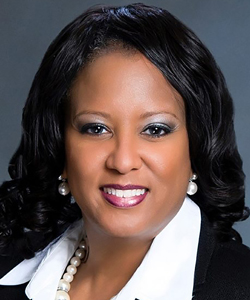
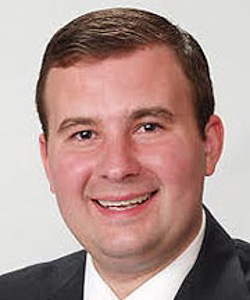
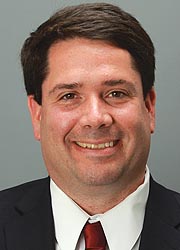
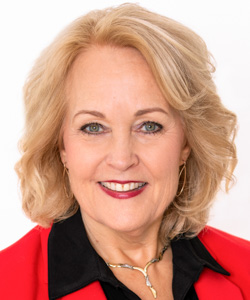
Aaron Kaufman
Aaron Kaufman House · District 18
D
Strong +
100% 8
Andre Johnson
Andre Johnson House · District 34A
D
Strong +
100% 8
Andrea Harrison
Andrea Harrison House · District 24
D
Strong +
100% 8
Andrew Pruski
Andrew Pruski House · District 33A
D
Strong +
100% 8
Anne Kaiser
Anne Kaiser House · District 14
D
Strong +
100% 8
Chris Adams
Chris Adams House · District 37B
R
Strong −
0% 8
Jay Jacobs
Jay Jacobs House · District 36
R
Strong −
0% 8
Kathy Szeliga
Kathy Szeliga House · District 7A
R
Strong −
0% 8
Mark Fisher
Mark Fisher House · District 27C
R
Strong −
0% 8
Matt Morgan
Matt Morgan House · District 29A
R
Strong −
0% 8
Showing 51–60 of 68 bills

All healthcare bills

signed · Maryland · House of Delegates May 26, 2026

HB 684: Health Insurance - Material Changes to Provider Networks - Notification and Special Enrollment Period

HB 684 requires health insurance companies to notify members 60 days in advance if a provider (including primary care or behavioral health providers) is removed from their network, unless termination relates to fraud, abuse, or licensure issues. It mandates that members affected by such changes receive a 90-day special enrollment period to continue seeing those providers, along with clear contact information for filing complaints. Insurance companies must also notify the Maryland Insurance Commissioner about network changes at least 60 days before termination and update their access plans within 5 business days of the change. This bill directly affects health insurance members who lose provider access and requires insurers to follow specific transparency and transition procedures.
in committee · Maryland · House of Delegates Feb 5, 2026

HB 632: Certificate of Need - Psychiatric Health Care Facilities and Psychiatric and Mental Health Services - Exemption

HB 632 removes psychiatry and all subcategories of psychiatric services from the definition of "medical service" requiring a Certificate of Need (CON) in Maryland. This exempts psychiatric health care facilities and providers of psychiatric or mental health services from needing state approval before establishing or operating these services. The bill amends Maryland law by deleting "psychiatry" from the list of medical services subject to CON requirements, which currently includes services like surgery, pediatrics, and rehabilitation. This change directly affects psychiatric hospitals, clinics, and mental health programs seeking to expand or open without prior state review. The policy shift simplifies regulatory requirements for mental health service providers.
Sub-Topics Mental Health
passed both · Maryland · Senate Apr 13, 2026

SB 348: Hospitals and Freestanding Birthing Centers - High-Risk Pregnancies - Communication After Discharge

SB 348 requires hospitals and freestanding birthing centers in Maryland to provide specific postpartum support to individuals who have experienced high-risk pregnancies. It mandates that facilities complete referral forms for local health departments, provide resources about postpartum complications (including cardiovascular conditions, chronic disease, substance misuse, and mental health), and call birthing parents 24 to 72 hours after discharge to assess their status. The bill also requires annual reports from health departments detailing referrals made through this process. These provisions apply to all facilities delivering newborns following high-risk pregnancies and take effect October 1, 2026.
signed · Maryland · Senate Apr 14, 2026

SB 444: Certificate of Need - Intermediate Health Care Facilities

SB 444 repeals an exemption that previously allowed intermediate care facilities offering substance use disorder treatment to change bed capacity without a certificate of need. It creates a new exemption for facilities providing *medically managed residential substance use disorder treatment services*, removing the requirement for a certificate of need if they submit 45 days' written notice to the Commission and the Commission determines the change aligns with the state health plan, improves service efficiency, and serves the public interest. This bill directly affects intermediate care facilities focused on substance use disorder treatment by reducing regulatory barriers for expanding bed capacity or establishing new facilities. The key mechanism is replacing a certificate of need with a streamlined notice-and-review process administered by the Commission. (SB 444, "Certificate of Need - Intermediate Health Care Facilities," 2026)
in committee · Maryland · House of Delegates Feb 5, 2026

HB 679: Health Occupations - Cross-Sex Hormone Therapy for Minors

HB 679 prohibits licensed healthcare providers in Maryland from prescribing, dispensing, or administering cross-sex hormone treatments (including estrogen, testosterone, or blockers) for the purpose of treating gender-related mental health conditions like gender dysphoria in minors. The bill directly affects minors under 18 seeking such treatment and healthcare practitioners who would provide it. Violating this law is classified as a felony, punishable by up to life imprisonment. The law takes effect October 1, 2026, and defines "cross-sex hormone therapy" as treatment to develop secondary sex characteristics for gender transition.
Sub-Topics Mental Health
signed · Maryland · House of Delegates May 26, 2026

HB 546: Primary and Secondary Education - Educator Professional Development - Course on Well-Being and Flourishing

HB 546 requires Maryland's State Department of Education to provide a free, mandatory professional development course on educator well-being and flourishing to all school personnel and administrators by July 1, 2027. The course must cover eight key areas of well-being identified by the federal Substance Abuse and Mental Health Services Administration, including social connections, physical health, emotional resilience, and financial literacy. Schools may use synchronous or asynchronous instruction, and the department can develop the course itself or adapt existing third-party materials. The bill ensures this course is offered at the same rate as other required professional development courses for licensed educators.
in committee · Maryland · House of Delegates Feb 10, 2026

HB 178: Public Health - Sickle Cell Disease - Specialized Clinics and Scholarship Program for Medical Residents

HB 178 establishes three specialized sickle cell disease clinics in Montgomery County, Harford County, and an Eastern Shore county, operating under a hub-and-spoke model to provide comprehensive care including pain management, mental health services, genetic counseling, and social support. It allocates $6.1 million for fiscal year 2028 to fund clinic operations, staff, training, and community partnerships, with priority for addressing social barriers like transportation and housing. The bill also creates a scholarship program for medical residents specializing in sickle cell disease hematology, requiring recipients to practice in Maryland after training. These provisions directly affect Maryland residents living with sickle cell disease, particularly in underserved communities, by expanding access to coordinated care and increasing specialist availability.
signed · Maryland · Senate Apr 28, 2026

SB 412: Maryland Department of Health - Forensic Review Boards and Community Forensic Aftercare Program

SB 412 establishes Maryland’s Community Forensic Aftercare Program within the Maryland Department of Health. The program monitors two groups: individuals committed to the health department due to being "not criminally responsible" (often called "not guilty by reason of insanity" cases), and people with mental illness or intellectual disability requiring community monitoring under specific legal circumstances. Key mechanisms include creating a community monitoring board to decide on conditional release and out-of-state travel, and requiring licensed social workers ("Program Monitors") to track compliance with court orders and make health recommendations. The bill amends Maryland’s Criminal Procedure and Health codes to implement this program, focusing on safety and structured oversight for these individuals.
Sub-Topics Courts Mental Health
in committee · Maryland · House of Delegates Feb 17, 2026

HB 715: Algorithmic Addiction Fund – Establishment

HB 715 establishes the Algorithmic Addiction Fund as a special, nonlapsing state fund to address harms linked to social media algorithms affecting children. The fund is financed by civil penalties from settlements/judgments about social media-related harm to youth, state budget appropriations, and interest earnings. It mandates the Maryland Department of Health to use these resources exclusively for evidence-based prevention, intervention, and treatment services - including school education programs on digital literacy, mental health support for issues like depression and anxiety, and research - prioritizing youth mental health outcomes. The fund cannot replace existing state funding for these services.
signed · Maryland · Senate Apr 14, 2026

SB 205: Health Insurance - Mental Health and Substance Use Disorders - Codification of Federal Requirements

SB 205 codifies federal mental health parity requirements into Maryland law, requiring health insurance carriers to comply with the Paul Wellstone and Pete Domenici Mental Health Parity Act. It mandates carriers to collect and report data on access to mental health and substance use disorder benefits, explain differences in care access, and undergo comparative analyses of nonquantitative treatment limitations. The Maryland Insurance Commissioner gains authority to review carrier reports and address noncompliance. This bill directly affects all health insurance carriers operating in Maryland, ensuring their coverage aligns with federal parity standards for mental health and substance use disorder benefits. It clarifies enforcement mechanisms without creating new benefit requirements.
Showing 51 to 60 of 68 bills
Previous 1 … 5 6 7 Next