Issue · Healthcare

Healthcare

Every healthcare bill, vote, and legislator stance in Maryland, automatically classified by Maddy, our AI policy reader.

Total bills
366
2026 Regular Session
Top supporter
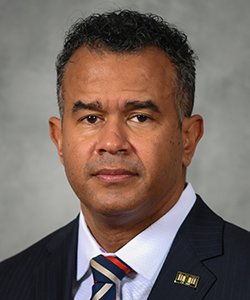
Alonzo Washington
100% support rate
Top opponent
Jason Gallion
0% support rate
Ranked legislators
10
5 support · 5 oppose
Key legislators

Who's moving healthcare in Maryland

Legislators moving healthcare in Maryland
Legislator Party Stance Support rate Votes
Alonzo Washington
Alonzo Washington Senate · District 22
D
Strong +
100% 68
Brian Feldman
Brian Feldman Senate · District 15
D
Strong +
100% 70
C.T. Wilson
C.T. Wilson House · District 28
D
Strong +
100% 98
Kevin Harris
Kevin Harris Senate · District 27
D
Strong +
100% 70
Pam Beidle
Pam Beidle Senate · District 32
D
Strong +
100% 71
Jason Gallion
Jason Gallion Senate · District 35
R
Strong −
0% 71
Jack Bailey
Jack Bailey Senate · District 29
R
Strong −
0% 69
Johnny Salling
Johnny Salling Senate · District 6
R
Strong −
4% 71
J.B. Jennings
J.B. Jennings Senate · District 7
R
Strong −
4% 71
Mary Beth Carozza
Mary Beth Carozza Senate · District 38
R
Strong −
5% 70
Showing 291–300 of 366 bills

All healthcare bills

passed · Maryland · House of Delegates Mar 18, 2026

HB 599: Health - Licensure of Hospitals - Ownership Requirements

HB 599 requires hospitals seeking a new license or undergoing ownership changes after October 1, 2026, to be federally recognized nonprofit organizations registered with the state. Specifically, it mandates that hospitals qualifying for licensure on or after that date must operate as nonprofits under federal law and maintain that status as a condition of their license. The bill also prohibits transferring ownership of any licensed hospital after October 1, 2026, to any entity other than another nonprofit organization. This directly affects hospitals seeking new licenses, renewing licenses, or changing ownership in Maryland after the effective date.
in committee · Maryland · Senate Jan 29, 2026

SB 392: Maryland Technology Development Corporation - Long COVID Innovation Grant and Loan Program

SB 392 requires Maryland's Technology Development Corporation (MTDC) to create a grant and loan program funding research, product development, and manufacturing for Long COVID treatments. The program establishes the Maryland Long COVID Research Fund (a permanent, nonlapsing fund) and mandates MTDC to contract with an independent scientific review committee to evaluate and recommend funding for proposals. It directly affects public and private entities in Maryland conducting Long COVID research, requiring them to meet criteria set by MTDC for review and oversight. The bill defines Long COVID using the National Academy of Sciences' 2024 standard and ensures funds support treatment innovation through structured application and progress reviews.
signed · Maryland · House of Delegates May 26, 2026

HB 684: Health Insurance - Material Changes to Provider Networks - Notification and Special Enrollment Period

HB 684 requires health insurance companies to notify members 60 days in advance if a provider (including primary care or behavioral health providers) is removed from their network, unless termination relates to fraud, abuse, or licensure issues. It mandates that members affected by such changes receive a 90-day special enrollment period to continue seeing those providers, along with clear contact information for filing complaints. Insurance companies must also notify the Maryland Insurance Commissioner about network changes at least 60 days before termination and update their access plans within 5 business days of the change. This bill directly affects health insurance members who lose provider access and requires insurers to follow specific transparency and transition procedures.
signed · Maryland · House of Delegates Apr 28, 2026

HB 347: Workers' Compensation - Occupational Disease Presumptions - Hypertension

HB 347 adds hypertension to the list of occupational diseases presumed work-related for specific emergency responders in Maryland. It creates a legal presumption that firefighters, firefighting instructors, rescue squad members, advanced life support unit members, and State Fire Marshal staff with hypertension are entitled to workers' compensation benefits if they meet four conditions: diagnosed by a provider, prescribed hypertension medication for 90+ consecutive days, completed 2+ years of cumulative service in the state, and are currently employed in that role. This bill modifies Maryland’s workers’ compensation law (specifically Sections 9-502 and 9-503) to expand eligibility for these occupations without requiring separate proof that hypertension resulted from their job duties. It directly affects these emergency personnel seeking compensation for hypertension-related disability or death.
in committee · Maryland · Senate Jan 23, 2026

SB 264: Drinking Water - Regulation - Control and Prevention of Waterborne Disease

SB 264 establishes new requirements to prevent waterborne diseases like Legionnaires' disease in Maryland's public water systems. It mandates minimum disinfectant residual levels, regular testing for pathogens, and specific water management programs for building owners/operators. Public water suppliers must provide notices about system disruptions and maintain records, while the Maryland Department of Health must create a public awareness campaign and publish compliance data online. Violations could result in civil penalties up to $25,000 per day for larger systems, with collected fines funding health initiatives. The bill directly affects all public water systems serving 15+ connections or 25+ people, including municipal suppliers and building operators.
signed · Maryland · Senate Apr 28, 2026

SB 394: Public Health - Expedited Partner Therapy - Bacterial Vaginosis and Licensed Certified Midwives

SB 394 adds bacterial vaginosis to Maryland's list of conditions eligible for expedited partner therapy (EPT). This allows certain healthcare providers - like physicians, advanced practice nurses, and pharmaciststo prescribe antibiotics to a sexual partner of a diagnosed patient without requiring a personal examination of the partner. The law aims to prevent reinfection in the diagnosed patient and stop disease spread, expanding existing EPT rules that previously covered only chlamydia, gonorrhea, and trichomoniasis. It applies to public and private health care settings in Maryland starting October 1, 2026.
Sub-Topics Public Health
in committee · Maryland · House of Delegates Jan 20, 2026

HB 162: Department of Aging - Maryland Access Point - Dementia-Friendly Communities

HB 162 requires Maryland’s Department of Aging to provide resources, training, grants, and support to the Maryland Access Point network to establish dementia-friendly communities. It directly affects individuals living with dementia, their families, and caregivers by mandating community-based efforts to reduce stigma, improve physical accessibility (like clear signage), and promote social inclusion. Key provisions include requiring the Access Point network to create public educational materials about dementia support and ensuring communities implement specific actions - such as making environments safer, enabling participation in community life, and training local businesses and responders. The bill updates Maryland’s Aging and Disability Resource Center Program to prioritize dementia-friendly initiatives, effective October 2026.
in committee · Maryland · House of Delegates Feb 10, 2026

HB 341: Maryland Commission for Boys' and Men's Health - Establishment

HB 341 establishes the Maryland Commission for Boys’ and Men’s Health within the Maryland Department of Health. The 18-member commission, appointed by the Governor, Senate President, and House Speaker, will review health data on conditions like heart disease and cancer, promote preventive care through public awareness, and develop strategies to reduce health disparities affecting boys and men. The commission must collaborate with community partners to address issues like suicide rates and limited access to screenings, while ensuring culturally responsive health approaches. It will operate without paid membership but can accept federal or private funding for its work. The bill creates a coordinating body to guide state efforts, not a new service or funding program.
Sub-Topics Primary Care
passed · Maryland · House of Delegates Mar 20, 2026

HB 373: State Board of Dental Examiners - Disciplinary Action and Unannounced Inspections

HB 373 allows Maryland's State Board of Dental Examiners to conduct unannounced inspections of non-hospital dental offices to verify compliance with CDC infection control guidelines. It updates disciplinary rules for dentists, dental hygienists, and dental assistants by adding failure to follow these guidelines as grounds for license denial, suspension, or revocation. The bill also requires certified expanded function dental assistants to be properly trained and supervised, and prohibits employers from using uncertified assistants or violating specific practice standards. These changes directly affect dental professionals and their practices across Maryland.
Sub-Topics Hospitals
passed · Maryland · Senate Apr 10, 2026

SB 433: Family Law - Temporary and Final Protective Orders - Duration

SB 433 extends the timeframe for temporary protective orders in Maryland from 7 to 14 days after service and requires final protective order hearings to occur within 14 days of service, rather than 7 days. It also adds new provisions allowing judges to order respondents to pay specific costs incurred due to abuse, including medical/dental care, property repairs, shelter, transportation, court fees, and attorney fees. The bill clarifies that monetary awards under these provisions do not prevent petitioners from seeking additional compensation later for unawarded expenses. This directly affects individuals seeking protection from abuse (petitioners) and those accused of abuse (respondents) in family law cases. The changes take effect October 1, 2026.
Showing 291 to 300 of 366 bills
Previous 1 29 30 31 37 Next