Issue · Healthcare

Healthcare

Every healthcare bill, vote, and legislator stance in Maryland, automatically classified by Maddy, our AI policy reader.

Total bills
366
2026 Regular Session
Top supporter
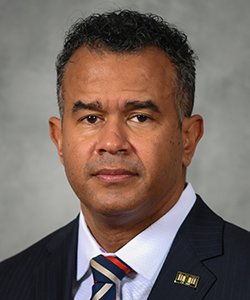
Alonzo Washington
100% support rate
Top opponent
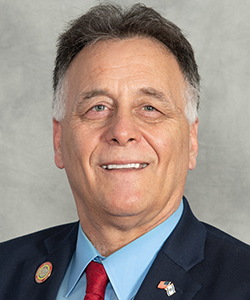
Jason Gallion
0% support rate
Ranked legislators
10
5 support · 5 oppose
Key legislators

Who's moving healthcare in Maryland

Legislators moving healthcare in Maryland
Legislator Party Stance Support rate Votes
Alonzo Washington
Alonzo Washington Senate · District 22
D
Strong +
100% 68
Brian Feldman
Brian Feldman Senate · District 15
D
Strong +
100% 70
C.T. Wilson
C.T. Wilson House · District 28
D
Strong +
100% 98
Kevin Harris
Kevin Harris Senate · District 27
D
Strong +
100% 70
Pam Beidle
Pam Beidle Senate · District 32
D
Strong +
100% 71
Jason Gallion
Jason Gallion Senate · District 35
R
Strong −
0% 71
Jack Bailey
Jack Bailey Senate · District 29
R
Strong −
0% 69
Johnny Salling
Johnny Salling Senate · District 6
R
Strong −
4% 71
J.B. Jennings
J.B. Jennings Senate · District 7
R
Strong −
4% 71
Mary Beth Carozza
Mary Beth Carozza Senate · District 38
R
Strong −
5% 70
Showing 271–280 of 366 bills

All healthcare bills

in committee · Maryland · House of Delegates Mar 19, 2026

HB 714: Health - Abortion Data - Submission to the Centers for Disease Control and Prevention

HB 714 requires the Maryland Department of Health to share abortion-related data with the Centers for Disease Control and Prevention (CDC) when requested, unless sharing would violate federal or state law. The bill directly affects Maryland's health department, mandating data submission under specific conditions. Key provisions include an exception allowing the department to withhold data if legal conflicts arise, and it takes effect October 1, 2026. This law updates Maryland's health reporting requirements to align with federal data collection needs.
Sub-Topics Women's Health Tags Data Reporting
signed · Maryland · Senate Apr 14, 2026

SB 24: State Emergency Medical Services Board - Public Access Automated External Defibrillator Program - Revisions

SB 24 revises Maryland's Public Access Automated External Defibrillator (AED) Program to improve oversight and accessibility. It requires most organizations using public AEDs to appoint an AED coordinator responsible for maintenance, reporting, and emergency notification, while exempting law enforcement agencies from needing certificates for AEDs in patrol vehicles. The bill also repeals outdated requirements for regional AED committees and clarifies that grocery stores and restaurants are not subject to certain AED registration rules. These changes aim to streamline compliance for entities managing public AEDs, including schools, businesses, and public facilities.
signed · Maryland · House of Delegates Apr 14, 2026

HB 442: Professional Liability Insurance Coverage - Nursing Homes, Assisted Living Facilities, Nurse Midwives, and Licensed Certified Midwives - Disclosure (Nyeli Rose Lewis Act of 2026)

HB 442 requires nursing homes, assisted living facilities, and nurse midwives in Maryland to disclose their professional liability insurance status to residents and potential residents. Specifically, these providers must provide written notice (including electronic communication) if they lack coverage or if coverage has lapsed and not been renewed, with timing requirements: at the first visit for potential residents or at application for admission, and within 30 days of a lapse for current residents. The bill also mandates that facilities without coverage post a conspicuous notice for residents and guests. This law does not change insurance requirements but ensures transparency about coverage gaps. It directly affects residents and potential residents of these care facilities by providing clear, timely disclosure of insurance status.
in committee · Maryland · House of Delegates Feb 10, 2026

HB 202: Public Health - Social Isolation and Loneliness Pilot Grant Program - Establishment

HB 202 establishes Maryland's Social Isolation and Loneliness Pilot Grant Program within the Department of Health to fund community programs addressing social isolation. The program awards up to $20,000 per grant to eligible organizations serving vulnerable populations - including youth, seniors, and rural communities - to cover operating costs like staffing and venue fees for socioemotional support services. It requires a $100,000 FY2028 budget appropriation and mandates a program evaluation by December 2029, reporting on financial use and outcomes. The pilot runs from October 2026 through March 2030, focusing on reducing health impacts of isolation without funding research or capital projects.
in committee · Maryland · House of Delegates Feb 13, 2026

HB 515: Public Health - Local Drug Overdose Fatality Review Teams - Membership

HB 515 requires that hospital representatives on Maryland's county drug overdose fatality review teams hold specific leadership roles - such as vice president, chief medical officer, or assistant medical officer - instead of any hospital staff member. This change directly affects county-level review teams that analyze overdose deaths, as well as the hospitals participating in them. The bill amends existing law to specify these qualifications for hospital representatives within the team membership structure. It does not create new teams or funding but sets a clearer standard for who can serve in this role. The law takes effect October 1, 2026.
died · Maryland · House of Delegates Feb 9, 2026

HB 209: Health Care Providers - Assisted Reproductive Treatment - Informed Consent and Fraud

HB 209 requires health care providers to obtain explicit, written consent from both patients receiving assisted reproductive treatment (like IVF or egg/sperm donation) and donors before using their reproductive material. It prohibits providers from using their own sperm or eggs without patient consent, misrepresenting donor information (such as genetic history), or using donor material without proper consent. Violations can result in civil penalties (up to $50,000 per violation) or felony charges (up to 10 years in prison) for intentional misuse. The bill directly affects fertility clinics, patients seeking treatment, and donors, ensuring transparency and accountability in reproductive care.
passed · Maryland · House of Delegates Feb 13, 2026

HB 60: Sickle Cell Disease - Institutions of Higher Education - Policies, Procedures, and Educational Campaigns (Kaitlyn's Law)

This bill requires Maryland colleges and universities to provide reasonable accommodations to students with sickle cell disease and prohibits denying them access to facilities or services based on their diagnosis. It mandates the Maryland Department of Health to create an education campaign for campus staff, develop guidelines for supporting students with sickle cell disease, and compile training materials for faculty and administrators. The law directly affects students with sickle cell disease at public and private institutions of higher education in Maryland, as well as campus staff responsible for implementing these policies. The requirements take effect October 1, 2026, with institutions needing to establish clear reporting procedures for violations.
Sub-Topics Higher Education
in committee · Maryland · Senate Feb 4, 2026

SB 416: Health Maintenance Organizations - Payments to Nonparticipating Providers - Reimbursement Rate

SB 416 sets new minimum reimbursement rates that Maryland health maintenance organizations (HMOs) must pay to nonparticipating health care providers, such as doctors and hospitals not under contract with an HMO, for specific services. For trauma physicians treating trauma patients in designated trauma centers, HMOs must pay the greater of 140% of the Medicare rate (adjusted for inflation) or the 2001 rate (adjusted for inflation). For other services like routine office visits, HMOs must pay at least 125% of the rate they paid in 2019 (adjusted for inflation) or 140% of the Medicare rate from 2008 (adjusted for inflation), whichever is higher. This bill directly affects HMOs and nonparticipating providers by standardizing these minimum payment rates across Maryland.
Sub-Topics Medicare
passed · Maryland · House of Delegates Mar 23, 2026

HB 658: Maryland Department of Health - Forensic Review Boards and Community Forensic Aftercare Program

HB 658 establishes Maryland’s Community Forensic Aftercare Program within the Department of Health. The program monitors two groups: individuals found not criminally responsible due to mental illness who are on conditional release, and people with mental illness or intellectual disability requiring community monitoring under specific legal circumstances. Key provisions require the Program to create a community monitoring board to make decisions about conditional release and out-of-state travel for these individuals. The bill amends existing criminal procedure and health codes to implement this new oversight structure, replacing outdated sections with the new program framework.
Sub-Topics Mental Health
in committee · Maryland · House of Delegates Jan 23, 2026

HB 468: Health and Taxation - Digital Social Media Services and the Mental Health Care Fund for Children and Youth

HB 468 establishes a new "Mental Health Care Fund for Children and Youth" in Maryland, funded by a tax on digital social media companies' annual revenues within the state. The bill imposes a tax on qualifying digital social media services (e.g., platforms generating revenue from Maryland users) and directs all collected revenue into this dedicated, non-lapsing fund. The fund must be used exclusively to improve access to mental health care services for children and youth, supplementing existing state funding without replacing it. The Comptroller will distribute the tax revenue to the fund, which the Secretary will administer per the new provisions in the Health and Tax codes.
Showing 271 to 280 of 366 bills
Previous 1 27 28 29 37 Next