Issue · Healthcare

Healthcare

Every healthcare bill, vote, and legislator stance in Maryland, automatically classified by Maddy, our AI policy reader.

Total bills
366
2026 Regular Session
Top supporter
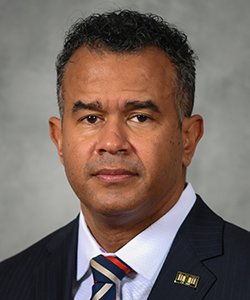
C.T. Wilson
100% support rate
Top opponent
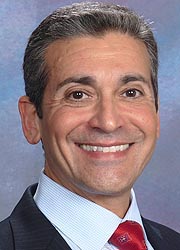
Jason Gallion
0% support rate
Ranked legislators
10
5 support · 5 oppose
Key legislators

Who's moving healthcare in Maryland

Legislators moving healthcare in Maryland
Legislator Party Stance Support rate Decisive votes
C.T. Wilson
C.T. Wilson House · District 28
D
Strong +
100% 34
Ben Kramer
Ben Kramer Senate · District 19
D
Strong +
100% 23
Bill Ferguson
Bill Ferguson Senate · District 46
D
Strong +
100% 23
Carl Jackson
Carl Jackson Senate · District 8
D
Strong +
100% 23
Clarence Lam
Clarence Lam Senate · District 12
D
Strong +
100% 23
Jason Gallion
Jason Gallion Senate · District 35
R
Strong −
0% 23
Jack Bailey
Jack Bailey Senate · District 29
R
Strong −
0% 22
J.B. Jennings
J.B. Jennings Senate · District 7
R
Strong −
4% 23
Johnny Salling
Johnny Salling Senate · District 6
R
Strong −
4% 23
Mary Beth Carozza
Mary Beth Carozza Senate · District 38
R
Strong −
5% 22
Showing 231–240 of 366 bills

All healthcare bills

in committee · Maryland · House of Delegates Feb 9, 2026

HB 944: Maryland Health Care Commission - Certificates of Need and Material Change Transactions

HB 944 modifies Maryland's health care oversight rules by ending an exemption that previously allowed certain hospital mergers to bypass certificate of need requirements. It requires health care entities (like hospitals and ambulatory surgical facilities) to notify both the Maryland Health Care Commission and the public before making major ownership changes. The bill establishes a public interest review process to evaluate these transactions, using specific criteria to determine if they align with community needs. The Executive Director of the Commission must decide on such transactions within a set timeframe, ensuring faster oversight of significant health care market shifts. This directly affects hospitals and health care providers planning major ownership changes in Maryland.
Sub-Topics Hospitals
died · Maryland · House of Delegates Feb 23, 2026

HB 795: Health Insurance - Artificial Intelligence - Grievance Process and Reporting (AI Health Insurance Accountability Act of 2026)

HB 795 requires Maryland health insurance companies to provide human review for any coverage denial made using artificial intelligence, algorithms, or software tools. Insurers must also report quarterly aggregated data on these AI-related denials, including claim types, member demographics (race, gender, profession), and policy details (individual, group, or exchange plans). These reports must be submitted to the state insurance commissioner and include the total number of AI-related grievances reviewed. The bill directly affects health insurers operating in Maryland and impacts members who face AI-driven coverage decisions.
in committee · Maryland · House of Delegates Feb 11, 2026

HB 1145: Juvenile Records - Access by Baltimore City Mayor's Office

HB 1145 allows Baltimore City's Mayor's Office of Neighborhood Safety and Engagement, Mayor's Office of Children and Family Success, and Mayor's Office of African American Male Engagement to access and use juvenile records when providing services to a child and developing a treatment plan. The bill clarifies that existing confidentiality rules for juvenile records do not block these specific city offices from accessing records under these circumstances. It also makes these offices liable for unauthorized release of any accessed records. This change affects how these three city offices handle juvenile records for service delivery and treatment planning.
in committee · Maryland · House of Delegates Mar 18, 2026

HB 1527: Complementary and Alternative Health Care - Practice Authorized (Complementary and Alternative Health Care Practice Act)

HB 1527 authorizes complementary and alternative health care practitioners (such as acupuncturists, chiropractors, and massage therapists) to practice without state licenses, certifications, or authorizations. It removes existing licensing requirements for these fields by repealing related sections of Maryland law and establishing new regulations under a dedicated Title 22 for "Complementary and Alternative Health Care Practitioners." Practitioners must now comply with specific requirements and limitations outlined in the new Title 22 provisions instead of traditional licensing rules. This directly affects current and future practitioners in these health care specialties who would no longer need formal licenses to operate.
Sub-Topics Medical Licensing
in committee · Maryland · House of Delegates Feb 16, 2026

HB 1603: Health Insurance - Vision Benefits - Regulation of Insurers and Vision Benefit Managers

HB 1603 establishes new regulations for vision benefit plans and discount plans in Maryland. It requires insurers and vision benefit managers to disclose specific information (like legal name, addresses, and regulatory oversight) on their websites and in communications. The bill also sets rules for contracts with eye care providers (optometrists and ophthalmologists), prohibits certain restrictive contract terms, and mandates fair reimbursement procedures. These changes directly affect insurers, vision benefit managers, and eye care providers participating in vision benefit programs. The bill repeals an existing section and adds new sections (15-2201-15-2213) to Maryland’s Insurance Article.
Sub-Topics Insurance
in committee · Maryland · House of Delegates Feb 11, 2026

HB 448: Health Facilities - Certified Recovery Residences - Unannounced Inspections

This bill requires Maryland's Department of Health to conduct at least two unannounced annual inspections of each certified recovery residence to verify compliance with health and safety standards. Facilities found noncompliant must correct deficiencies within one month of receiving notice; failure to do so may result in certification revocation. The law amends existing health code (§ 19-2502.1) to establish this inspection schedule and remediation process. It directly affects certified recovery residences operating in Maryland under the state's credentialing system.
signed · Maryland · House of Delegates May 12, 2026

HB 625: Human-Relevant Research Fund - Collection of Contributions - Responsible Entity

HB 625 shifts responsibility for collecting fees from research facilities to the Maryland Department of Agriculture, replacing the current system under the Department of Health. It requires facilities submitting USDA Form 7023 (for animal testing) to pay annual contributions based on animal count: $5,000 for ≤100 animals, $10,000 for 101-500, $55,000 for 501-5,000, and $75,000 for over 5,000. Funds collected will support the Human-Relevant Research Fund established under Maryland’s Economic Development Article. The bill repeals existing health code provisions and creates new agriculture code sections for this fee structure, effective October 2026.
signed · Maryland · House of Delegates Apr 14, 2026

HB 278: Human Services - Department of Aging and Commission on Aging (The Longevity Ready Maryland Act)

HB 278, the "Longevity Ready Maryland Act," requires Maryland's Secretary of Aging to lead implementation of the Longevity Ready Maryland Plan. This plan aims to coordinate state services for older adults by evaluating their needs, assessing existing programs, and fostering cross-sector collaboration across health, housing, employment, and social services. The bill mandates annual reports to the governor and legislature on progress, updates the Commission on Aging's role, and requires a comprehensive statewide plan to be revised every four years. It directly affects older Marylanders, the Department of Aging, local area agencies on aging, and state agencies responsible for aging-related services.
Sub-Topics Long-Term Care Tags Seniors
in committee · Maryland · House of Delegates Jan 15, 2026

HB 117: Public Schools - Airway Clearing Device Availability and Use - Policy (Bowen Levy Airway Clearing Device Act)

HB 117 requires every Maryland public school to have at least one airway clearing device (a portable suction device for choking emergencies) and mandates that county school boards establish policies allowing school nurses and trained staff to use these devices during choking incidents. The policy must specify storage locations (near eating areas) and require staff training on device use and choking emergency response. Schools must report all device uses to the State Department of Education via a standardized form, and personnel acting in good faith during emergencies are protected from personal liability. This bill directly affects public schools, county boards, and school staff by standardizing emergency response protocols for choking incidents.
Sub-Topics Student Health
signed · Maryland · House of Delegates May 26, 2026

HB 340: School Psychologist Interstate Licensure Compact

HB 340 would allow Maryland to join the School Psychologist Interstate Licensure Compact, enabling licensed school psychologists from member states to practice in Maryland without reapplying for separate state licenses. This directly affects school psychologists seeking to work across state lines, particularly in areas facing staffing shortages. The compact establishes standardized requirements for multistate licensure and creates a commission to manage the agreement, while ensuring states maintain authority to protect public safety through their own scope-of-practice laws. The goal is to improve access to school psychological services by streamlining licensing for qualified professionals.
Sub-Topics Medical Licensing
Showing 231 to 240 of 366 bills
Previous 1 … 23 24 25 … 37 Next