Issue · Healthcare

Healthcare

Every healthcare bill, vote, and legislator stance in Maryland, automatically classified by Maddy, our AI policy reader.

Total bills
366
2026 Regular Session
Top supporter
C.T. Wilson
100% support rate
Top opponent
Jason Gallion
0% support rate
Ranked legislators
10
5 support · 5 oppose
Key legislators

Who's moving healthcare in Maryland

Legislators moving healthcare in Maryland
Legislator Party Stance Support rate Decisive votes
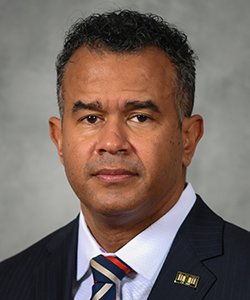
C.T. Wilson
C.T. Wilson House · District 28
D
Strong +
100% 34
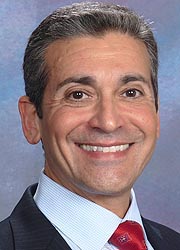
Ben Kramer
Ben Kramer Senate · District 19
D
Strong +
100% 23
Bill Ferguson
Bill Ferguson Senate · District 46
D
Strong +
100% 23
Carl Jackson
Carl Jackson Senate · District 8
D
Strong +
100% 23
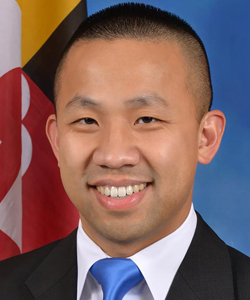
Clarence Lam
Clarence Lam Senate · District 12
D
Strong +
100% 23
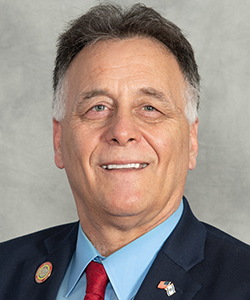
Jason Gallion
Jason Gallion Senate · District 35
R
Strong −
0% 23
Jack Bailey
Jack Bailey Senate · District 29
R
Strong −
0% 22
J.B. Jennings
J.B. Jennings Senate · District 7
R
Strong −
4% 23
Johnny Salling
Johnny Salling Senate · District 6
R
Strong −
4% 23
Mary Beth Carozza
Mary Beth Carozza Senate · District 38
R
Strong −
5% 22
Showing 141–150 of 366 bills

All healthcare bills

signed · Maryland · House of Delegates May 26, 2026

HB 1093: Health Insurance - Provider Panels - Requirements

HB 1093 requires health insurance companies (carriers) to change how they manage provider panels. It removes application fees for providers seeking panel inclusion, mandates specific notice timelines for denials, and requires carriers to update provider directories more frequently. The bill also expands the types of providers carriers cannot restrict (like mental health specialists) and changes rules for reimbursing patients for care from nonparticipating providers. These changes directly affect health insurance companies, doctors/hospitals seeking panel access, and patients navigating provider networks.
in committee · Maryland · Senate Feb 12, 2026

SB 797: Maryland Medical Assistance Program and Health Insurance - Claims for Reimbursement - Downcoding

SB 797 prohibits insurers, nonprofit health service plans, HMOs, and managed care organizations from downcoding healthcare claims (reducing reimbursement without proper justification) in specific situations. The bill requires these entities to provide healthcare providers with a 30-day notice before downcoding, including the specific reason, original and revised codes, and an opportunity to submit additional documentation. It bans practices like using algorithms without clinical review, downcoding based solely on diagnosis codes, or targeting providers treating complex conditions. This directly affects healthcare providers and insurers by establishing clear rules for claim reimbursement and appeal processes.
Sub-Topics Insurance
in committee · Maryland · House of Delegates Feb 13, 2026

HB 1385: Health Insurance - Use of Artificial Intelligence - Human Evaluation

HB 1385 requires health insurers and pharmacy benefit managers using artificial intelligence (AI) for medical treatment reviews (utilization review) to include licensed healthcare professionals in key evaluations. Specifically, it mandates that AI decisions must be reviewed by a licensed professional who can question, modify, or override AI determinations based on a patient’s full medical history and individual circumstances. The bill also requires quarterly reviews of AI performance using human assessments of real-world health outcomes to improve accuracy and safety. These provisions apply to all AI tools used in utilization review processes within Maryland’s health insurance system, effective October 1, 2026.
in committee · Maryland · House of Delegates Feb 13, 2026

HB 1134: Pharmaceutical Drugs and Devices - Gifts to Health Care Professionals - Prohibition

HB 1134 prohibits pharmaceutical and medical device sellers from giving healthcare professionals gifts exceeding $50 in total retail value per calendar year. It directly affects drug/device manufacturers and healthcare professionals who prescribe or recommend products, including their organizations and employees. The bill defines "gifts" broadly to include payments, food, travel, and entertainment (excluding peer-reviewed medical literature) and sets a clear annual $50 limit. Violations are punishable as misdemeanors with fines up to $5,000 or six months in jail. The law takes effect October 1, 2026.
in committee · Maryland · House of Delegates Feb 19, 2026

HB 739: Health Insurance - Prompt Payment of Claims - Requirements

HB 739 requires health insurers, nonprofit health plans, and HMOs to pay or clearly explain claim refusals within 30 days of receiving a claim. It mandates that insurers provide specific, detailed notices when denying payment (including exact missing information) and treats any refusal as an official denial. The bill also limits fees for electronic payments (e.g., credit card) by requiring advance notice to providers and offering fee-free alternatives, while extending the time providers have to submit claims (180 days) and appeal denials (90 days). This directly affects insurers and providers by standardizing payment timelines and reducing opaque claim denials.
Sub-Topics Insurance
in committee · Maryland · House of Delegates Feb 19, 2026

HB 865: Health Insurance - Remittance Advice - Interest on Late-Paid Claims

HB 865 requires health insurers, nonprofit health service plans, and health maintenance organizations (HMOs) to provide clear remittance advice that separately identifies and itemizes interest owed on late-paid claims. Specifically, it mandates that interest rates apply at 1.5% for claims unpaid 31-60 days, 2% for 61-120 days, and 2.5% after 120 days. This interest is automatically included in the reimbursement payment without requiring claim filers to submit additional claims for the interest. The bill directly affects insurers and the healthcare providers or patients who file claims, ensuring transparency in late-payment calculations. It takes effect October 1, 2026.
Sub-Topics Insurance
passed · Maryland · House of Delegates Mar 23, 2026

HB 1143: Public Health - Office of the Chief Medical Examiner - Perinatal Autopsies (Lung Float Test Ban)

HB 1143 bans the use of the "lung float test" (a hydrostatic lung test) during perinatal autopsies in Maryland. It directly affects the Chief Medical Examiner, deputy examiners, assistant examiners, and authorized pathologists when determining if a death was a stillbirth or occurred after a live birth. The bill prohibits this specific test method and allows parents, guardians, or legal representatives to file a civil lawsuit if the test is used unlawfully. Violations also become grounds for disciplinary action against medical examiners.
Sub-Topics Public Health
in committee · Maryland · Senate Feb 12, 2026

SB 942: Assisted Outpatient Treatment - Surrender or Seizure of Firearms

SB 942 requires courts to order individuals under court-ordered assisted outpatient treatment to surrender all firearms to law enforcement if the court determines they pose a risk of causing physical harm to themselves or others with firearm access. This applies only during the duration of the treatment order and affects people subject to such court orders under Maryland's mental health law. The bill establishes procedures for surrender, storage of firearms by law enforcement, and return upon order expiration, including requiring officers to provide receipts and information on reclaiming firearms. It also allows courts to issue search warrants for unreturned firearms and use contempt powers for violations. The law modifies existing Maryland code sections governing assisted outpatient treatment to include these firearm safety measures.
Sub-Topics Mental Health
signed · Maryland · House of Delegates Apr 28, 2026

HB 1376: Maryland Medical Assistance Program, Maryland Children's Health Program, and Health Insurance - Transfers to Special Pediatric Hospitals - Requirements

HB 1376 requires Maryland's Medicaid (Maryland Medical Assistance Program) and Children's Health Program to provide a review within 3 business days for transfer requests to special pediatric hospitals when requested by the hospital or referring provider. It mandates retrospective reviews if a transfer is denied as "not medically necessary," with providers reimbursed for "administrative days" (days a patient remains without transfer) during the review process. The bill directly affects special pediatric hospitals - facilities serving children under 22 or those 2+ years old with co-occurring physical/behavioral health conditions - and their referring providers. Key provisions include eliminating prior authorization requirements for transfers while establishing strict timelines and reimbursement for administrative delays during appeals. This bill updates existing Medicaid and insurance rules to streamline transfers to specialized pediatric care facilities.
passed · Maryland · House of Delegates Apr 13, 2026

HB 797: Employment Discrimination - Fire and Rescue Public Safety Employees - Use of Medical Cannabis

HB 797 prohibits employers from discriminating against fire and rescue public safety employees who use medical cannabis, provided they have a valid written certification from a licensed healthcare provider under Maryland's medical cannabis program. The bill modifies existing law to clarify that an employer cannot take adverse employment actions (like termination or denial of promotion) solely due to medical cannabis use, as long as the employee meets the state's certification requirements. It updates definitions in Maryland law to ensure fire and rescue employees qualify for the same protections as other medical cannabis patients under the existing program. The law does not override workplace safety rules or require employers to accommodate cannabis use during work hours.
Showing 141 to 150 of 366 bills
Previous 1 … 14 15 16 … 37 Next