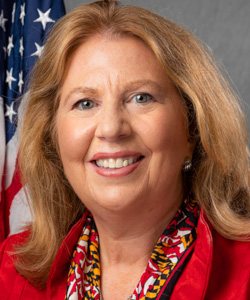
This bill requires Maryland hospitals to screen patients in emergency departments for pregnancy-related medical emergencies. If a patient has such a condition, hospitals must stabilize it through appropriate treatment - including pregnancy termination when medically necessary - before transferring them, and cannot transfer unstable patients without following federal emergency transfer rules. It prohibits hospitals from retaliating against staff who refuse transfers of unstable patients or report violations, and imposes civil penalties (up to $50,000) for noncompliance. The law applies to all Maryland hospitals and aims to ensure timely, stable care for pregnant patients in medical crises.
This bill establishes the Maryland Advanced Manufacturing Grant Program within the Maryland Technology Development Corporation to support companies specializing in regenerative medicine and other advanced manufacturing sectors. The program will provide grants that recipients can use exclusively for acquiring or renovating manufacturing space, improving infrastructure, and purchasing necessary equipment. A dedicated fund will be created to hold grant money, with interest earnings credited back to the fund rather than the state's general fund. The Corporation will work with the Maryland Stem Cell Research Commission to set eligibility criteria, application procedures, and award amounts, with the program taking effect on July 1, 2026.
HB 625 shifts responsibility for collecting fees from research facilities to the Maryland Department of Agriculture, replacing the current system under the Department of Health. It requires facilities submitting USDA Form 7023 (for animal testing) to pay annual contributions based on animal count: $5,000 for ≤100 animals, $10,000 for 101-500, $55,000 for 501-5,000, and $75,000 for over 5,000. Funds collected will support the Human-Relevant Research Fund established under Maryland’s Economic Development Article. The bill repeals existing health code provisions and creates new agriculture code sections for this fee structure, effective October 2026.
HB 1109 creates the Maryland Medical Reserve Corps, a statewide volunteer network for emergencies like disease outbreaks or disasters, managed by the Maryland Department of Health. It requires the Department to notify county health officers about procurement opportunities for electronic health records systems, allowing counties to join without state approval if fully funded locally. The bill establishes a Public Health Workforce Development Fund (using interest earnings and transfers from another fund) and mandates the Department of Legislative Services to assess health equity impacts of new legislation. These changes directly affect county health departments, the Department of Health, and public health workforce planning.
HB 1367 establishes a Commission on Re-Imagining Health Care in Maryland to study and recommend changes for a new statewide healthcare system. The commission, composed of 20 appointed members including state officials, healthcare providers, insurers, county representatives, and community members, will examine how healthcare is delivered in other regions and address issues like provider shortages, cost balancing, and system integration. It will specifically study how to create a patient-centered system covering all health needs, eliminate access barriers, and ensure financial sustainability for all Maryland residents. The commission’s final recommendations, due by 2028, would guide potential future policy changes but do not enact any immediate healthcare reforms.
SB 772 requires the Maryland Department of Health to create and maintain a public database of employment training and job placement programs. The database will help residents find opportunities that can lead to eligibility for Medicaid (Maryland Medical Assistance Program) and SNAP (Supplemental Nutrition Assistance Program), including program details, application steps, and direct contact options. The Department must update the database every 30 days and assist individuals in enrolling in listed programs. Other state agencies, including the Department of Labor and Department of Human Services, must recommend programs for inclusion. This bill directly affects Maryland residents seeking to improve employment prospects while maintaining access to critical health and nutrition benefits.
HB 1016 invalidates noncompete and conflict-of-interest clauses in employment contracts for certain employees if their employer relocates the majority of its employees or principal business location outside Maryland. It directly affects low-wage workers (earning ≤150% of state minimum wage), healthcare workers providing direct patient care (earning ≤$350,000 annually), and veterinary professionals. For high-earning healthcare workers ($350,000+), the bill allows limited 1-year noncompete restrictions within 10 miles of their prior workplace. The law takes effect October 1, 2026, and applies only to contracts signed after that date.
HB 1012 authorizes counties and municipalities in Maryland to establish local suicide fatality review teams, which directly affect local governments and public health agencies. These teams must include representatives from health departments, law enforcement, schools, hospitals, and mental health professionals to review suicide cases and identify systemic factors. The bill requires teams to coordinate with the state suicide review committee and mandates confidentiality for case discussions, exempting meetings about individual cases from public disclosure laws and protecting sensitive information. It also prohibits public disclosure of identifying details about deceased individuals or those affected by suicide, ensuring privacy while allowing teams to develop prevention recommendations.
SB 719 restricts the land application of sewage sludge containing per- and polyfluoroalkyl substances (PFAS) above specific concentration levels, effective after a set date. It requires monitoring for PFAS in sewage sludge and products containing it, authorizes stricter pretreatment rules for industrial users discharging PFAS, and allows local jurisdictions to set fees for such discharges. The bill directly affects sewage sludge generators (like wastewater treatment facilities), industrial users, and local regulators by mandating new PFAS testing, usage limits, and fee structures. It amends Maryland’s environmental code to establish these requirements without changing existing land application rules for sludge below the new PFAS thresholds.
HB 772 establishes a workgroup within Maryland's Health Care Commission to develop fairer reimbursement methods for certified community behavioral health clinics and outpatient mental health centers. The workgroup will study current costs, staffing models, and federal requirements to create transparent, cost-based payment systems, comparing approaches used in other states. It must submit an interim report by December 2026 and a final report by October 2027 with specific recommendations, implementation options, and fiscal estimates. The bill does not require immediate rate changes or new funding, but rather sets a process for future policy decisions based on the workgroup's findings.