Issue · Energy

Energy

Every energy bill, vote, and legislator stance in Maryland, automatically classified by Maddy, our AI policy reader.

Total bills
102
2026 Regular Session
Top supporter
Brian Crosby
100% support rate
Top opponent
Tiffany Alston
27% support rate
Ranked legislators
10
5 support · 5 oppose
Key legislators

Who's moving energy in Maryland

Legislators moving energy in Maryland
Legislator Party Stance Support rate Votes
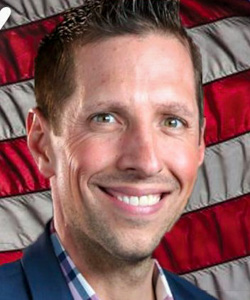
Brian Crosby
Brian Crosby House · District 29B
D
Strong +
100% 49
Mary Washington
Mary Washington Senate · District 43
D
Strong +
100% 56
Dalya Attar
Dalya Attar Senate · District 41
D
Strong +
100% 36
Stuart Schmidt
Stuart Schmidt House · District 33B
R
Strong +
94% 117
Kevin Hornberger
Kevin Hornberger House · District 35B
R
Strong +
85% 126
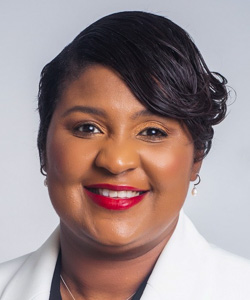
Tiffany Alston
Tiffany Alston House · District 24
D
Oppose
27% 104
Nicole Williams
Nicole Williams House · District 22
D
Oppose
27% 81
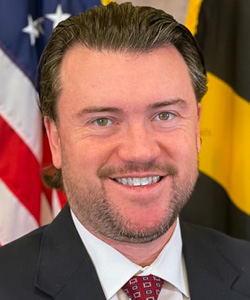
Jeff Ghrist
Jeff Ghrist House · District 36
R
Oppose
29% 92
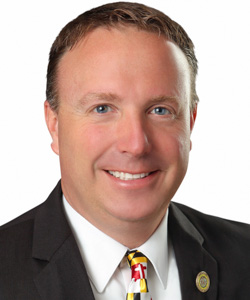
Jeff Long
Jeff Long House · District 27B
D
Oppose
29% 104
Denise Roberts
Denise Roberts House · District 25
D
Oppose
29% 115
Showing 21–30 of 102 bills

All energy bills

in committee · Maryland · House of Delegates Feb 13, 2026

HB 1476: Public Service Commission - Net Energy Metering - Successor Program

HB 1476 modifies Maryland’s net energy metering program by ending the current standard tariff when total customer-generator capacity reaches 3,000 megawatts or a successor program is implemented. It requires the Public Service Commission to develop and implement a new successor program by December 2026, which must balance incentives for distributed solar/wind generation, minimize costs for utility customers, and ensure fair compensation while considering grid needs and energy equity. The successor program will remain available until combined capacity from both the old and new programs reaches 6,000 megawatts. This bill directly affects residential and commercial solar/wind owners, utilities, and all Maryland ratepayers through changes to how distributed energy is compensated and integrated into the grid.
in committee · Maryland · House of Delegates Feb 13, 2026

HB 1525: Regional Greenhouse Gas Initiative, EmPOWER Energy Efficiency Programs, and Community Solar Energy Generating Systems

HB 1525 would require Maryland to withdraw from the Regional Greenhouse Gas Initiative (RGGI) by January 1, 2027, ending the state's participation in a regional program that sets carbon emission limits for power plants. The bill eliminates a surcharge utilities used to recover costs for energy efficiency programs (EmPOWER), directly affecting how these programs are funded. It also limits the amount of electricity that can be purchased or credited under community solar programs. Maryland could rejoin RGGI if all other PJM Interconnection states become full members or if the state becomes a net electricity exporter.
in committee · Maryland · Senate Mar 6, 2026

SB 966: Public Service Commission - Net Energy Metering - Successor Program

SB 966 requires Maryland's Public Service Commission to develop a successor program for net energy metering (NEM) when the current program reaches 3,000 megawatts of combined customer-generator capacity. The new program must incentivize distributed renewable energy (like rooftop solar), minimize long-term costs for all ratepayers, and balance fair compensation for energy exported to the grid with grid benefits and energy equity concerns. The Commission must complete this program development by December 2026, including stakeholder input, and submit a report to the legislature. The successor program will operate until total NEM capacity (current + successor) reaches 6,000 megawatts. This directly affects residential and commercial solar/wind system owners (eligible customer-generators) and electric utilities.
in committee · Maryland · Senate Feb 10, 2026

SB 590: Study on Greenhouse Gas Emissions Economy-Wide Cap-and-Invest Program (Maryland Climate Crisis Equity Act)

SB 590 requires Maryland's Department of the Environment to study the design and implications of an economy-wide cap-and-invest program to help achieve the state's 2045 net-zero greenhouse gas emissions goal. The study, to be developed with agencies like the Climate Change Commission and Energy Administration, will evaluate key elements including which sectors (like electricity generation) to cover, how to protect low-income households through revenue use (e.g., rebates, weatherization), and how to address equity in overburdened communities. It will also assess program mechanics such as allowance distribution, auction design, and potential use of offset credits, building on Maryland's existing experience with the Regional Greenhouse Gas Initiative. The study aims to provide a foundation for future policy decisions on climate funding and emissions reductions.
in committee · Maryland · House of Delegates Feb 12, 2026

HB 1019: School Bus Transition - Propane-Powered School Buses - Grant Program, Fund, and Purchase

HB 1019 creates a grant program and dedicated fund to help Maryland school districts transition from diesel school buses to either propane-powered or zero-emission buses. The program provides grants to cover the extra costs of purchasing or operating these cleaner buses, as well as for infrastructure installation (for zero-emission buses), planning, and pilot programs. Funding comes from state appropriations, interest earnings, donations, and legal settlements specifically earmarked for this purpose. The bill updates existing law to explicitly include propane-powered buses in the transition program, which previously only covered zero-emission vehicles.
in committee · Maryland · Senate Feb 16, 2026

SB 771: Human Services - Energy Assistance Programs - Administration and Funding

SB 771 moves the administration of Maryland’s electric universal service program from the Public Service Commission to the Office of Home Energy Programs within the Department of Human Services. This program provides energy assistance to low-income households with annual incomes at or below 200% of the federal poverty level, covering bill assistance, weatherization, and arrearage retirement. The bill also expands the Strategic Energy Investment Fund to include fuel assistance programs and updates related definitions and responsibilities across state code sections. These changes aim to streamline program management under a single agency focused on human services.
in committee · Maryland · House of Delegates Feb 17, 2026

HB 1404: Public Utilities - Energy Generation and Transmission

HB 1404 authorizes investor-owned electric companies and electricity suppliers in Maryland to construct, operate, and recover costs for their own natural gas energy generation facilities and related transmission infrastructure. The bill explicitly permits natural gas energy systems to be built, operated, and permitted in the state while requiring compliance with certificate or commission approval processes. It also directs the Public Service Commission to delay certain orders until specific conditions are met and encourages the PJM Interconnection to expedite interconnection for new thermal generation. The legislation expresses legislative support for developing additional nuclear energy in Maryland. These provisions directly affect energy providers and shape how new power infrastructure can be developed and financed within the state.
in committee · Maryland · Senate Feb 10, 2026

SB 749: Residential Retail Customer and Retail Electricity Suppliers - Definition and Alterations

SB 749 defines "residential retail customer" as individuals using electricity or gas at a home, excluding businesses mislabeled as residential. It requires electricity suppliers to price non-green power at or below the utility's standard offer service rate, allows consolidated billing for electricity and gas, and mandates that suppliers marketing electricity as "green" must meet a 51% renewable energy standard (or 1% above the state's portfolio standard). The bill also adds requirements for the Public Service Commission to approve green power pricing and restricts automatic renewals for green power contracts. These changes directly affect residential electricity suppliers and their customers in Maryland.
in committee · Maryland · House of Delegates Feb 20, 2026

HB 1618: Department of the Environment - Procedures for Permitting Efficiency - Requirements

HB 1618 requires Maryland's Department of the Environment, working with the Department of Commerce, to create streamlined permitting procedures by October 1, 2027. It directly affects businesses primarily engaged in manufacturing (sectors 31, 32, and 33 under U.S. industry classification), such as food processing, chemical production, and machinery. Key provisions mandate a 60-day decision timeline on permit applications, assign a dedicated navigator to assist applicants, and establish a single digital portal for submissions. The bill takes effect October 1, 2026, aiming to reduce delays in environmental permitting for qualifying businesses.
in committee · Maryland · House of Delegates Feb 13, 2026

HB 1516: Human Services - Energy Assistance Programs - Administration and Funding

HB 1516 transfers administration of Maryland's electric universal service program from the Public Service Commission to the Office of Home Energy Programs within the Department of Human Services. It also expands the Strategic Energy Investment Fund to cover fuel assistance programs, including weatherization for low-income households. The bill directly affects low-income residents with annual incomes at or below 200% of the federal poverty level who receive energy bill assistance. Key provisions include requiring the new Office to implement the electric universal service program and continuing the weatherization component previously managed by the Department of Housing and Community Development. The changes aim to streamline administration under one agency while maintaining existing eligibility and service mechanisms.
Showing 21 to 30 of 102 bills
Previous 1 2 3 4 11 Next