Issue · Budget & Taxes

Budget & Taxes

Every budget & taxes bill, vote, and legislator stance in Maryland, automatically classified by Maddy, our AI policy reader.

Total bills
413
2026 Regular Session
Top supporter
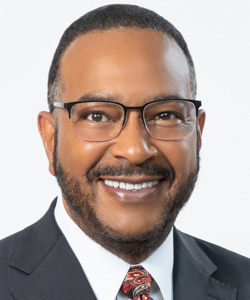
Carl Jackson
92% support rate
Top opponent
Jason Gallion
27% support rate
Ranked legislators
10
5 support · 5 oppose
Key legislators

Who's moving budget & taxes in Maryland

Legislators moving budget & taxes in Maryland
Legislator Party Stance Support rate Votes
Carl Jackson
Carl Jackson Senate · District 8
D
Strong +
92% 95
Cory McCray
Cory McCray Senate · District 45
D
Strong +
89% 97
Arthur Ellis
Arthur Ellis Senate · District 28
D
Strong +
88% 60
Anthony Muse
Anthony Muse Senate · District 26
D
Strong +
88% 65
Alonzo Washington
Alonzo Washington Senate · District 22
D
Strong +
87% 90
Jason Gallion
Jason Gallion Senate · District 35
R
Oppose
27% 103
Steve Hershey
Steve Hershey Senate · District 36
R
Oppose
30% 96
Kathy Szeliga
Kathy Szeliga House · District 7A
R
Oppose
30% 220
Matt Morgan
Matt Morgan House · District 29A
R
Oppose
30% 218
Lauren Arikan
Lauren Arikan House · District 7B
R
Oppose
30% 214
Showing 391–400 of 413 bills

All budget & taxes bills

signed · Maryland · House of Delegates Apr 14, 2026

HB 259: Financial Institutions - Maryland Community Investment Venture Fund and Regulation of Entities - Revisions

HB 259 revises Maryland's financial regulations by repealing certain fees charged to banking institutions and credit unions, such as the $25 fee for charter certificate requests. It updates the Maryland Community Investment Venture Fund to extend the deadline for the Commissioner to match institutional investments from 2028 to 2030 and clarifies the Fund’s purpose: to help banks and credit unions develop financial products and services for low- to moderate-income communities. The bill also redesignates the Fund as a nonlapsing special fund (not part of the General Fund) and specifies that investment returns must credit the Banking Institution and Credit Union Regulation Fund. These changes directly affect banking institutions, credit unions, and the Commissioner of Financial Regulation.
Sub-Topics State Budget
died · Maryland · House of Delegates Feb 23, 2026

HB 378: Prince George's County - Income Tax Credit for Parent and Guardian Volunteers in Elementary and Secondary Schools PG 420-26

HB 378 creates a state income tax credit for parents or legal guardians who volunteer at their child's elementary or secondary school in Prince George's County. Eligible individuals can claim a credit of $20 per volunteer hour, up to a $500 annual maximum, based on hours verified by school administrators or county board members. The credit is refundable if it exceeds the taxpayer's state income tax liability for the year. To claim the credit, applicants must submit a form to their school's administrator (for nonpublic schools) or county board representative (for public schools), and the State Department of Education will provide the necessary application and certificate forms. This policy directly affects parents and guardians volunteering in PG County public or charter schools.
Sub-Topics Income Tax Tax Credits
in committee · Maryland · House of Delegates Jan 26, 2026

HB 90: Property Taxes - Authority of Counties to Establish a Subclass and Set a Special Rate for Commercial and Industrial Property

HB 90 allows Maryland counties and Baltimore City to create a special property tax rate for commercial and industrial properties - including mixed-use buildings - to fund transportation projects or school budgets. It requires counties to automatically exempt the residential portion of mixed-use properties from this special tax using public records, without requiring owner applications. The special rate must be in addition to the general tax rate, cannot exceed 12.5 cents per $100 assessed value total, and cannot apply to residential parts of qualifying buildings. This directly affects commercial/industrial property owners, particularly those with mixed-use properties, by modifying how their taxes are calculated for specific public funding purposes.
passed · Maryland · House of Delegates Mar 25, 2026

HB 386: Metro Funding Modification Act of 2026

HB 386 modifies Maryland's funding for the Washington Metropolitan Area Transit Authority (WMATA) by requiring the Governor to withhold 35% of annual grants under specific conditions. It directly affects WMATA and Maryland's budget process, mandating that the Governor withhold funds if WMATA fails to submit required reports (like safety assessments and financial data) or if it doesn't develop a rail signaling workforce transition plan by July 2028. The bill also requires WMATA to provide detailed annual reports on safety, ridership, finances, and capital investments to trigger full funding. If WMATA receives a modified audit opinion without a corrective plan, or misses the workforce plan deadline, the Governor must withhold the funds until these conditions are met.
signed · Maryland · Senate May 26, 2026

SB 194: Income and Property Tax Incentives - Members and Veterans of the Space Force - Application

SB 194 amends Maryland tax code to extend existing income and property tax benefits to members and veterans of the Space Force. It updates definitions in tax laws to explicitly include "space service" alongside military, naval, and air service, making Space Force members, veterans, and their surviving spouses eligible for current programs. Key provisions include revising eligibility for job creation tax credits (under Section 6-301(e)) and property tax exemptions for disabled veterans (Sections 7-208 and 9-265). These changes ensure Space Force personnel qualify for the same tax incentives previously available only to traditional military branches. The bill directly affects Space Force members, veterans, and their families by expanding access to existing state tax benefits.
Sub-Topics Property Tax
in committee · Maryland · Senate Jan 22, 2026

SB 281: Metro Funding Modification Act of 2026

SB 281 modifies Maryland's funding for the Washington Metropolitan Area Transit Authority (WMATA) by requiring the Governor to withhold 35% of annual capital grants under specific conditions. It directly affects WMATA, the Washington Suburban Transit District, and collective bargaining units, mandating WMATA to submit detailed safety, financial, and ridership reports annually. Key provisions include withholding funds if WMATA receives a modified audit opinion without a corrective plan, fails to develop a rail signaling transition plan by July 2028, or terminates rail operators due to automation. The bill also requires the Governor to include specific appropriations for WMATA's capital costs and Metrorail subsidies in the state budget. This legislation is contingent on Virginia and D.C. enacting similar funding measures.
passed · Maryland · Senate Apr 8, 2026

SB 287: Economic Development - Tax Increment Financing - Noncontiguous Areas

SB 287 allows local governments in Maryland to designate *noncontiguous* blighted areas as development districts for tax increment financing (TIF). This means communities can now use TIF tools for economic development projects in disconnected land parcels (like separate lots in a blighted neighborhood) that were previously ineligible under the law. The bill amends Maryland’s Economic Development Code to explicitly include "noncontiguous" areas in the definition of "development district" and updates related sections to permit this designation. It directly affects counties, cities, and other local governments seeking to revitalize fragmented blighted areas through TIF. The change takes effect October 1, 2026.
Sub-Topics Tax Incentives Tags Economic Development
signed · Maryland · House of Delegates May 12, 2026

HB 607: Constitutional Officers - Salaries

HB 607 increases the annual salaries for Maryland's four constitutional officers: the Comptroller, Treasurer, Attorney General, and Secretary of State. The bill establishes new salary schedules with step increases after each anniversary of an officer's term, raising the first-year salary to $175,000-$185,000 (depending on the office) starting in 2027, with subsequent raises to $180,000-$185,000 in later years. These changes apply only to terms beginning on or after October 1, 2026, and do not affect current officeholders serving terms that started before this date. The bill amends specific sections of Maryland's Annotated Code to implement these salary adjustments.
in committee · Maryland · House of Delegates Jan 26, 2026

HB 26: Public Schools - Open Enrollment - Policies and Funding

HB 26 allows students to attend public schools in counties other than their home county with parental/guardian consent, subject to specific rules. County school boards must create transparent application processes, prioritize local students and siblings, and track enrollment capacity, while ensuring compliance with anti-discrimination laws. The bill requires sending counties (where students live) to fund receiving counties (where schools are attended) based on per-student costs, with the state covering shortfalls if the sending county spends less. This directly affects students seeking cross-county schooling, county school boards, and the funding distribution between school districts.
signed · Maryland · House of Delegates Apr 28, 2026

HB 175: Income Tax Credit - Venison Donation - Alterations

HB 175 repeals the $300 annual limit on Maryland’s income tax credit for hunters donating processed antlerless deer meat to 501(c)(3) organizations, allowing individuals to claim up to $75 per deer processed for human consumption. It requires hunters to comply with state hunting laws and donate meat through eligible nonprofit programs, while mandating donation programs to report donor names and donation counts to the Comptroller annually. The bill directly affects hunters who process and donate antlerless deer meat to qualified nonprofits, removing a previous cap on the total credit amount. Key provisions include maintaining the $75 per deer limit, requiring donations to 501(c)(3) organizations, and adding reporting requirements for donation programs. This changes the policy by expanding access to the credit without increasing the per-deer benefit.
Showing 391 to 400 of 413 bills
Previous 1 39 40 41 42 Next