Issue · Budget & Taxes

Budget & Taxes (Audits & Accountability)

Every budget & taxes bill, vote, and legislator stance in Maryland, automatically classified by Maddy, our AI policy reader.

Total bills
44
2026 Regular Session
Top supporter
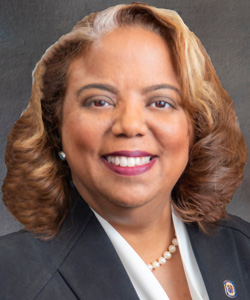
Deni Taveras
100% support rate
Top opponent
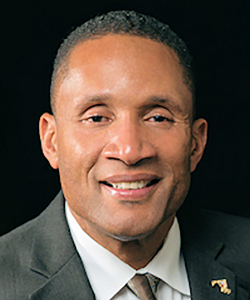
Terry Baker
0% support rate
Ranked legislators
10
5 support · 5 oppose
Key legislators

Who's moving audits & accountability in Maryland

Legislators moving audits & accountability in Maryland
Legislator Party Stance Support rate Votes
Deni Taveras
Deni Taveras House · District 47B
D
Strong +
100% 5
Heather Bagnall Tudball
Heather Bagnall Tudball House · District 33C
D
Strong +
100% 5
Joe Vogel
Joe Vogel House · District 17
D
Strong +
100% 5
Adrian Boafo
Adrian Boafo House · District 23
D
Strong +
100% 4
Arthur Ellis
Arthur Ellis Senate · District 28
D
Strong +
100% 4
Terry Baker
Terry Baker House · District 1C
R
Strong −
0% 6
William Wivell
William Wivell House · District 2A
R
Strong −
0% 5
Robin Grammer
Robin Grammer House · District 6
R
Strong −
0% 4
April Rose
April Rose House · District 5
R
Strong −
17% 6
Jay Jacobs
Jay Jacobs House · District 36
R
Strong −
17% 6
Showing 11–20 of 44 bills

All budget & taxes bills

signed · Maryland · House of Delegates May 12, 2026

HB 1422: State Procurement and Personnel - Liquidated Damages Documentation Requirements and State Fiscal Leadership Capacity

HB 1422 requires Maryland state agencies receiving at least $2 billion annually in state and federal funds to appoint chief financial officers (CFOs) meeting specific qualifications, such as being a certified public accountant with five years of fiscal management experience or holding a relevant master's degree with three years of experience. These CFOs must submit detailed annual financial reports to the Office of the Comptroller, including certification of accuracy and documentation linking federal funds to specific programs. The bill also authorizes the Secretary of Budget to grant pay plan exemptions to help recruit qualified CFOs and mandates agencies to provide documentation if they choose not to pursue liquidated damages from contract breaches. This legislation applies to Executive Branch units meeting the funding threshold and aims to standardize financial oversight.
signed · Maryland · House of Delegates May 26, 2026

HB 1280: Supporting Our Caregiver Infrastructure Program - Feasibility Study

HB 1280 directs Maryland's Comptroller to study whether a program providing monthly payments to caregivers for specific family members would be feasible. The study must examine economic impacts like potential job growth, increased tax revenue, and reduced public benefits use, while assessing costs and funding options. It requires collaboration with the Department of Human Services and agencies like the Department of Aging, with a final report due by July 1, 2027. The bill expires June 30, 2028, and does not create the program itself.
signed · Maryland · House of Delegates Apr 28, 2026

HB 933: Sales and Use Tax - Certificates Indicating Multiple Points of Use - Alterations

HB 933 simplifies sales tax collection for businesses purchasing digital codes, digital products, or taxable services used across multiple locations. It allows vendors to accept a "fully completed" certificate (requiring basic business details like names, addresses, and registration numbers) without needing Comptroller approval, relieving vendors from collecting tax on those transactions. The certificate remains valid for all future sales of qualifying digital products/services to the same buyer until revoked in writing. This applies retroactively to past transactions, streamlining tax compliance for businesses operating across jurisdictions or reselling digital goods.
in committee · Maryland · Senate Feb 11, 2026

SB 925: Sales and Use Tax – Distribution of Cannabis Sales Tax Revenue – Maryland Veterans Trust Fund

SB 925 directs 3% of the sales and use tax revenue collected from cannabis sales in Maryland to be distributed quarterly to the Maryland Veterans Trust Fund. This fund provides monetary and non-monetary assistance to veterans, their families, Maryland National Guard members, and supporting programs. The bill amends existing tax code to establish this specific allocation, requiring the Comptroller to distribute the funds after other mandated distributions for cannabis tax revenue. This policy change directly affects veterans' support programs by creating a dedicated revenue stream from cannabis taxation. The bill takes effect July 1, 2026.
signed · Maryland · Senate Apr 28, 2026

SB 519: Earned Income Tax Credit - Assistance Program Implementation Delay and Study

SB 519 delays Maryland's Earned Income Tax Credit Assistance Program implementation until 2029, instead of 2024. It requires the Comptroller's Office to study outreach efforts by December 31, 2030, to help low-income residents claim the credit they qualify for but often miss. The bill also directs the Department of Service and Civic Innovation to recommend ways to assist low-income residents in claiming tax credits. This legislation postpones the program's start date while mandating studies to improve future outreach and participation.
passed both · Maryland · Senate Apr 13, 2026

SB 961: Income Tax Credit - Venison Donation - Alterations

SB 961 modifies Maryland's tax credit for hunters donating processed deer meat. It removes the previous $300 annual limit on the credit, allowing hunters to claim the full credit for eligible expenses without the cap. The bill maintains a $75 per deer processing expense limit and requires donations to go to IRS 501(c)(3) organizations. Hunters must still comply with hunting laws, and donation programs must report donor information to the Comptroller annually. The change takes effect July 1, 2026.
in committee · Maryland · Senate Feb 12, 2026

SB 832: Nonprofit Hospitals - Community Benefits

SB 832 requires most nonprofit hospitals in Maryland to provide annual community benefits equal to either 100% of their tax-exempt value or 5% of their net patient revenue (with at least 4% in charity care). Hospitals must file annual reports detailing these benefits to the Health Services Cost Review Commission within 120 days of their fiscal year-end. The Commission then reports annually to the Attorney General and Comptroller by December 1, including compliance status and financial details. If a hospital fails to meet the requirements, the Comptroller may revoke its tax-exempt status for the following year, though hospitals can correct unintentional errors to avoid this. The bill excludes hospitals in counties with populations under 50,000.
in committee · Maryland · House of Delegates Feb 11, 2026

HB 1193: Department of Natural Resources - Savage Highlands State Park - Hotel Rental Surcharge

HB 1193 requires the Maryland Department of Natural Resources to collect an 8% surcharge on hotel rentals at Savage Highlands State Park. The revenue from this surcharge will be sent to the Comptroller for distribution to Garrett County. Specifically, 6% of the surcharge funds must be used by Garrett County for promoting the county, while the remaining 2% is directed to the county’s general fund. The bill takes effect July 1, 2026, and directly affects park renters and Garrett County’s budget allocation.
in committee · Maryland · Senate Feb 5, 2026

SB 547: Recipients of State and Local Government Funding - Reporting (Buy Maryland Reporting Requirements)

SB 547 requires state and local government units, as well as businesses receiving state funding for goods or services, to report annual details about how funds are used. Specifically, it mandates that recipients disclose contractor/subcontractor information - including addresses, employee counts, work locations, and minority business certification status - on annual reports to the Comptroller and on business tax returns. The Comptroller must then compile this data into an annual report for the legislature, including metrics like the percentage of in-state vs. out-of-state contractors and minority business participation. This bill directly affects government entities, funded businesses, and their contractors, aiming to increase transparency in public spending. It takes effect July 1, 2026.
in committee · Maryland · Senate Feb 11, 2026

SB 732: Cannabis - Community Reinvestment and Repair Fund - Distribution and Use of Funds for Baltimore City

SB 732 requires Maryland's Comptroller to direct funds from the Community Reinvestment and Repair Fund (funded by cannabis tax revenue and business fees) specifically to Baltimore City's Comptroller. The Baltimore City Comptroller must then establish a special fund to distribute these resources to community programs in areas disproportionately impacted by historical cannabis enforcement. Funds can support services like behavioral health care, job training, housing assistance, and after-school programs - but cannot fund law enforcement or replace existing city programs. The bill mandates these funds remain separate from general city revenue and are subject to audit, ensuring they directly benefit Baltimore communities most affected by past cannabis policies.
Showing 11 to 20 of 44 bills
Previous 1 2 3 5 Next