Issue · Budget & Taxes

Budget & Taxes

Every budget & taxes bill, vote, and legislator stance in Maryland, automatically classified by Maddy, our AI policy reader.

Total bills
373
2026 Regular Session
Top supporter
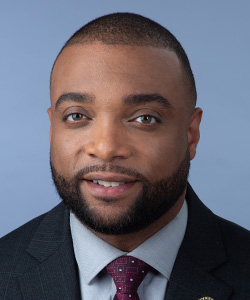
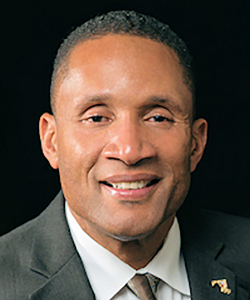
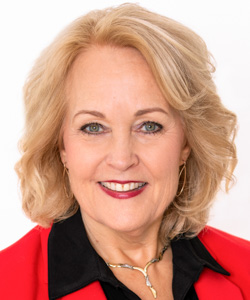
Carl Jackson
92% support rate
Top opponent
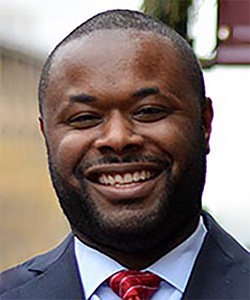
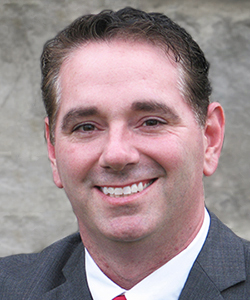
Jason Gallion
27% support rate
Ranked legislators
10
5 support · 5 oppose
Key legislators

Who's moving budget & taxes in Maryland

Legislators moving budget & taxes in Maryland
Legislator Party Stance Support rate Votes
Carl Jackson
Carl Jackson Senate · District 8
D
Strong +
92% 95
Cory McCray
Cory McCray Senate · District 45
D
Strong +
89% 97
Arthur Ellis
Arthur Ellis Senate · District 28
D
Strong +
88% 60
Anthony Muse
Anthony Muse Senate · District 26
D
Strong +
88% 65
Alonzo Washington
Alonzo Washington Senate · District 22
D
Strong +
87% 90
Jason Gallion
Jason Gallion Senate · District 35
R
Oppose
27% 103
Steve Hershey
Steve Hershey Senate · District 36
R
Oppose
30% 96
Kathy Szeliga
Kathy Szeliga House · District 7A
R
Oppose
30% 220
Matt Morgan
Matt Morgan House · District 29A
R
Oppose
30% 218
Lauren Arikan
Lauren Arikan House · District 7B
R
Oppose
30% 214
Showing 141–150 of 373 bills

All budget & taxes bills

in committee · Maryland · Senate Feb 13, 2026

SB 690: Property and Casualty Insurance - Distribution of Premium Tax Proceeds to State Disaster Recovery Fund

SB 690 requires Maryland property and casualty insurance companies to contribute $5 million annually, starting July 1, 2026, from their premium tax revenue to the State Disaster Recovery Fund. This fund, established under Maryland law, supports disaster recovery efforts across the state. The bill amends Maryland's insurance code to mandate this specific annual distribution, directly affecting insurers by altering how a portion of their tax payments is allocated. It creates a concrete, automatic transfer of funds without new tax rates or eligibility requirements.
Sub-Topics Revenue
in committee · Maryland · Senate Feb 5, 2026

SB 603: Mattress Stewardship Program - Establishment

SB 603 establishes a mandatory mattress recycling program in Maryland, requiring mattress producers and their representatives to submit stewardship plans to the Department of the Environment. The bill prohibits landfill disposal and incineration of mattresses after specific dates (with limited exceptions) and mandates an assessment on all mattresses sold in the state to fund recycling. Retailers must provide consumers with information about the program, while the Department must approve plans and oversee the Mattress Stewardship Advisory Board. This aims to divert mattresses from waste streams, aligning with Maryland’s sustainable materials management goals and modeled after successful programs in other states.
in committee · Maryland · Senate Feb 9, 2026

SB 602: Algorithmic Addiction Fund - Establishment

SB 602 establishes the Algorithmic Addiction Fund in Maryland to use settlement funds from cases where social media algorithms harmed children. The fund, administered by the Maryland Department of Health, is financed by civil penalties from settlements related to social media harm and earns interest. It directly supports children by funding prevention programs (like school digital literacy campaigns), treatment services for mental health impacts (such as depression and anxiety), research, and evidence-based interventions. The fund is non-lapsing, meaning unused money rolls over annually, and all spending must align with the state budget.
in committee · Maryland · House of Delegates Feb 12, 2026

HB 1308: Homeowners' Property Tax Credit - Eligibility and Calculation - Alterations

HB 1308 modifies Maryland's homeowners' property tax credit program by raising eligibility thresholds. It increases the assessed value cap for qualifying homes from $300,000 to $480,000, raises the income threshold for the first tax credit bracket from $8,000 to $12,500, and raises the combined gross income limit from $60,000 to $95,000. The bill also raises the net worth limit for eligibility from $200,000 to $320,000. These changes will directly affect more middle-income homeowners who previously exceeded the lower limits, expanding access to the credit starting June 1, 2026.
passed · Maryland · Senate Mar 23, 2026

SB 520: Property Tax - Charter Counties - Application of County Tax Limitation on Public Safety Budget

SB 520 allows charter counties in Maryland to set property tax rates above their charter limits - via simple majority vote - to fund public safety budgets (like police and fire services). It requires that any excess tax revenue collected beyond the charter limit must be allocated solely to public safety, not other county programs. The bill applies only to charter counties (e.g., Baltimore County) and mandates annual reporting to the Governor and legislature on tax rates and revenue usage. This changes existing tax rules by creating a specific exemption for public safety funding while maintaining other budget constraints.
Sub-Topics Property Tax Revenue Policing Tags Public Safety
in committee · Maryland · House of Delegates Feb 10, 2026

HB 1080: Income Tax - Addition Modifications - Excluded Opportunity Fund Gains, Foreign-Derived Deduction Eligible Income, and Interest

HB 1080 modifies Maryland's income tax code to align with recent federal changes. It adds three specific types of income to Maryland taxable income: capital gains from qualified opportunity funds (previously excluded federally), certain foreign business income, and interest excluded under federal law. This affects Maryland taxpayers and corporations that earn these specific income types, requiring them to include these amounts in their state tax calculations. The changes take effect for taxable years beginning after December 31, 2025, with the full implementation starting July 1, 2026.
Sub-Topics Income Tax
signed · Maryland · Senate Apr 14, 2026

SB 756: Baltimore City – Economic Development Project in Downtown RISE District – Payment in Lieu of Taxes

SB 756 creates a tax exemption for certain new or rehabilitated commercial or residential developments in Baltimore City's Downtown RISE District (specifically Wards 4 and 22 precincts), replacing property taxes with annual "payment in lieu of taxes" agreements. Property owners must enter a formal agreement with Baltimore City by June 30, 2036, after demonstrating the project's economic necessity through a city-approved analysis. The bill requires annual reporting on job creation, estimated tax revenue, and other economic benefits of qualifying projects. This applies only to developments including hotels, offices, retail, multifamily housing, or mixed-use facilities within the defined district.
Sub-Topics Revenue Tax Incentives
died · Maryland · House of Delegates Mar 16, 2026

HB 1204: Primary and Secondary Education - Education Savings Account Program - Establishment

HB 1204 establishes Maryland's Education Savings Account Program, providing state-funded accounts for parents of eligible K-12 students to cover approved education expenses. Eligible students include those who attended public school for at least 100 days last year (or military-connected students), with funding set at 75% of per-pupil state/local funding for families below 500% of the federal poverty level, and 50% for others. Parents must sign agreements committing to use funds only for approved costs (like private school tuition or licensed tutoring), not double-bill insurance, and return unused funds upon graduation or withdrawal. The bill also adds a state income tax deduction for deposits into these accounts.
signed · Maryland · House of Delegates May 12, 2026

HB 1452: Economic Development - Prince George's County Suitland Development Authority - Established

HB 1452 establishes the Suitland Development Authority in Prince George’s County to revitalize the Suitland Road and Silver Hill Road intersection area, which has faced decades of underdevelopment and blight. The Authority will create neighborhood revitalization plans with resident input, modify project boundaries (subject to a vote), manage finances, and operate tax-exempt under certain conditions. It directly affects residents and businesses in this specific neighborhood by aiming to boost economic activity, reduce unemployment, retain existing businesses, and increase property tax revenue for the county and state. The bill creates a new government entity focused on targeted neighborhood redevelopment, not broader policy changes.
signed · Maryland · Senate Apr 14, 2026

SB 860: Department of Aging – Aging Resilience Fund – Establishment

SB 860 establishes the Aging Resilience Fund, a dedicated, nonlapsing fund administered by Maryland's Department of Aging. The fund is designed to support the department's mission by covering administrative costs like personnel, partnership development, and senior-focused programs. Interest earnings from the fund must be reinvested into the fund itself, and money can only be spent following state budget rules. This bill directly affects the Department of Aging's operations and senior services programs in Maryland.
Sub-Topics State Budget
Showing 141 to 150 of 373 bills
Previous 1 14 15 16 38 Next