

Maddy summaryThe Bereaved Parents Rights Act requires hospitals and birth centers to notify parents of miscarriages or stillbirths about their options for burial, cremation, or hospital disposal. This notification must occur within six hours of the event or the parent's discharge, using a standardized form provided by the government. If parents choose burial or cremation within 72 hours, the facility must follow the same state laws that apply to other fetal deaths. The bill also allows parents to sue in federal court if these notification requirements are not met.
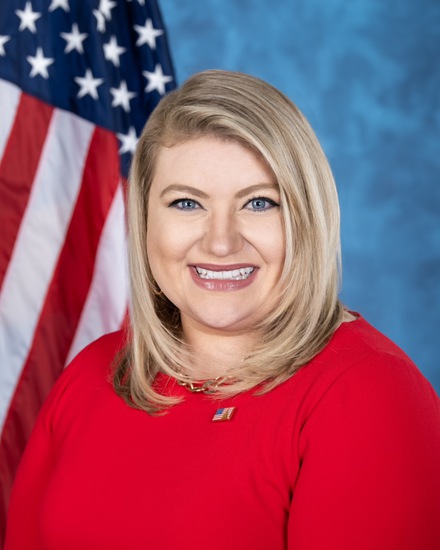
Rep. Kat Cammack
Sponsored bills
Maddy summaryThe Answering the Call Act of 2026 aims to improve access and outreach for the 9-8-8 National Suicide Prevention Lifeline specifically for first responders, including law enforcement, firefighters, and EMTs. It directs the Secretary of Health and Human Services to conduct outreach activities, in coordination with first responder organizations, to promote 9-8-8 and address barriers like stigma and privacy concerns. The bill also authorizes grants for public awareness campaigns, mandates specialized trauma-informed training for 9-8-8 counselors to serve first responders, and requires data collection on their hotline use with privacy safeguards. Additionally, it establishes a pilot program for federal agencies and first responder organizations to collaborate on tailoring these outreach efforts.
Maddy summaryHR 8603, the Dismemberment Abortion Ban Act of 2026, prohibits physicians from performing abortions that involve dismembering an unborn child and extracting it piece by piece or crushed from the uterus. The law allows exceptions only when the procedure is necessary to save the mother's life, while explicitly permitting other abortion methods for reasons such as rape or incest. It imposes criminal penalties of up to two years in prison or fines on physicians who violate the ban and creates a civil lawsuit system where women or parents of minors can seek monetary damages and attorney fees against providers. The bill also defines an 'unborn child' as a human organism from fertilization until birth and clarifies that the woman undergoing the procedure cannot be prosecuted or held financially liable.
Equal Representation Act This bill requires that the statement sent by the President to Congress after the decennial census indicating the number of persons in each state exclude noncitizens. (This statement is the basis for reapportionment of U.S. Representatives.) The bill also requires any questionnaire used in the decennial census to include a checkbox or other similar option for respondents to indicate whether the respondent and each household member is (1) a U.S. citizen, (2) a U.S. national but not a citizen, (3) a non-U.S. national ( alien under federal law) lawfully residing in the United States, or (4) a non-U.S. national unlawfully residing in the United States. The Department of Commerce must make public the number of persons in each state, disaggregated by each of these four categories.
Maddy summaryHR 7464, the TEMP Act, requires the Federal Crop Insurance Corporation to research and develop index-based insurance for specific crops (like tomatoes, citrus, and strawberries) against frost or cold weather damage. This research must evaluate risk management tools and aim to create policies covering either production or revenue loss from such events. The Corporation must report its findings and recommendations to Congress within one year of the bill's enactment. The bill directly affects farmers growing these frost-vulnerable crops by initiating a process to potentially expand their insurance options.
Maddy summaryThis resolution supports designating March 21, 2026, as National Women in Agriculture Day to recognize the contributions of women in the agricultural sector. It highlights that over 1.2 million women in the U.S. are agricultural producers, representing more than one-third of all producers, and notes their significant economic impact through farm sales and roles in research, education, and agribusiness. The measure encourages citizens to acknowledge and celebrate women working in agriculture during National Ag Week, aligning with the 2026 International Year of the Woman Farmer.
Maddy summaryThe First Responders' Equipment Access Act directs the EPA to update its regulations to allow easier access to engines and equipment for first responders. This change affects federal, state, and local agencies that provide law enforcement, disaster relief, search and rescue, fire response, and emergency medical services. Under the new rules, these agencies can request exemptions from certain engine emission standards for national security purposes without needing to specify exact quantities. The Department of Homeland Security and other national defense agencies would be authorized to endorse these exemption requests. This legislation removes a bureaucratic hurdle that previously required detailed quantity specifications for such exemptions.
Maddy summaryThis bill, titled the Clean Water for All Life Act, would amend federal criminal law to prohibit chemical abortions unless a healthcare provider is physically present during the procedure. It directly affects individuals who prescribe, administer, or assist with chemical abortion drugs like mifepristone and misoprostol by making it a federal crime to provide these services without a physical exam and the provider's presence. The law requires that patients receive a catch kit and red bag medical waste container with disposal instructions, and it defines an unborn child as beginning at fertilization. Violations could result in up to five years in prison and a $50,000 fine for each occurrence. The bill does not address other forms of abortion or change existing state laws.
Maddy summaryHR 5688, the Non-Domiciled CDL Integrity Act, changes rules for issuing commercial driver's licenses (CDLs) to people who don't live in the state where the license is issued. It allows states to issue CDLs to foreign nationals with lawful U.S. immigration status and work-related visas (valid for up to one year or until their stay ends), requiring states to verify status before issuing and keep records for two years. For residents of U.S. territories like Puerto Rico, it requires proof of U.S. citizenship or permanent residency before issuing CDLs, with similar verification and record-keeping rules. The bill directly affects commercial drivers from foreign countries and U.S. territories seeking CDLs in states where they are not residents.
Deploying Infrastructure with Greater Internet Transactions And Legacy Applications Act or the DIGITAL Applications Act This bill requires the Department of the Interior and the Forest Service to each establish an online portal for accepting, processing, and disposal of applications for communications use authorizations. These are requests for easements, rights-of-way, leases, licenses, or other authorizations to locate or modify a transmitting device, support structure, or other communications facility on public lands or National Forest System land. Interior and the Forest Service must also notify the National Telecommunications and Information Administration (NTIA) within three business days of establishing their respective portals, and once the portals are established, the NTIA must link to them from its website.