

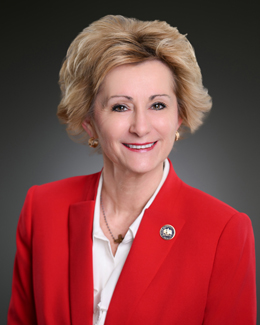
Maddy summaryThis bill directs the Louisiana Department of Health to conduct a study identifying gaps in acute healthcare access for individuals with intellectual and developmental disabilities. The legislation also establishes a committee to oversee this study, which will include representatives from the House and Senate, as well as one member appointed by the Senate president. The primary goal is to gather data on where and how these individuals face barriers in receiving timely medical care. Once the study is complete, the department is required to submit a report detailing its findings to the legislature.
Sponsored bills
Maddy summaryHB 1092 renames the Office for Citizens with Developmental Disabilities within the Louisiana Department of Health to the Office of Intellectual and Developmental Disability Supports. This change updates the official name of the agency across multiple state laws and statutes to reflect its current focus on intellectual and developmental disabilities. The bill also makes technical adjustments to ensure the new name is consistently used in legal documents related to disability benefits, voting assistance, and service administration. Directly affected parties include the Louisiana Department of Health, state agencies, and individuals who receive services through this office. The legislation does not alter existing programs or funding but primarily updates terminology to align with modern naming conventions.
Maddy summaryHB 222 requires Louisiana Medicaid to cover dental procedures when they are medically necessary for a patient to safely receive another Medicaid-covered medical treatment. This directly affects Medicaid enrollees who need dental care as a prerequisite for other covered medical procedures, such as surgeries or chronic condition management. The bill mandates the Louisiana Department of Health to update the state’s federal Medicaid plan, create necessary administrative rules, and submit required amendments to the Centers for Medicare and Medicaid Services. It does not expand general dental coverage but targets specific cases where dental treatment is a medical necessity for other covered care.
Maddy summarySB 125 increases compensation for people wrongfully convicted in Louisiana. It raises the annual payment rate from $25,000 to $40,000 per year incarcerated, with a new maximum total of $600,000 starting August 1, 2026 (up from $400,000 previously). It also allows those convicted before July 2022 to apply for supplemental payments (up to $40,000 annually) by August 1, 2027, and offers a $250,000 lump sum option for new claims filed after July 2022. The bill directly affects Louisiana residents who were wrongfully imprisoned and seek financial redress under state law.
Maddy summaryHB 726 increases penalties for abandoning boats or vessels in Louisiana by doubling the fines for this specific violation. The bill directly affects boat owners who intentionally leave vessels on public property, private land without permission, or in state waters. It amends existing law to explicitly double the criminal penalties for abandoning boats or boating accessories, as outlined in Section 2531.1(A)(2). This change applies to all vessels covered under the littering statute, including boats and related equipment. The law focuses on strengthening enforcement against vessel abandonment as a form of illegal disposal.
Maddy summaryHB 584 requires Louisiana's local social services districts to provide foster children aged 14-18 with durable, reusable luggage (such as backpacks, boxes, or suitcases) instead of garbage bags when they move between foster homes. This policy change directly affects youth in foster care by ensuring their belongings are transported safely and with dignity. The bill explicitly prohibits the use of garbage bags for this purpose and defines the responsibility of social services districts to provide the required luggage. It amends Louisiana law to guarantee this specific right for older foster youth during placement transitions.
Maddy summaryThis bill extends surviving spouse benefits to reserve and auxiliary law enforcement officers in Louisiana who die while on duty. It modifies existing law to include these officers under the same eligibility rules as commissioned officers, specifically when they die while: (1) traveling to or from a public safety emergency, or (2) commuting between their residence and work area in a law enforcement vehicle provided by their agency. The policy change directly affects the spouses of reserve and auxiliary officers who qualify under these two scenarios. It expands access to financial security payments previously limited to commissioned officers.
Maddy summaryHB 1253, known as the Gracey Claire Rushing Act, updates Louisiana laws to improve how coroners document and handle human remains and internal organs. The bill requires detailed autopsy reports that include specific personal information, medical findings, and a record of any retained organs, while keeping these reports private except for law enforcement or court orders. Family members and the decedent's physician are granted the right to receive a copy of the report upon request. The legislation is named in memory of a child whose death in 2009 prompted calls for better safeguards in the treatment of remains.
Maddy summarySB 143 requires Louisiana's Department of Public Safety to provide bulletproof vests to all "peace officers" (full-time state, municipal, sheriff, or public agency employees whose duties include enforcing laws and making arrests) upon request. It creates a dedicated "Special Protective Equipment Fund" to finance the vests, funded annually by $8.5 million from the state general fund starting July 2026, plus donations or grants. The bill mandates vests meet U.S. Department of Justice standards and must be wholly manufactured in countries part of the U.S.-Mexico-Canada Agreement (USMCA). This law directly affects all eligible law enforcement personnel by ensuring access to standardized protective gear through state-funded provisions.
Maddy summarySB 307 would authorize the display of the Ten Commandments as a historical monument on Louisiana State Capitol grounds, alongside other documents like the Mayflower Compact and the Declaration of Independence. The bill requires that such displays include context documents explaining their historical significance to the legal and cultural heritage of Louisiana and the U.S., and mandates that private donations fund the monument without state cost. It references Supreme Court rulings (Van Orden v. Perry and American Legion v. American Humanists Association) that permit religious historical displays on government property when privately funded. The commissioner of administration would oversee the installation, with the bill explicitly prohibiting state funding for the monument.