Issue · Criminal Justice

Criminal Justice (Courts)

Every criminal justice bill, vote, and legislator stance in Louisiana, automatically classified by Maddy, our AI policy reader.

Total bills
9
2026 Regular Session
Top supporter
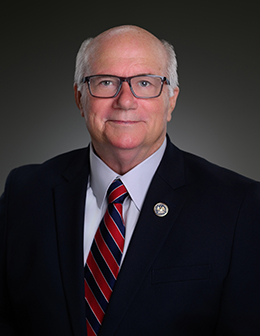
Jeff Wiley
83% support rate
Top opponent
Pat Moore
29% support rate
Ranked legislators
10
5 support · 5 oppose
Key legislators

Who's moving courts in Louisiana

Legislators moving courts in Louisiana
Legislator Party Stance Support rate Votes
Jeff Wiley
Jeff Wiley House · District 81
R
Strong +
83% 12
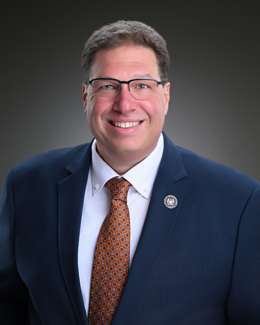
Francis Thompson
Francis Thompson House · District 19
R
Strong +
80% 10
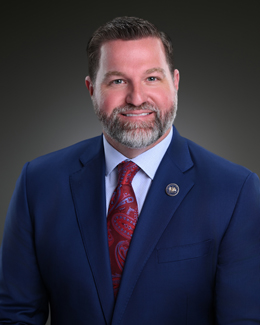
Brian Glorioso
Brian Glorioso House · District 90
R
Support
79% 14
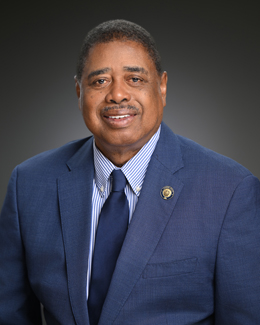
Jacob Landry
Jacob Landry House · District 49
R
Support
77% 13
Stephanie Hilferty
Stephanie Hilferty House · District 94
R
Support
77% 13
Pat Moore
Pat Moore House · District 17
D
Oppose
29% 14
Rashid Young
Rashid Young House · District 11
D
Oppose
33% 6
Tammy Phelps
Tammy Phelps House · District 3
D
Oppose
36% 11
Blake Miguez
Blake Miguez Senate · District 22
R
Oppose
38% 8
Ed Price
Ed Price Senate · District 2
D
Oppose
38% 8
Showing 9 of 9 bills

All criminal justice bills

signed · Louisiana · House Jun 8, 2026

HB 552: DWI: Provides relative to driving while intoxicated (EN NO IMPACT See Note)

HB 552 amends Louisiana's DWI laws to explicitly include "impaired" driving alongside "intoxicated" driving, expanding the scope of the offense to cover impairment from alcohol or drugs. It clarifies that city and municipal courts can handle first and second DWI offenses (with penalties matching state law), but third or subsequent offenses must be tried in district court with a jury. The bill also requires courts to assess additional costs when alcohol was a factor in any offense, and makes intoxilyzer test results automatically admissible as evidence in DWI cases. These changes directly affect drivers facing DWI charges, local courts handling such cases, and prosecutors presenting evidence.
Sub-Topics Courts
signed · Louisiana · House May 11, 2026

HB 131: CRIMINAL/PROCEDURE: Provides relative to post-conviction relief

HB 131 modifies Louisiana's post-conviction relief process by adding two new restrictions on appeals. It denies relief if a petitioner knew about a claim but failed to raise it during trial (Article 930.4(B)) or raised it in trial but didn’t pursue it on appeal (Article 930.4(C)). The bill also changes custody rules: if relief is granted, the person cannot be released on bail until Louisiana’s Supreme Court finishes reviewing the case (Article 930.5(C)). This directly affects individuals convicted of crimes seeking to overturn their convictions through post-conviction appeals. The law aims to reduce repetitive or incomplete appeals while clarifying custody procedures during appeals.
Sub-Topics Courts
signed · Louisiana · House Jun 9, 2026

HB 784: SEX OFFENSE/REGISTRY: Provides relative to sex offender registration and notification requirements

HB 784 updates Louisiana's sex offender registration laws by expanding the definition of "sex offense" to include specific crimes like human trafficking (R.S. 14:46.2), certain deepfake violations (R.S. 14:73.13), and offenses against minors such as child pornography (R.S. 14:81.1) and molestation (R.S. 14:81.2). It requires individuals convicted of these offenses to register with law enforcement within three business days of establishing Louisiana residency. The bill also clarifies registration requirements for offenders convicted under other jurisdictions' laws and updates court notification forms. This affects anyone convicted of the specified offenses who must comply with Louisiana's registration system.
signed · Louisiana · House May 14, 2026

HB 336: CRIMINAL/PROCEDURE: Provides relative to post-conviction relief

HB 336 establishes new rules for inmates seeking post-conviction relief after federal habeas corpus proceedings are stayed to allow exhaustion of state remedies. It requires petitioners to submit unexhausted claims to Louisiana state district courts within 30 days, proving they had good cause for not raising the claim earlier, that the claim isn't frivolous, and they avoided delaying tactics. Applications failing to meet these requirements face automatic dismissal. The bill mandates expedited review by state courts and prioritized handling by the Louisiana Supreme Court for these claims.
Sub-Topics Courts
signed · Louisiana · House May 15, 2026

HB 231: DOMESTIC ABUSE: Adds intentional evasion of service of process for certain court orders as conduct that constitutes a violation of a protective order

HB 231 creates a new criminal offense for intentionally avoiding service of specific court orders, directly affecting individuals who evade legal notices related to protective orders, custody cases, or other civil/criminal proceedings. The bill makes it a violation to deliberately skip being served with orders issued under laws covering domestic violence (R.S. 9:361 et seq.), child custody (R.S. 28:53.2), or certain civil/criminal court processes (e.g., Code of Civil Procedure Articles 3601 or 3607.1). Key provisions define which orders trigger this crime and establish criminal penalties for intentional evasion, rather than focusing on the underlying order's content. This policy change adds a criminal consequence for avoiding court-ordered notices, targeting a specific behavior without altering the substantive requirements of the covered orders.
signed · Louisiana · Senate May 15, 2026

SB 106: PUBLIC RECORDS: Provides that certain photographs, audio or video recordings, digital images regarding a crime scene or used in a criminal prosecution are not public records available for release or to be copied except by clerk of court or a court order. (8/1/26)

SB 106 makes certain crime scene photographs, videos (including body camera footage), audio recordings, and digital images confidential under Louisiana law. It directly affects law enforcement agencies, prosecutors, coroners, and other public bodies that collect or maintain such evidence used in criminal cases. The bill prohibits these materials from being released as public records, except when a court specifically orders disclosure. This change applies to all media depicting crime scenes, evidence, or victims' bodies that may be used in criminal proceedings, regardless of who created or holds the material. The law ensures these sensitive materials remain confidential without a judicial order.
Sub-Topics Courts Law Enforcement Policing Tags Government Transparency
signed · Louisiana · House Jun 2, 2026

HB 133: CRIME/BATTERY: Provides relative to certain battery offenses against school employees (EN SEE FISC NOTE GF EX)

This Louisiana bill creates a specific offense for battery against school teachers, defined as battery committed when the perpetrator knows the victim is a teacher or targets them due to their job. It sets harsher penalties for non-student offenders (up to 5 years in jail or $5,000 fine) versus students (up to 1.5 years jail with 72 hours mandatory for minor cases, or up to 1 year for injuries requiring medical care). Juvenile offenders under 17 are handled under the Children's Code, requiring court-approved counseling (costs borne by the family) and secure detention for teens 14+ who commit this crime. The law applies to all school teachers during work duties and modifies juvenile court procedures for such offenses.
passed · Louisiana · House May 7, 2026

HB 276: BAIL: Authorizes a court to conduct a contradictory bail hearing prior to setting bail for a person in custody who is charged with certain sexually based offenses against a child under the age of eighteen

HB 276 establishes a statewide minimum bail amount of $50,000 for individuals arrested in Louisiana for specific sexual offenses against minors under 18 years old. It directly affects defendants charged with offenses like rape (first, second, or third degree), sexual battery, child sexual abuse materials, or molestation of a juvenile. The bill mandates that district courts set this minimum bail amount for listed offenses, though courts may set higher amounts based on factors in Article 316. This policy change standardizes initial bail requirements for these serious crimes, aiming to ensure defendants remain in custody pending trial.
signed · Louisiana · Senate May 29, 2026

SB 258: JUVENILES: Provides relative to juvenile traffic violations. (2/3 - CA5s19) (8/1/26)

SB 258 changes Louisiana law to require that 17-year-olds and older be prosecuted in district court for traffic offenses, rather than juvenile court. It amends the Children's Code by redefining "delinquent act" to include traffic violations for individuals under 17, meaning traffic offenses committed by 17- to 20-year-olds will now be treated as criminal matters in adult court. The bill directly affects teens aged 17-20 who commit traffic violations, shifting their cases from juvenile proceedings to standard criminal prosecution. This change removes the previous exclusion of traffic violations from juvenile court jurisdiction for this age group. The bill is currently prefiled and awaiting committee referral.