Issue · Criminal Justice

Criminal Justice (Sentencing)

Every criminal justice bill, vote, and legislator stance in Louisiana, automatically classified by Maddy, our AI policy reader.

Total bills
35
2026 Regular Session
Top supporter
Sylvia Taylor
100% support rate
Top opponent
Larry Bagley
0% support rate
Ranked legislators
10
5 support · 5 oppose
Key legislators

Who's moving sentencing in Louisiana

Legislators moving sentencing in Louisiana
Legislator Party Stance Support rate Votes
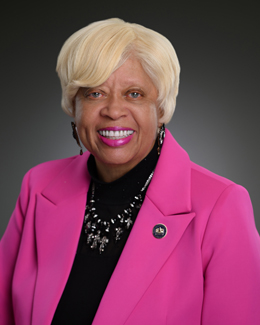
Sylvia Taylor
Sylvia Taylor House · District 57
D
Strong +
100% 10
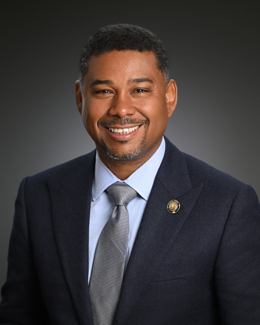
Barbara Carpenter
Barbara Carpenter House · District 63
D
Strong +
100% 9
Tammy Phelps
Tammy Phelps House · District 3
D
Strong +
100% 7
Gary Carter
Gary Carter Senate · District 7
D
Strong +
100% 5
Sam Jenkins
Sam Jenkins Senate · District 39
D
Strong +
100% 5
Larry Bagley
Larry Bagley House · District 7
R
Strong −
0% 5
Phil Tarver
Phil Tarver House · District 36
R
Strong −
0% 5
Valarie Hodges
Valarie Hodges Senate · District 13
R
Strong −
0% 5
Blake Miguez
Blake Miguez Senate · District 22
R
Strong −
0% 4
Patrick Connick
Patrick Connick Senate · District 8
R
Strong −
0% 4
Showing 21–30 of 35 bills

All criminal justice bills

in committee · Louisiana · House Mar 9, 2026

HB 523: PARDON/PAROLE: Provides relative to parole eligibility for certain individuals (OR SEE FISC NOTE GF EX)

HB 523, the "Hope For Redemption Act," creates new parole eligibility for individuals convicted of second-degree murder (R.S. 14:30.1) if they were aged 17-24 at the time of the offense. To qualify, they must have no prior felony convictions, have served at least 30 years of their life sentence, and not fall under specific exclusions (e.g., first-degree murder, sex offenses, or crimes against children under 13). The bill directly affects eligible life-sentenced individuals who committed second-degree murder as young adults, altering parole consideration criteria under Louisiana law. It does not change sentencing but establishes new pathways for parole review after lengthy incarceration. The law would apply only to those meeting all specified conditions, excluding certain high-risk offenses from eligibility.
signed · Louisiana · Senate May 22, 2026

SB 199: CRIME/PUNISHMENT: Imposes a mandatory minimum sentence for a second offense of purchasing commercial sexual activity. (8/1/26) (EN SEE FISC NOTE GF RV)

SB 199 imposes mandatory minimum prison sentences for second and subsequent offenses related to prostitution in Louisiana. For a second conviction of purchasing commercial sexual activity, offenders face at least six months in prison (with no parole eligibility for that period), plus fines of $1,500-$2,000. Similarly, second or subsequent solicitation offenses require a minimum six-month prison term (with no parole eligibility) and the same fines. The bill directly affects individuals convicted of these specific repeat offenses, with half of collected fines directed to a state fund under R.S. 15:539.4.
signed · Louisiana · House May 15, 2026

HB 102: CRIME: Creates the crime of second degree cruelty to the elderly and persons with infirmities (EN INCREASE GF EX See Note)

HB 102 creates a new criminal offense for "second degree cruelty to elderly and persons with infirmities," targeting intentional or negligent mistreatment causing serious injury to vulnerable individuals. It directly affects caregivers - including family members, neighbors, nursing homes, and care facilities - and applies to elderly people (60+), those with disabilities, or individuals in residential care settings. Key provisions define the crime, set penalties of up to 40 years in prison (with a mandatory minimum of 5 years if death occurs), and include an affirmative defense for spiritual healing methods. The bill also designates this offense as a "crime of violence" under Louisiana law, impacting sentencing in related cases.
Sub-Topics Corrections Sentencing
signed · Louisiana · House May 15, 2026

HB 125: SEX OFFENSE/REGISTRY: Provides relative to the supervised release of sex offenders (EN NO IMPACT See Note)

HB 125 amends Louisiana law to clarify and require courts to provide written notification to sex offenders about registration and notification rules at sentencing. It specifies registration periods (15 years, 25 years, or lifetime) and update frequencies (annually, every six months, or every 90 days) based on offense type, such as crimes against minors or aggravated offenses. The bill mandates that offenders provide detailed personal information - including addresses, employment, photos, DNA, and online identities - to law enforcement within three business days of moving, being released from custody, or changing residence. This applies directly to individuals convicted of sex offenses under Louisiana law, ensuring consistent implementation of registration requirements.
signed · Louisiana · House Jun 9, 2026

HB 159: CRIMINAL/SENTENCING: Creates a pretrial incarceration alternative pilot program in Caddo Parish (EN SEE FISC NOTE LF EX See Note)

HB 159 creates a pilot program in Caddo Parish, Louisiana, allowing eligible defendants to serve pretrial time at home under electronic monitoring instead of being held in jail. To qualify, defendants cannot face violent crime or sex offense charges (as defined by law) and must pass a risk assessment by the sheriff’s office, in coordination with the district attorney and court. Participants must follow conditions like curfews, possible mental health check-ins, and pay a sliding-scale fee for supervision (with lower costs for those who cannot afford full fees). The sheriff must develop program rules, evaluate its effectiveness, and report findings to legislative committees and Caddo Parish officials, with the program ending if a new or expanded jail opens in the parish.
signed · Louisiana · House May 15, 2026

HB 808: CRIME/SEX OFFENSES: Provides relative to the intentional exposure to HIV (EN NO IMPACT See Note)

HB 808 (Louisiana) amends criminal law to define and penalize intentional HIV exposure without consent. It makes it a crime to knowingly transmit HIV through sexual contact, sharing needles without consent, or other contact posing a "substantial likelihood of transmission" (defined as contact with blood, semen, or vaginal fluid with significant medical risk). The bill specifies higher penalties for exposing first responders (fines up to $6,000, 11 years imprisonment) and includes affirmative defenses if the victim knew of the HIV status and consented, or if medical advice confirmed non-infectious status with disclosure. It also explicitly classifies this offense as a "sex offense" under Louisiana law for sentencing purposes. The bill does not criminalize low-risk conduct, as clarified in Section E.
Sub-Topics Sentencing
in committee · Louisiana · House Mar 9, 2026

HB 402: CRIMINAL/HABIT OFFENDERS: Provides relative to the Habitual Offender Law

HB 402 modifies Louisiana's Habitual Offender Law to change sentencing for individuals convicted of three felonies classified as "crimes of violence" under state law, but without actual physical violence occurring during the offenses. It sets a new sentencing range: a fixed prison term of at least half the longest possible sentence for the third offense, but no more than twice the sentence for a first-time felony conviction. This applies to people already serving sentences for such offenses prior to June 15, 2001, meaning their sentences could be adjusted under this law. The bill specifically targets third felony convictions where the crimes meet the legal definition of "crime of violence" without involving actual physical force against people or property.
Sub-Topics Corrections Sentencing
signed · Louisiana · Senate May 29, 2026

SB 201: JUVENILE JUSTICE: Limits juvenile offender parole eligibility in resentencing court. (8/1/26)

SB 201 requires Louisiana courts to hold specific hearings when resentencing juvenile offenders to determine whether parole eligibility should be included in their sentence. The bill mandates that courts explicitly state their reasoning for denying parole eligibility, reserving such sentences for the "worst offenders and worst cases." It also specifies that appellate courts must prioritize the original sentencing court's findings, particularly when youth was rejected as a mitigating factor. This procedural change affects juvenile offenders facing resentencing, focusing on the process for determining parole eligibility rather than altering sentencing ranges.
signed · Louisiana · House Jun 2, 2026

HB 158: PROBATION: Provides relative to technical violations of probation (EN SEE FISC NOTE GF EX)

HB 158 modifies Louisiana's probation rules to address "technical violations" (like missing check-ins or failing drug tests) for certain defendants. It allows judges to impose up to 180 days in jail without reducing the overall probation sentence for individuals on probation for non-violent offenses (excluding crimes of violence or sex offenses). This applies only to violations not involving new criminal conduct, not to serious breaches. The bill does not change sentencing for new crimes but adds a specific penalty for administrative probation breaches. The measure is currently pending in committee review.
signed · Louisiana · House Jun 2, 2026

HB 137: CRIMINAL/SENTENCING: Changes sentencing guidelines for posting or calling in threats to schools (EN SEE FISC NOTE GF EX)

HB 137 increases penalties for threatening schools by adding a new offense: terrorizing or menacing school property, events, or firearm-free zones. It mandates 5-15 years in prison (no parole) for adults and fines up to $15,000 for such threats. Schools must distribute age-appropriate information about these crimes to students in grades 6+ and their parents annually. Parents or guardians of minors committing these acts face civil fines ($5,000-$10,000), and juvenile courts must consider restitution for response costs.
Showing 21 to 30 of 35 bills
Previous 1 2 3 4 Next