

Maddy summaryThis bill ensures that critical firearm-related operations continue during government shutdowns by designating them as "excepted" under federal law. It specifically covers the FBI's background check system (NICS), ATF enforcement programs, Commerce Department firearm export licensing, and State Department defense trade controls. These functions would remain operational even if most government services halt, directly affecting firearm background checks and export licensing processes. The policy change prevents temporary disruptions to gun sales and international firearm transactions during shutdowns.
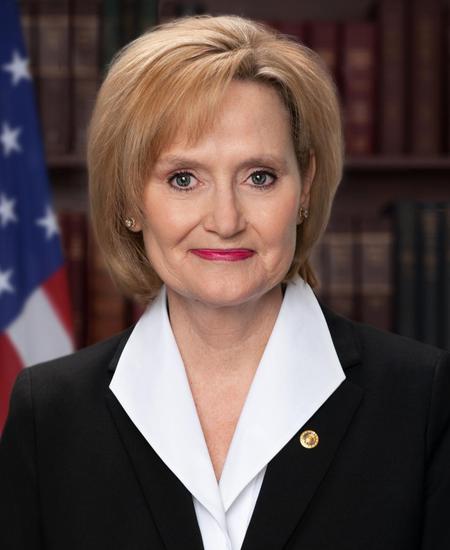
Sen. Cindy Hyde-Smith
Sponsored bills
Maddy summaryThis bill ensures military personnel and their support staff continue receiving pay during government funding gaps in fiscal year 2026. It authorizes funds from the Treasury to cover pay and allowances for active-duty service members, reserves, military support civilians (including Coast Guard staff), and qualifying contractors if regular budget appropriations aren't approved. The funding remains available until the earliest of: a new budget passing, a continuing resolution without this funding, or January 1, 2027. It directly affects all active-duty military, reserve components, and civilian/contractor support staff within the Department of Defense and Coast Guard.
Maddy summarySRES 475 is a symbolic Senate resolution designating November 1, 2025 (the first Saturday of November) as "National Bison Day." It directly affects all Americans by officially recognizing this date for public observance. The resolution acknowledges bison's historical, cultural, and economic significance, particularly to Native American tribes and rural communities, and builds on an existing annual tradition celebrated since 2012. The Senate encourages the public to observe the day with appropriate ceremonies and activities, though the resolution contains no new laws or funding.
Maddy summaryThis bill ensures the U.S. Capitol Police continue receiving pay during fiscal year 2026 funding gaps by authorizing temporary funds for salaries, benefits (including hazard pay and retirement), and contractor support. It directly affects Capitol Police officers (classified as "excepted employees" during emergencies), their civilian support staff, and contractors providing essential services. The funding mechanism provides immediate payments for the period starting October 1, 2025, and lasts until Congress passes regular appropriations for the Capitol Police or September 30, 2026, whichever comes first.
Maddy summaryS 3065, the LABEL Act, requires clear labeling of the country of origin and production method (farm-raised or wild) for fish sold in the U.S. It directly affects fish producers, importers, and retailers who sell covered fish commodities. The bill mandates that this information appear in a conspicuous location on packaging or displays, using a font size at least as large as the description of the fish type (e.g., "farm-raised salmon"). This labeling must be easily readable by consumers under normal shopping conditions. The law takes effect 180 days after enactment.
Maddy summaryThis bill (S 2440) directs the Secretary of Agriculture to transfer approximately 310 acres of federal land in Franklin County, Mississippi (divided into two parcels totaling 137.7 and 173 acres) to the Scenic Rivers Development Alliance. The transfer would occur via quitclaim deed after the Alliance submits a written request, pays fair market value (determined by a government-approved appraisal), and covers related costs. Proceeds from the sale would be deposited into the Sisk Act fund. The bill specifically affects the Alliance as the recipient and the federal government as the landowner, with no policy changes beyond this land transfer.
Maddy summaryThis Senate resolution (SRES 464) designates September 2025 as "National Cholesterol Education Month" and September 30, 2025, as "LDL-C Awareness Day." It encourages all U.S. individuals to know their low-density lipoprotein cholesterol (LDL-C) number and recognizes the need for improved screening and treatment of elevated LDL-C to reduce heart disease and stroke risks. As a commemorative resolution, it has no binding policy effect but aims to raise public awareness about cholesterol management. The resolution directly affects the public by promoting education on a key cardiovascular risk factor.
Maddy summaryS 3047, the Restoring Rural Health Act, modifies Medicare rules to protect certain rural hospitals from losing critical access hospital (CAH) status due to distance rule violations. It directly affects rural hospitals designated as CAHs as of January 1, 2024, that receive a noncompliance notice from Medicare (CMS) between December 1, 2024, and January 1, 2027, regarding distance requirements. The bill adds a new exception allowing these hospitals to retain CAH status during that specific 14-month period, even if they fail the distance standard. This provides temporary stability for rural healthcare access without changing the underlying distance rule. The policy change applies only to hospitals meeting the defined criteria during the specified notice period.
Maddy summaryS 3030, the Pay Our Military Act of 2025, ensures that active-duty military members, reservists, civilian Defense personnel, and supporting contractors continue receiving pay and essential benefits during any funding gap in fiscal year 2026. It appropriates necessary funds from the Treasury to cover pay, allowances, housing, travel, and other payments if Congress hasn’t passed full-year appropriations by September 30, 2026. These funds are charged to future appropriations when regular funding is enacted, preventing delays in military compensation. The bill takes effect retroactively as of September 30, 2025, to cover any missed payments during the prior fiscal year.
Maddy summaryThe Border Lands Conservation Act directs the Secretaries of Interior and Agriculture to install roads and surveillance technology on federal lands adjacent to the U.S. borders with Mexico and Canada to enhance border security and operational control. It requires reports on environmental damage and wildfires caused by illegal border crossings, establishes a program to manage vegetation and reduce fire risks on border lands, and prohibits federal funding for housing undocumented immigrants on federal lands (except in detention facilities). The bill affects federal land management agencies, the Department of Homeland Security, and border states, while explicitly protecting tribal sovereignty and legal land uses like grazing and recreation.