

Federal Firearms Licensee Protection Act of 2025 This bill modifies criminal penalties for an offense involving the theft of a firearm from a licensed importer, manufacturer, or dealer, or from their business premises. Specifically, the bill does the following: increases from 10 to 20 years the maximum prison term, and creates a 3- or 5-year mandatory minimum prison term for an offense that occurs during the commission of a burglary or robbery. An attempt to commit an offense is subject to the same penalties as a substantive offense.
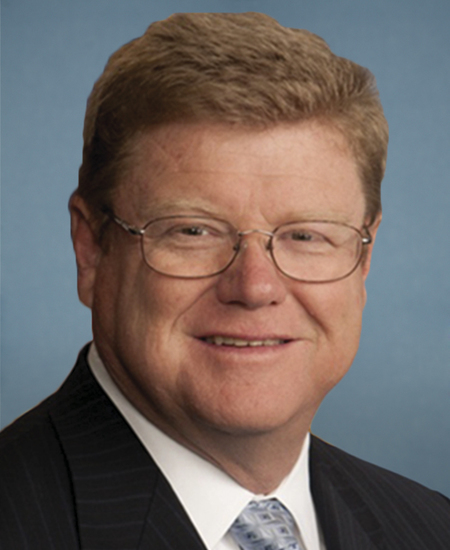
Rep. Mark E. Amodei
Sponsored bills
Maddy summaryHRES 166 is a non-binding House resolution expressing U.S. support for the Iranian people's desire for a democratic, secular, and nonnuclear republic. It condemns the Iranian regime's terrorism, regional proxy wars, internal suppression of ethnic and religious minorities, and human rights abuses - including executions and repression of women-led protests. The resolution calls for holding the regime accountable through sanctions, supports the Ten-Point Plan for Iran’s democratic transition, and urges protection for Iranian political refugees in Albania. It does not create new laws but affirms U.S. policy alignment with Iranian protesters' demands.
Maddy summaryThis bill awards a Congressional Gold Medal to the 761st Tank Battalion (known as the "Black Panthers"), the first predominantly Black armored unit in World War II's European Theater. It recognizes their combat service from 1944-1946, including key roles in the Battle of the Bulge and breaking the Siegfried Line, despite facing racial prejudice during and after the war. The medal will be displayed at the National Museum of African American History and Culture, with bronze duplicates available for sale to cover costs. The bill commemorates the battalion's 130,000 enemy casualties inflicted, 50% casualty rate, and their 1978 Presidential Unit Citation. It does not create new laws or affect current policies.
Maddy summaryHR 1551, the Protect and Serve Act of 2025, creates a new federal criminal offense for intentionally harming law enforcement officers under specific circumstances. It imposes harsher penalties, including up to 10 years in prison for serious injury or life imprisonment if death occurs, kidnapping is involved, or a firearm is used. The law applies when the crime crosses state lines, involves interstate weapons, occurs on federal property, or targets federal officers. Prosecutions require the Attorney General’s written certification, considering factors like prior state convictions and public safety impact. The bill directly affects law enforcement officers and federal prosecutors by expanding federal jurisdiction for certain violent crimes against them.
Maddy summaryHouse Resolution 152 is a symbolic congressional resolution reaffirming the U.S.-Canada partnership. It highlights their $1 trillion annual trade relationship (supporting 8 million U.S. jobs), joint border security efforts against fentanyl trafficking, and energy cooperation - including Canada as the U.S.'s top oil supplier and critical minerals partner. The resolution emphasizes shared security interests, integrated supply chains, and collaboration on defense, Arctic security, and democratic values. It does not create new laws but formally expresses congressional support for strengthening this alliance.
Maddy summaryThe Access Technology Affordability Act of 2025 creates a new tax credit for individuals who purchase technology designed to assist blind people, such as screen readers or braille displays. This credit covers up to $2,000 in expenses per three-year period for qualified access technology used by the taxpayer, their spouse, or a blind dependent. The credit adjusts for inflation after 2026 but does not apply to costs already covered by other tax benefits. The credit expires after 2030, with adjustments for cost-of-living changes starting in 2027.
Maddy summaryHR 1492 amends the Social Security Act to extend the negotiation period for standard drug manufacturers under the federal drug pricing program. Specifically, it changes the timeframe from 7 years to 11 years for small-molecule drugs (like traditional pills) to negotiate prices with the government, aligning it with the existing 12-year period for complex biologic drugs (like insulin or monoclonal antibodies). This adjustment directly affects pharmaceutical companies that produce small-molecule drugs, giving them a longer window to negotiate pricing terms. The bill makes this change effective as if it had been part of the 2022 law that established the program.
Maddy summaryHR 1440, the Discriminatory Gaming Tax Repeal Act of 2025, repeals Chapter 35 of the Internal Revenue Code, which imposed excise taxes on wagering activities. This repeal directly affects gambling businesses and individuals subject to these taxes, removing the federal tax obligation. The change takes effect for taxable years beginning after December 31, 2024, eliminating the tax requirement for future reporting periods. The bill focuses solely on repealing the existing tax provision without altering other gambling regulations.
Maddy summaryHR 1399, the Prior Approval Reform Act, removes a requirement in federal election law that previously mandated prior approval for certain political solicitations. It amends Section 316(b)(4)(D) of the Federal Election Campaign Act by deleting the phrase "to the extent that and all that follows," effectively eliminating the need for pre-approval. This change applies to all solicitations made on or after January 1, 2025, directly affecting political campaigns and committees that conduct fundraising under this provision. The bill makes a procedural adjustment to streamline fundraising processes without altering substantive campaign finance rules.
Maddy summaryThe Downwinders Parity Act of 2025 amends the Radiation Exposure Compensation Act (RECA) to expand eligibility for compensation to people exposed to nuclear fallout from U.S. testing. It removes specific geographic restrictions (like townships 13-16 at ranges 63-71) and instead includes "all acreage in any county" where part is affected, making more downwinders eligible for benefits. The bill also extends the RECA trust fund deadline from 2024 to December 31, 2030, ensuring continued funding. This directly affects individuals and families living near nuclear test sites who were previously excluded due to narrow geographic criteria.