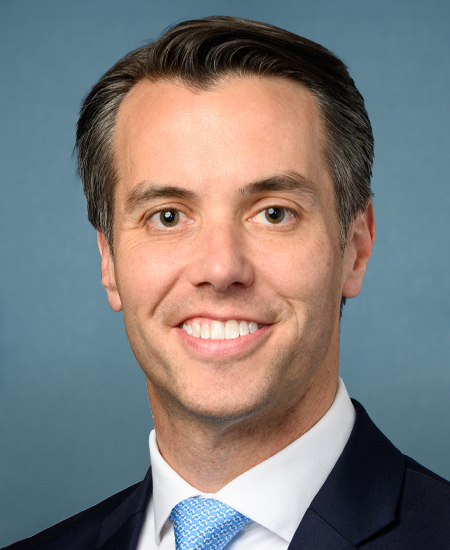
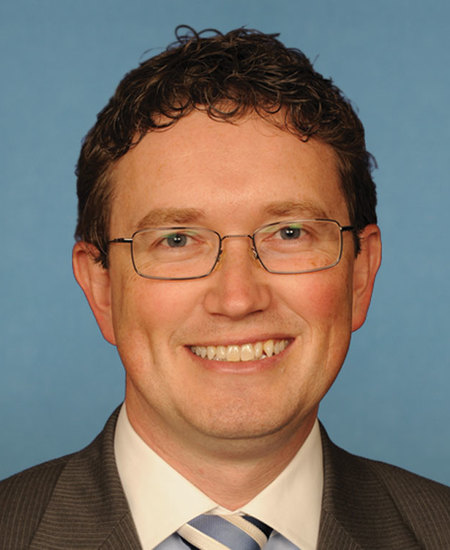
The Flock-Off Act prohibits federal agencies, state and local governments, and other recipients of federal funds from using federal money to purchase, operate, or maintain automated camera systems that capture biometric data or license plate information. The bill requires these entities to remove any existing covered camera systems within 180 days of enactment, with violations resulting in the withholding of further federal funding until reimbursed. Specific exceptions allow for the continued use of such systems within one mile of the U.S. borders for security purposes and on toll roads strictly for toll collection and enforcement.
This bill redesignates the existing National Parks and Public Land Legacy Restoration Fund as the America's Legacy Restoration Fund to address deferred maintenance on federal lands. It directs revenue from recreation fees and a portion of energy development income into the fund, which must be used primarily for repairing critical infrastructure like roads, trails, and buildings managed by agencies such as the National Park Service and the Forest Service. The legislation establishes strict rules requiring that most funds go toward non-transportation projects, mandates transparency through public dashboards tracking project status, and sets aside a small percentage for matching private donations. Additionally, the bill increases entrance fees for foreign visitors to ensure they contribute to the fund, while prohibiting the use of these specific funds for land acquisition or employee bonuses.
The American High-Speed Rail Act expands federal funding and streamlines regulations to support the development of high-speed and higher-speed rail projects across the United States. It authorizes billions of dollars in grants for corridor planning, technology improvements, and construction, while allowing the federal government to cover up to 100% of project costs under specific conditions. The bill also introduces new provisions to facilitate land acquisition, prioritize border projects, and extend labor protections to workers involved in federally funded rail infrastructure. Additionally, the legislation defines higher-speed rail as trains traveling between 110 and 186 miles per hour and includes tax incentives for rail carriers that sell or lease property to support these projects.
The Connected Vehicle Security Act of 2026 restricts the importation, sale, and manufacture of vehicles and related technology from specific countries, including China, Russia, Iran, and North Korea, to address national security concerns. The law defines prohibited items as connected vehicles, their software, and hardware components and sets different effective dates, with vehicle bans starting in 2027 and hardware restrictions beginning in 2030. A government official can grant exceptions for specific items after reviewing security risks and notifying Congress, while the agency must publish annual reports on enforcement actions and compliance.
The Interstate Ferry Fairness Act allows privately owned ferries and ferry terminals operating between two adjoining states to receive federal funding for construction and purchase. Under this legislation, private ferry operators can apply for federal assistance if the Secretary of Transportation determines the project provides substantial public benefits or meets surface transportation needs. The bill also permits privately owned ferries to charge fares that cover operational costs plus a reasonable rate of return approved by the Secretary. These changes expand eligibility for the Ferry Boat Program beyond publicly owned vessels, while maintaining oversight on fare structures and fund usage.
This bill, known as the Dalilah Law, would restrict commercial driver's licenses to U.S. citizens, lawful permanent residents, and holders of specific work visas. It requires states to verify the citizenship or visa status of all CDL applicants and renewals within 180 days of enactment, while also mandating English language proficiency testing for all license holders. States that fail to enforce these requirements or issue licenses to ineligible individuals risk losing federal transportation funding. The law also imposes lifetime disqualifications for operating commercial vehicles without proper immigration status.
HR 4178, the "Enforce the Caps Act," sets specific annual spending limits for non-defense discretionary programs in federal budgets from fiscal years 2026 through 2029. It establishes new budget authority ceilings of $1.622 trillion for 2026, increasing to $1.671 trillion by 2029. These caps directly affect federal agencies managing programs like education, transportation, and scientific research by restricting their annual funding levels. The bill amends the 1985 Balanced Budget Act to insert these fixed spending levels into law, creating binding limits for those fiscal years.
The Aviation Funding Stability Act of 2025 ensures continued operation of Federal Aviation Administration (FAA) programs during government funding gaps. It allows the FAA to use unspent funds from the Airport and Airway Trust Fund to maintain critical services - including air traffic control, airport infrastructure, and safety research - at the previous fiscal year's funding level if Congress fails to pass a new budget. This prevents shutdowns for up to 30 days or until a new budget is enacted, with spending limited to prior-year rates and subject to existing program rules. The bill directly affects all FAA operations, keeping airports and air traffic systems running during budget delays.
HR 758 requires the Postal Service to create rules for reporting traffic crashes involving mail delivery vehicles that cause injury or death. Postal employees and contractors operating mail transport vehicles must report such crashes within 3 days, including details like location, injuries, fatalities, and contributing factors. The Postal Service will maintain an internal database of these reports and publish an annual public summary showing trends without identifying individuals. This aims to improve transparency about safety incidents in mail delivery operations, with penalties like fines or contract termination for contractors who miss reporting deadlines.
The American Energy Independence and Affordability Act extends multiple clean energy tax credits that were set to expire between 2025 and 2026. It specifically extends residential clean energy credits through 2034, clean electricity investment credits for wind and solar through 2032, and clean vehicle credits for electric vehicles through 2032. The bill also reinstates special rates for sustainable aviation fuel and modifies requirements for energy-efficient home improvements. These provisions directly affect homeowners installing solar panels, businesses investing in clean energy infrastructure, and manufacturers producing clean energy equipment.