Issue · Energy

Energy

Every energy bill, vote, and legislator stance in Kentucky, automatically classified by Maddy, our AI policy reader.

Total bills
14
119th Congress
Top supporter
Morgan McGarvey
69% support rate
Top opponent
Thomas Massie
32% support rate
Ranked legislators
6
1 support · 5 oppose
Key legislators

Who's moving energy in Kentucky

Legislators moving energy in Kentucky
Legislator Party Stance Support rate Votes
Morgan McGarvey
Morgan McGarvey House · District 3
D
Support
69% 259
Thomas Massie
Thomas Massie House · District 4
R
Oppose
32% 256
Mitch McConnell
Mitch McConnell Senate
R
Oppose
33% 194
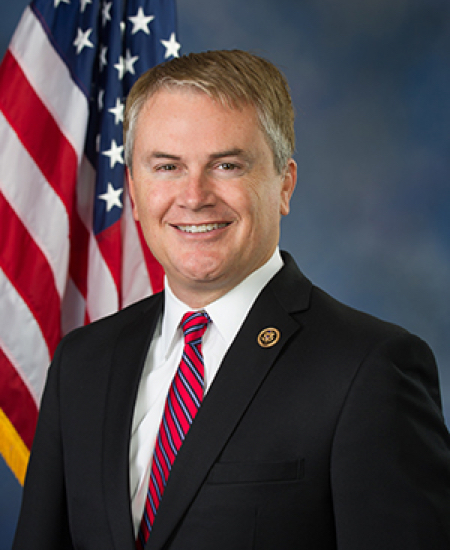
James Comer
James Comer House · District 1
R
Oppose
34% 257
Brett Guthrie
Brett Guthrie House · District 2
R
Oppose
34% 259
Andy Barr
Andy Barr House · District 6
R
Oppose
34% 253
Showing 1–10 of 14 bills

All energy bills

in committee · United States · Senate Jul 16, 2026

S 5025: Lindsey O. Graham Sanctioning Russia Act of 2026

This bill establishes a comprehensive sanctions framework targeting the Russian government and its affiliated entities in response to ongoing military actions. It authorizes the President to block assets, revoke visas, and prohibit financial transactions for Russian officials, military leaders, and foreign persons supporting Russia's defense industry or undermining Ukraine. The legislation also bans U.S. investments in Russian energy sectors, prohibits the purchase of Russian sovereign debt, and imposes high tariffs on Russian imports while restricting crude oil purchases by specific foreign nations. Additionally, the bill prevents Russian companies from listing on U.S. stock exchanges and includes mechanisms for terminating sanctions only if Russia signs a peace agreement accepted by Ukraine and ceases hostilities.
Sub-Topics Oil & Gas
in committee · United States · House Jun 11, 2025

HR 3930: Roadless Area Conservation Act of 2025

This bill codifies existing protections for designated roadless areas within the National Forest System by prohibiting new road construction, road reconstruction, and logging in these areas. It directly affects National Forest lands already identified as "inventoried roadless areas" under the current Roadless Rule, which covers roughly 58 million acres. The key mechanism requires the Secretary of Agriculture to enforce these prohibitions, maintaining current protections without expanding restrictions to other lands or altering existing multiple-use management. The bill does not create new protected areas but legally solidifies the existing regulatory framework to preserve ecological and recreational values.
in committee · United States · House Apr 10, 2025

HR 2814: Transportation Freedom Act

Transportation Freedom Act This bill reduces taxes on auto companies and repeals specified environmental regulations on cars and trucks. The bill establishes a new tax deduction equal to 200% of eligible wages paid or incurred by domestic producers of automobiles or automobile components, subject to limitations. It also allows an entity to reduce (and adjust) its financial statement income (for purposes of calculating liability for the alternative minimum tax) by the amount of eligible wages it elects to deduct. The bill nullifies the 2024 rules of the Environmental Protection Agency (EPA) regarding (1) the finalization of specified greenhouse gas (GHG) programs and the reduction of emissions from certain light-duty and medium-duty vehicles (e.g., cars and trucks that are under a certain weight) starting with model year 2027, and (2) phase three of GHG emission standards for heavy-duty vehicles (e.g., school buses and tractor-trailer trucks). It also repeals the 2024 rules of the National Highway Traffic Safety Administration (NHTSA) regarding corporate average fuel economy (CAFE) standards for certain cars, trucks, and vans.  Additionally, the bill eliminates (1) the option given to California to set standards for car emissions that are more stringent than those set under the Clean Air Act, and (2) the option for other states to adopt California's standards.  NHTSA and the EPA must establish new CAFE and GHG standards, respectively, for vehicles that are economically practicable and technologically feasible. The GHG standards may not require the production or sale of electric vehicles.
in committee · United States · Senate Jan 28, 2026

S 3713: No Climate Treaties Act of 2026

This bill requires the U.S. Senate to provide advice and consent for any international climate agreement that involves legally binding domestic emissions reductions (like the Paris Agreement), treating such agreements as treaties under the Constitution. It directly affects the executive branch and federal agencies by blocking the use of federal funds to implement or comply with these agreements unless Senate approval is first obtained. The key mechanism is changing the process for entering climate agreements from executive action to a formal treaty ratification process. This would prevent the U.S. government from joining or rejoining international climate deals without Senate confirmation. The bill does not alter the content of climate agreements but changes how they are approved and funded.
Sub-Topics Climate Change
in committee · United States · House Feb 6, 2025

HR 1052: UNPLUG EVs Act

HR 1052, the UNPLUG EVs Act, rescinds unobligated federal funds from two electric vehicle infrastructure programs. It targets unused balances from the National Electric Vehicle Infrastructure Formula Program (established by the Infrastructure Investment and Jobs Act) and charging/fueling grant programs under federal highway law. These rescinded funds will be deposited into the U.S. Treasury's general fund to reduce the federal deficit. The bill does not alter existing program requirements or affect current EV infrastructure projects, only redirecting unspent allocated funds.
in committee · United States · House Jul 24, 2025

HR 4705: ACHE Act of 2025

The ACHE Act of 2025 requires the National Institute of Environmental Health Sciences to study health impacts of mountaintop removal coal mining on communities in Kentucky, Tennessee, West Virginia, and Virginia. It imposes a temporary moratorium on new federal permits for such mining until the study concludes, while mandating ongoing pollution monitoring (water, air, soil) at existing sites with public reporting of results. Coal mining companies must pay a fee to cover federal costs for the study and monitoring program. The bill directly affects coal mining operations in the specified Appalachian regions and the communities living near them, focusing on evidence-based health research and transparency.
Sub-Topics Coal
in committee · United States · House Jun 10, 2025

HR 3870: COAL POWER Act

HR 3870, the COAL POWER Act, repeals a specific Environmental Protection Agency (EPA) rule issued on May 7, 2024, which set emission standards for coal- and oil-fired power plants. This bill directly affects coal and oil-fired electric utilities by removing their requirement to comply with that particular EPA regulation (89 Fed. Reg. 38508). The key mechanism is a straightforward repeal, treating the rule as if it never took effect. The bill does not create new rules or alter existing environmental standards beyond this specific EPA action.
Sub-Topics Coal Oil & Gas
died · United States · Senate Feb 27, 2025

SJRES 12: A joint resolution providing for congressional disapproval under chapter 8 of title 5, United States Code, of the rule submitted by the Environmental Protection Agency relating to "Waste Emissions Charge for Petroleum and Natural Gas Systems: Procedures for Facilitating Compliance, Including Netting and Exemptions".

This joint resolution (SJRES 12) seeks to block an Environmental Protection Agency (EPA) rule that established procedures for a "Waste Emissions Charge" affecting petroleum and natural gas systems. Specifically, it targets the EPA's November 2024 rule (89 Fed. Reg. 91094) which outlined compliance methods like netting and exemptions for emissions charges. If passed, the resolution would formally disapprove the rule under federal law (Chapter 8 of Title 5, U.S. Code), preventing it from taking effect. The bill directly affects the oil and gas industry by removing a specific regulatory framework for emissions reporting and fees. This is a procedural disapproval measure, not a new policy.
passed · United States · House Feb 10, 2025

HR 26: Protecting American Energy Production Act

The Protecting American Energy Production Act (HR 26) states that Congress believes states should have primary authority to regulate hydraulic fracturing (fracking) for oil and natural gas on state and private lands. It prohibits the President from imposing a moratorium on fracking without a new law passed by Congress. This bill directly affects federal executive authority by preventing unilateral federal bans and reinforces state regulatory roles. The key provision ensures any federal restriction on fracking would require a specific act of Congress, rather than executive action.
in committee · United States · House Apr 21, 2025

HCONRES 29: Expressing support for the withdrawal of the United States from the Paris Agreement.

HCONRES 29 is a non-binding congressional resolution supporting the U.S. withdrawal from the Paris Agreement, a 2015 UN climate pact adopted by 196 nations. It expresses Congress's backing for the President's action to withdraw the United States from this international climate agreement, which aims to reduce global greenhouse gas emissions. The resolution does not change U.S. policy or require new action - it merely states legislative support for the existing withdrawal effort. It directly affects U.S. participation in global climate negotiations but has no legal force.
Sub-Topics Climate Change
Showing 1 to 10 of 14 bills
1 2 Next