

Trade Preferences and American Manufacturing Competitiveness Act of 2021 This bill reauthorizes and revises specified U.S. trade programs and provisions. Specifically, the bill extends through January 1, 2027, the Generalized System of Preferences (GSP), which provides duty-free treatment to products imported from designated beneficiary countries. The bill makes various changes to the GSP, including by (1) adding human rights, environmental, and other criteria for designation as a beneficiary developing country; (2) requiring an assessment of how the GSP supports worker and gender rights; and (3) requiring a study on rules of origin and GSP utilization rates. Additionally, the bill provides through December 31, 2023, and retroactively applies to 120 days before this bill's enactment, temporary duty suspensions or reductions to eligible imported products. This authorization is commonly known as the Miscellaneous Tariff Bill (MTB). The last version of the MTB was enacted in September 2018 and the temporary treatment for those products listed in the MTB expired on December 31, 2020. The bill also extends the American Manufacturing Competitiveness Act of 2016 for two future MTB cycles (one in 2022 and one in 2025). This extension allows the U.S. International Trade Commission to conduct the MTB petition, review, and recommendation process for those additional cycles. The bill extends customs user fees through June 21, 2031.
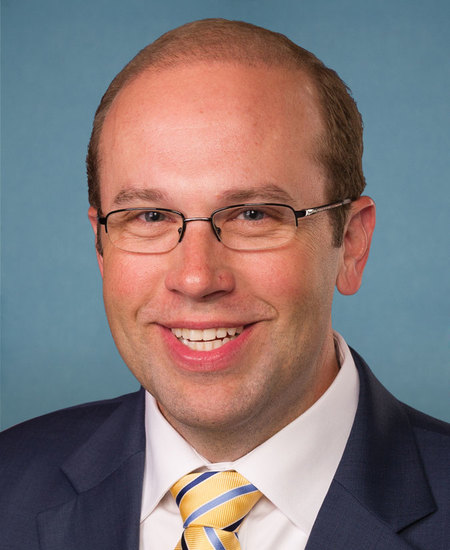
Rep. Jason Smith
Sponsored bills
Making Obligations Right by Enlarging Payments In Lieu of Taxes Act or the MORE PILT Act This bill directs the Department of the Interior to develop a modeling tool that calculates the approximate market value of land covered by the payments in lieu of taxes (PILT) program and the approximate amount of local tax revenue the land would generate if privately owned. The PILT program compensates local governments for tax revenue lost due to tax-exempt federal lands within their boundaries. Interior must annually report on the value of land covered by the PILT program, the tax revenue the land would generate if privately owned, and how PILT payments could more accurately reflect that tax revenue.
Trillion Trees Act This bills establishes a variety of requirements and incentives to plant trees and conduct other land management practices for the purposes of capturing and storing carbon in domestic and international trees and forests. Additionally, the bill provides incentives to research or develop other carbon sequestration tools. Specifically, the bill directs the Department of Agriculture (USDA) to set targets to increase forest carbon stock through January 1, 2100, for the purposes of sequestering and storing carbon in U.S. forests. It also establishes and provides funding for the Trillion Trees Challenge Fund to provide grants to nonfederal entities for activities related to reforestation efforts on public or private lands. In addition, it raises the cap on the Reforestation Trust Fund to enhance forest health in the National Forest System and requires the USDA to establish a Tree City USA Grant Program. The bill also allows the U.S. Agency for International Development to enter into an agreement with a nonprofit organization to establish an International Forest Foundation to promote reforestation and prevent deforestation. Additionally, it establishes requirements and incentives to address seedling shortages and support nurseries. Finally, the bill provides market incentives to research or develop other carbon sequestration tools relating to biochar, sustainable building practices, biochemical and bioplastic products, and biomass energy.
Flexible Financing for Rural America Act This bill allows rural utility service providers to submit to the Department of Agriculture (USDA) a request to adjust the interest rate or modify the terms of certain loans. The request shall include a report summarizing how the adjustment or modification will assist the borrower in providing critical utility services to a rural community. Specifically, on receipt of a request, USDA or the Department of the Treasury (in the case of a loan owned by the Federal Financing Bank) must adjust the interest rate on the loan to match certain interest rates for obligations of comparable maturity to the term remaining on the loan (or a higher rate requested by the borrower), and make modifications to the loan terms as necessary to address changes in the financial position of the borrower due to the COVID-19 public health emergency and to promote the financial sustainability of the borrower. In carrying out the adjustments or modifications, USDA or Treasury shall not impose or collect any fee from, or impose any penalty on, a borrower. The bill also provides funding to implement the adjustments and modifications and for the liquidation of residual intragovernmental amounts owed by the Federal Financing Bank in connection with certain loans.
Eliminate Lavish Incentives To Electric Vehicles Act or the ELITE Vehicles Act This bill terminates the tax credit for new qualified plug-in electric drive motor vehicles 30 days after this bill's enactment date. The credit is permanently repealed for taxable years beginning 1 year and 30 days after enactment.
Hamas International Financing Prevention Act This bill imposes sanctions targeting Hamas, the Palestinian Islamic Jihad, and any affiliate or successor groups. The President shall periodically report to Congress a list of each foreign person or instrumentality that knowingly assists, provides significant support or services to, or is involved in a significant transaction with a senior member or supporter of any of the targeted groups. The President shall impose two or more sanctions on the named persons. Specifically, the person may be (1) denied credit and services from the Export-Import Bank, (2) barred from purchasing certain controlled defense articles, (3) denied exports of items on the U.S. Munitions List, (4) prevented from receiving exports of certain goods or technology controlled for national security reasons, (5) prohibited from receiving financing of more than $10 million from any U.S. financial institution, or (6) subject to property-blocking restrictions. The President shall periodically report to Congress a list of foreign governments that have repeatedly provided material support for the targeted groups' terrorist activities. The President shall bar these governments from receiving for one year (1) U.S. assistance, or (2) exports of controlled munitions. The Department of Treasury shall instruct U.S. leadership of international financial institutions to oppose the provision of assistance to an identified government for one year. The bill provides for certain exceptions and waivers, such as for transactions that would serve U.S. national interests. The President shall report to Congress and periodically provide briefings on other specified topics related to the targeted groups, such as where these groups secure financing and surveillance equipment.
Improving Access to Medicare Coverage Act of 2021 This bill deems an individual receiving outpatient observation services in a hospital as an inpatient for purposes of satisfying the three-day inpatient hospital-stay requirement with respect to Medicare coverage of skilled nursing facility services.
This resolution expresses support for Israel's efforts of self-determination and collective security against external forces, recognizes Jerusalem as the legitimate capital city of Israel, and condemns actions by Hamas against the people of Israel.
This resolution condemns the rocket attacks by Hamas against Israel beginning the week of May 9, 2021. It also states that the United States must continue to invest in and support Israel's security and sovereignty.
United States Army Rangers Veterans of World War II Congressional Gold Medal Act This bill provides for the award of a single Congressional Gold Medal to the U.S. Army Rangers Veterans of World War II in recognition of their dedicated service during World War II.