

Maddy summaryThis bill proposes to amend the Kansas Constitution to require voter approval for any property tax exemptions. If passed, the change would shift the authority currently held by the state legislature to the electorate, meaning voters would directly decide whether specific groups or properties receive tax breaks. The measure does not create new exemptions itself but establishes a new rule for how future exemptions must be approved. It directly affects Kansas voters, property owners, and local governments by altering the process for determining tax relief.
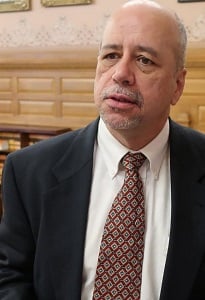
Rep. Tom Sawyer
Sponsored bills
Maddy summaryHB 2678 would establish Kansas' first legal medical cannabis program, allowing licensed businesses to cultivate, process, and sell cannabis products for medical use to qualifying patients. It requires the state to expunge past cannabis-related criminal records and imposes an excise tax on sales, with funds directed to child care, economic development, mental health, low-cost housing, and property tax rebates. The bill creates new licensing systems for cultivators, processors, and dispensaries, while exempting medical cannabis use from certain drug possession laws. It directly affects patients with qualifying medical conditions, licensed cannabis businesses, and the state's criminal justice and social service funding mechanisms.
Maddy summaryThis House Concurrent Resolution urges the U.S. Congress to pass comprehensive immigration reform to address issues caused by decades of federal inaction. The bill highlights how the lack of updated laws has negatively impacted states, local communities, and families through workforce shortages, economic instability, and family separation. It specifically calls for modernizing immigration pathways to reduce visa backlogs and ensuring that law enforcement actions are conducted with clear accountability and respect for due process. By requesting federal action, the resolution aims to restore predictability to immigration policy and protect vulnerable populations from the consequences of outdated statutes.
Maddy summaryHB 2631 increases the property tax exemption for residential homeowners in Kansas, raising the amount exempt from the statewide school levy from $75,000 to $125,000 of a property's appraised value. This change directly affects Kansas homeowners with residential properties who pay school taxes. The bill amends existing law to apply this higher exemption starting in 2027, reducing their taxable value for school funding purposes. The exemption applies to all taxable years beginning in 2027 and beyond.
Maddy summaryThis Kansas bill (HB 2707) expands the definition of "abuse" under the Protection from Abuse Act to include intentionally harming, threatening, or causing injury to a pet to control, punish, intimidate, or distress a partner or household member. It also allows courts to include specific orders about pet custody and protection in existing protection orders. The bill directly affects individuals in abusive relationships where pets are used as tools of control, such as when an abuser threatens or harms a pet to coerce a victim. Key mechanisms include adding new provisions to the law defining abuse (Section 1) and creating specific court orders for pet-related safety (Sections 10-11 of K.S.A. 60-3107).
Maddy summaryHB 2628 creates a refundable Kansas income tax credit for residents paying tuition and fees at eligible colleges or universities. It allows qualifying taxpayers to claim up to $300 per year toward these costs for themselves or their child, with any unused portion refunded if the credit exceeds their tax bill. The credit applies to Kansas residents who paid for attendance at institutions meeting state-defined standards under K.S.A. 72-3222. This policy directly supports families and individuals covering higher education expenses, making the credit accessible even if they owe no state income tax.
Maddy summaryHB 2620 increases Kansas' earned income tax credit (EITC) by raising the state credit percentage from 17% to 18% of the federal EITC amount for tax years 2010-2012, then maintaining 17% for all subsequent years. It directly affects low-to-moderate-income Kansas residents who qualify for the federal EITC and claim it on their state tax returns. The bill modifies how the state credit is calculated (based on the federal credit amount) and ensures any excess credit beyond state tax liability is refunded to the taxpayer. This change updates Kansas law to align with the federal credit percentage, effective upon publication in the statute book.
Maddy summaryHB 2629 increases Kansas income tax standard deduction amounts for 2024 and beyond. It raises the standard deduction to $3,605 for single filers, $8,240 for married couples filing jointly, and $6,180 for heads of household in 2024, with further increases scheduled for 2026. This bill directly affects Kansas residents who claim the standard deduction instead of itemizing deductions on their state income tax returns. The change reduces taxable income for qualifying filers, lowering their overall tax liability under Kansas law.
Maddy summaryHB 2600 establishes the "Affordable Healthcare for Kansans" program to expand Medicaid eligibility in Kansas. It would extend coverage to non-pregnant adults under 65 with incomes at or below 138% of the federal poverty level, directly affecting low-income Kansans currently ineligible for Medicaid. The key provision raises the income threshold for Medicaid eligibility to match the federal standard, effective January 1, 2027. This change requires the Kansas Department of Health and Environment to administer the program and inform potential applicants. The bill aims to align Kansas Medicaid eligibility with the federal expansion program under federal law.
Maddy summaryThis bill designates a specific segment of K-5 highway in Wyandotte County (from the junction of K-5 and N. 18th Street west to N. 38th Street) as the "Representative Marvin S. Robinson II Memorial Highway." It also redesignates a portion of Interstate 635 (from the Kansas-Missouri border south to its junction with K-5 highway) as the "Harry Darby Memorial Highway." The bill requires the Kansas Secretary of Transportation to install highway signs marking both routes, following standard procedures. This is a procedural memorial designation with no substantive policy changes to transportation law.