

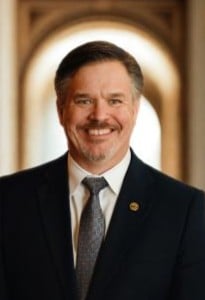
Photo of Kirk Haskins
D Kansas House · District 53 On the 2026 ballot

Rep. Kirk Haskins

Compare
Total votes
318
all sessions
Attendance
98%
6 missed
Near the chamber average
With party
97%
of cast votes
Near the chamber average
Bipartisan score
1%
crosses aisle rarely
Near the chamber average
Sponsored
52
bills & resolutions
Near the chamber average
Committees
5
assignments
52 bills and resolutions

Sponsored bills

Total
52
Primary
52
Co-sponsor
0
This page
52
matching current filters
Primary HB 2692
died · Kansas House · Lead sponsor
Establishing standards of conduct for agents of the United States immigration and customs enforcement (ICE) prohibiting facial covering of agents, requiring vehicles be clearly marked, requiring judicial search warrants, prohibiting raids in places of worships, schools, daycare centers, hospitals and courts, requiring minimum training.

Maddy summaryHB 2692 is a Kansas state bill requiring U.S. Immigration and Customs Enforcement (ICE) agents operating within Kansas to follow specific conduct standards. It prohibits agents from wearing facial coverings, mandates clear vehicle markings and identification, and requires judicial warrants for raids in schools, places of worship, hospitals, courts, and daycare centers. The bill also bans door-to-door residential raids and sets a minimum 14-week training standard for agents, matching Kansas law enforcement requirements. This legislation applies directly to federal ICE agents conducting enforcement activities in Kansas.

died Apr 10, 2026 0 co-sponsors
Primary HB 2436
died · Kansas House · Lead sponsor
Defining emergency opioid antagonist as including an expired emergency opioid antagonist for a person rendering aid to another in reasonable need of medical assistance.

Maddy summaryHB 2436 allows anyone providing medical assistance during an opioid overdose to use an expired emergency opioid antagonist (like naloxone) up to 10 years past its expiration date. This directly affects bystanders, first responders, and community members administering overdose reversal drugs. The bill amends Kansas law to explicitly include expired antagonists in the definition of "emergency opioid antagonist," ensuring they can be legally used in emergencies. This change increases access to life-saving treatment by removing expiration barriers during urgent situations. The law also maintains existing immunity protections for people seeking help or administering aid during overdoses.

died Apr 10, 2026 0 co-sponsors
Primary HB 2600
died · Kansas House · Lead sponsor
Establishing the Affordable Healthcare for Kansans program to expand medicaid eligibility.

Maddy summaryHB 2600 establishes the "Affordable Healthcare for Kansans" program to expand Medicaid eligibility in Kansas. It would extend coverage to non-pregnant adults under 65 with incomes at or below 138% of the federal poverty level, directly affecting low-income Kansans currently ineligible for Medicaid. The key provision raises the income threshold for Medicaid eligibility to match the federal standard, effective January 1, 2027. This change requires the Kansas Department of Health and Environment to administer the program and inform potential applicants. The bill aims to align Kansas Medicaid eligibility with the federal expansion program under federal law.

died Apr 10, 2026 0 co-sponsors
Primary HB 2029
Signed into law · Kansas House · Lead sponsor
Reconciling multiple amendments to certain statutes.

Maddy summaryThis bill designates a specific segment of K-5 highway in Wyandotte County (from the junction of K-5 and N. 18th Street west to N. 38th Street) as the "Representative Marvin S. Robinson II Memorial Highway." It also redesignates a portion of Interstate 635 (from the Kansas-Missouri border south to its junction with K-5 highway) as the "Harry Darby Memorial Highway." The bill requires the Kansas Secretary of Transportation to install highway signs marking both routes, following standard procedures. This is a procedural memorial designation with no substantive policy changes to transportation law.

Signed into law Apr 10, 2026 0 co-sponsors
Primary HB 2074
died · Kansas House · Lead sponsor
Including homestead renters as eligible to participate in certain homestead property tax refund claims.

Maddy summaryHB 2074 amends Kansas' Homestead Property Tax Refund Act to allow renters of their primary residence to qualify for the same tax refunds previously available only to homeowners. The bill explicitly includes renters in the eligibility criteria for three groups: individuals aged 55 or older, people with disabilities, and low-income households with dependent children. This change, effective for tax year 2025, updates the definition of "homestead" to cover rented properties and revises related terms in the law to reflect expanded access to the refund program.

died Apr 10, 2026 0 co-sponsors
Primary HB 2151
died · Kansas House · Lead sponsor
Increasing the Kansas minimum wage to $15 an hour.

Maddy summaryHB 2151 would raise Kansas' state minimum wage from $7.25 to $15 per hour for most hourly workers. The bill amends Kansas law (K.S.A. 44-1203) to establish this new rate and repeals the current minimum wage provisions. It directly affects most employees in Kansas, excluding specific categories like agricultural workers, domestic workers, and certain executive or administrative staff as defined in the law. Employers covered by federal minimum wage law would still follow the federal $7.25 rate, but all other Kansas employers would be required to pay at least $15 per hour.

died Apr 10, 2026 0 co-sponsors
Primary HB 2123
died · Kansas House · Lead sponsor
Increasing the minimum wage for employees that receive tips and gratuities.

Maddy summaryHB 2123 increases Kansas' minimum wage for tipped employees from $2.13 to $6.15 per hour. It requires employers to pay this base rate, and if the employee's tips plus this base rate total less than $7.25 per hour (the standard minimum wage), the employer must cover the difference. This directly affects restaurant workers, servers, and other service employees in Kansas who rely on tips as part of their income. The bill amends Kansas law to ensure tipped workers earn at least the full minimum wage when combining tips with their base pay. It does not apply to workers covered by federal minimum wage rules under the Fair Labor Standards Act.

died Apr 10, 2026 0 co-sponsors
Primary HB 2296
died · Kansas House · Lead sponsor
Requiring that certain health insurance plans impose a no-cost sharing requirement for a diagnostic or supplemental breast cancer examination for breast cancer imposed on an insured.

Maddy summaryHB 2296 requires most health insurance plans in Kansas to cover diagnostic and supplemental breast cancer exams without out-of-pocket costs for insured individuals. This means patients won’t pay deductibles, co-pays, or coinsurance for these exams when medically necessary to evaluate abnormalities (diagnostic) or screen high-risk individuals (supplemental), as defined by national cancer guidelines. The bill applies to plans issued or renewed before January 1, 2026, and exempts health savings account plans until after meeting the deductible for non-preventive care. It specifically covers exams like mammograms, MRIs, and ultrasounds used in these scenarios.

died Apr 10, 2026 0 co-sponsors
Primary HB 2090
died · Kansas House · Lead sponsor
Establishing the Kansas employee emergency savings account (KEESA) program to allow eligible employers to establish employee savings accounts, providing an income and privilege tax credit for certain eligible employer deposits to such employee savings accounts and providing a subtraction modification for certain employee deposits to such savings accounts.

Maddy summaryHB 2090 establishes the Kansas Employee Emergency Savings Account (KEESA) program, allowing eligible Kansas employers to set up employee savings accounts with automatic payroll deductions. Employers receive an income and privilege tax credit for their deposits, while employees can subtract their own contributions from taxable income. The program requires employers to make a minimum $50 initial deposit per employee, offer federally insured accounts with mobile access, provide financial literacy tools, and report participation details annually. It directly affects Kansas employers participating in the program and their employees who choose to enroll in these emergency savings accounts.

died Apr 10, 2026 0 co-sponsors
Primary HB 2073
died · Kansas House · Lead sponsor
Providing a sales tax exemption for feminine hygiene products and diapers.

Maddy summaryHB 2073 would exempt feminine hygiene products (such as tampons and pads) and diapers from Kansas' state sales tax. This means consumers purchasing these essential items would no longer pay the state sales tax at checkout. The bill amends Kansas' sales tax law (K.S.A. 2024 Supp. 79-3606) to add these products to the list of tax-exempt items. It directly affects all Kansas residents who buy these products, making them more affordable without changing other tax rules.

died Apr 10, 2026 0 co-sponsors
Showing 11 to 20 of 52 bills
Previous 1 2 3 6 Next