

Maddy summaryHB 2670 requires video streaming services operating in Kansas to ensure commercial advertisements are not louder than the main video content they interrupt, effective July 1, 2026. It adopts the federal CALM Act standards (originally for TV broadcasts) to set volume limits for ads. The law applies specifically to internet-based streaming services targeting Kansas consumers, excluding cable operators, broadcasters, and ad-free platforms. It does not create private lawsuits for violations.
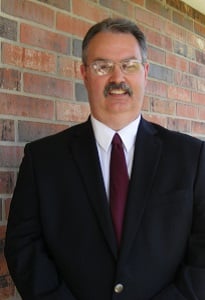
Rep. Lance Neelly
Sponsored bills
Maddy summaryHB 2664 creates a legal framework for private energy campuses - such as large data centers, manufacturing facilities, or hydrogen plants - located on contiguous private property to generate and sell electricity exclusively to businesses on the same site. It exempts these private energy sales from standard public utility regulations and net metering requirements, while allowing campuses to connect to the broader grid for emergency backup or energy exports through voluntary agreements with electric utilities. The bill requires utilities to approve these agreements (with state commission oversight for regulated utilities), but keeps utility rates and terms for private campus-to-campus power sales outside regulatory jurisdiction. This directly affects large industrial and data center enterprises seeking self-sufficiency, without altering service for residential or small commercial customers.
Maddy summaryHB 2599, known as the "Kansas lemonade stand law," exempts minor-owned businesses (operated solely by individuals under 18) from paying state sales tax and local taxes, licenses, or permits on the first $10,000 of annual sales of goods. It specifically applies to small, seasonal or intermittent businesses like lemonade stands, where minors make under $10,000 yearly in gross sales. The law removes both state-level sales tax obligations and local government fees for qualifying businesses. This policy directly supports young entrepreneurs by reducing startup costs for small-scale, temporary ventures.
Maddy summaryThis bill designates a specific segment of K-5 highway in Wyandotte County (from the junction of K-5 and N. 18th Street west to N. 38th Street) as the "Representative Marvin S. Robinson II Memorial Highway." It also redesignates a portion of Interstate 635 (from the Kansas-Missouri border south to its junction with K-5 highway) as the "Harry Darby Memorial Highway." The bill requires the Kansas Secretary of Transportation to install highway signs marking both routes, following standard procedures. This is a procedural memorial designation with no substantive policy changes to transportation law.
Maddy summaryHB 2006 changes retirement eligibility for Kansas Department of Corrections security officers. Starting July 1, 2025, these officers will join the state's police and fire retirement system (KP&F) instead of the general public employees system (KPERS). The bill allows officers to buy back prior service time in KPERS to count toward KP&F benefits, with a 7.15% employee contribution rate on salary. This applies to current and future security officers employed by corrections, affecting their retirement calculations and contributions.
Maddy summaryThis resolution expresses support for federal funding and authorization of a program designed to research and develop affordable, domestically made drones for public safety use. It specifically encourages the U.S. Department of Commerce to fund projects that create small, uncrewed aerial systems in the United States to reduce reliance on foreign manufacturers. The document also endorses the National Defense Authorization Act for fiscal year 2025, which restricts the federal government and its grant recipients from purchasing or operating DJI drones. Additionally, the resolution supports a provision requiring the Department of Defense to assess and potentially ban DJI drones within a year due to security concerns.
Maddy summaryThis bill proposes a constitutional amendment to Kansas to explicitly define the right to bear arms as a natural and fundamental right that includes owning ammunition, firearm accessories, and components. It requires that any government restrictions on this right must pass the strict scrutiny legal standard, which is the highest level of judicial review. If passed by the legislature and approved by voters, the change would strengthen existing gun protections by clarifying the scope of items covered and the level of protection they receive.
Maddy summaryHB 2008 modifies Kansas' retirement system definition of "security officer" to include specific juvenile corrections officer positions. It expands eligibility under the Kansas Public Employees Retirement System (KPERS) to cover roles like juvenile corrections officer I (A), I (B), II, and III, as defined in the state job classification plan. This change ensures these officers qualify for the same retirement benefits, employer contribution rates, and retirement date calculations as other security officers in the corrections department. The bill takes effect July 1, 2025, and amends K.S.A. 74-4914a and 74-4914e.
Maddy summaryHB 2005 creates a 75% income tax credit for Kansas veterans deemed totally disabled, permanently disabled, or unemployable under federal standards (38 C.F.R. § 3.340). It directly benefits eligible veterans who pay property taxes on their primary residence, allowing them to claim a credit equal to 75% of those taxes. The credit cannot exceed the actual property taxes paid and is unavailable if the veteran already received a homestead property tax refund or senior relief credit for the same property. Any excess credit beyond income tax liability will be refunded, and the credit applies to tax years starting in 2025.
Maddy summaryThis bill is a House resolution that honors the life and public service of Representative Melody McCray-Miller, who passed away in February 2026. It recognizes her decades of work in education, business, and government, including her roles as a teacher, restaurant owner, county commissioner, state representative, and community leader. The resolution formally acknowledges her contributions to Kansas families and communities but does not create new laws or change any policies. Its only effect is to officially celebrate her legacy within the Kansas House of Representatives.