Issue · Criminal Justice

Criminal Justice (Juvenile Justice)

Every criminal justice bill, vote, and legislator stance in Kansas, automatically classified by Maddy, our AI policy reader.

Total bills
14
2025-2026 Regular Session
Top supporter
Nikki McDonald
100% support rate
Top opponent
Bill Rhiley
0% support rate
Ranked legislators
10
5 support · 5 oppose
Key legislators

Who's moving juvenile justice in Kansas

Legislators moving juvenile justice in Kansas
Legislator Party Stance Support rate Decisive votes
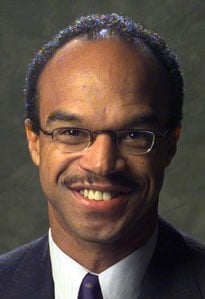
Nikki McDonald
Nikki McDonald House · District 49
D
Strong +
100% 4
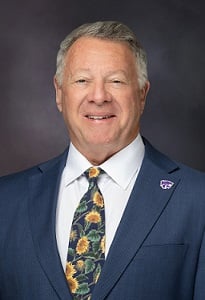
Bill Clifford
Bill Clifford Senate · District 39
R
Strong +
100% 3
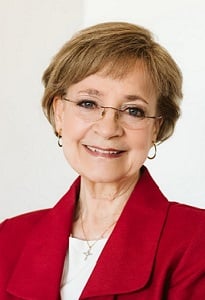
Cindy Holscher
Cindy Holscher Senate · District 8
D
Strong +
100% 3
David Haley
David Haley Senate · District 4
D
Strong +
100% 3
Dinah Sykes
Dinah Sykes Senate · District 21
D
Strong +
100% 3
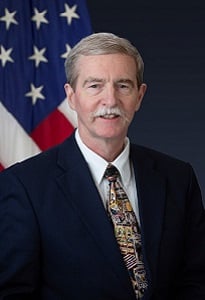
Bill Rhiley
Bill Rhiley House · District 80
R
Strong −
0% 4
Adam Thomas
Adam Thomas Senate · District 23
R
Strong −
0% 3
Beverly Gossage
Beverly Gossage Senate · District 9
R
Strong −
0% 3
Brad Starnes
Brad Starnes Senate · District 22
R
Strong −
0% 3
Brenda Dietrich
Brenda Dietrich Senate · District 20
R
Strong −
0% 3
Showing 11–14 of 14 bills

All criminal justice bills

died · Kansas · House Apr 10, 2026

HB 2076: Reducing the authorized amount of days that a child may be placed in a secure facility and eliminating the court's option to extend such authorization.

HB 2076 reduces the maximum number of days a court can authorize placing a child in a secure facility and eliminates the court's ability to extend that period. This change directly affects children in Kansas child welfare cases who are subject to court orders for secure placement, typically those adjudicated as "children in need of care" under specific legal criteria. The bill amends K.S.A. 38-2260 to set a fixed, shorter time limit for such placements without allowing extensions. This policy shift limits the duration children may be held in secure facilities during court proceedings.
Sub-Topics Juvenile Justice
died · Kansas · House Apr 10, 2026

HB 2350: Providing that no juvenile less than 18 years of age shall be prosecuted as an adult.

HB 2350 prohibits prosecuting any juvenile under 18 as an adult in Kansas. It directly affects all individuals under 18 accused of crimes, removing the possibility of adult criminal prosecution regardless of offense severity. The bill amends Kansas law to state explicitly that "no juvenile less than 18 years of age shall be prosecuted as an adult" and repeals the previous section allowing such prosecutions. This eliminates the court process for prosecutors to request adult prosecution for minors under 18, ensuring all juveniles under 18 remain under juvenile court jurisdiction.
Sub-Topics Juvenile Justice
died · Kansas · House Apr 10, 2026

HB 2227: Prohibiting the use of any prone restraint on a juvenile who is in custody at a juvenile detention facility or juvenile correctional facility or being assessed as part of the juvenile intake and assessment system.

HB 2227 prohibits the use of prone restraints (holding a juvenile face-down) on juveniles in custody at juvenile detention or correctional facilities, or during the juvenile intake and assessment process. The bill amends Kansas' juvenile justice code to explicitly ban this practice for all personnel in these settings. This law directly affects juveniles under state custody and those undergoing initial assessments in the juvenile justice system. The prohibition applies immediately to all relevant facilities and staff under the state's juvenile justice code.
Sub-Topics Juvenile Justice
signed · Kansas · Senate Apr 11, 2025

SB 204: Providing that the attorney members of the board of trustees of the county law library in certain counties shall be appointed by the chief judge of the judicial district, allowing such boards to authorize the chief judge to use certain fees for the purpose of facilitating and enhancing functions of the district court of the county and requiring the case, warrant and subpoena information be sealed in criminal and juvenile offender cases.

SB 204 requires Kansas courts to keep criminal and juvenile case records, warrants, and subpoenas confidential until warrants are executed or requests are denied. Law enforcement may still access these records for warrant execution, but public access is restricted otherwise. The law applies retroactively to all pending cases and mandates courts to make written "good cause" findings before sealing records, balancing privacy/safety concerns against public access to court proceedings. It directly affects defendants in criminal/juvenile cases, courts, and law enforcement by changing how sensitive case information is handled.
Showing 11 to 14 of 14 bills