

Maddy summarySRES 203 is a symbolic Senate resolution designating May 2025 as "Renewable Fuels Month" to recognize the role of renewable fuels. It does not create new laws but formally acknowledges four specific benefits: renewable fuels' contribution to reducing carbon emissions, lowering consumer fuel prices, supporting rural economies, and decreasing reliance on foreign energy sources. The resolution was introduced by Senators Ricketts, Grassley, Ernst, and others, with supporting details highlighting ethanol and biodiesel industry impacts like job creation and emissions reductions. This resolution has no binding effect but serves as a formal statement of congressional recognition.
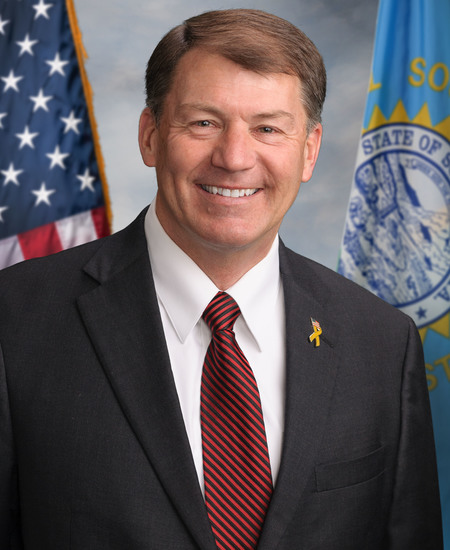
Sen. Mike Rounds
Sponsored bills
Maddy summaryThis resolution designates May 5, 2025, as the "National Day of Awareness for Missing and Murdered Indigenous Women and Girls" to honor victims and support families. It calls on the public to commemorate affected individuals and demonstrates solidarity with their families. The resolution also recommends the Department of Justice commission a new study on the crisis, noting that a previous study (2016) is outdated. As a symbolic gesture, it does not create new laws or funding but aligns with existing efforts like Savanna’s Act.
Maddy summaryS 1574, the Tribal Access to Electronic Evidence Act, allows tribal courts to legally request electronic evidence from service providers under the same rules as state courts. It directly affects tribal courts and tribal governments by adding "Tribal court" to the definition of "court of competent jurisdiction" in the Stored Communications Act. Key provisions require warrants for electronic evidence to follow specific tribal court procedures outlined in the Indian Civil Rights Act (25 U.S.C. 1302(a)(2)), rather than solely federal or state rules. This change ensures tribal courts can independently seek warrants for digital evidence stored for 180 days or less, aligning their authority with state courts. The bill makes no changes to the actual content of warrants but formalizes tribal courts' standing in electronic evidence requests.
Maddy summaryThis Senate resolution (SRES 193) designates April 2025 as "Financial Literacy Month" to raise public awareness about the importance of personal financial education and the consequences of financial illiteracy. It does not create new laws or directly affect specific groups; instead, it calls on federal, state, local, school, nonprofit, and business entities to observe the month with educational programs. The resolution cites statistics on unbanked households, student debt, and the benefits of financial education as context, but the only action taken is the symbolic designation. This is a procedural resolution with no binding requirements.
This bill increases the annual limit on the tax credit for qualified railroad track maintenance expenses (also referred to as the short line railroad tax credit) and expands eligibility for claiming the credit. Under current law, the tax credit is limited each tax year to $3,500 multiplied by the sum of the number of miles of railroad track owned or leased by the taxpayer (miles owned or leased) and the number of railroad track miles assigned to the taxpayer by a Class II or III railroad (miles assigned). This bill increases the annual limit to $6,100 multiplied by the sum of miles owned or leased and miles assigned. The $6,100 amount used in the calculation of the tax credit limit is adjusted for inflation for tax years beginning after 2025. The bill also expands eligibility for the tax credit to include gross expenses for maintaining railroad tracks owned or leased as of January 1, 2024. Under current law, the tax credit is limited to gross expenses for maintaining railroad tracks owned or leased as of January 1, 2015.
Insurance Data Protection Act This bill limits the ability of federal entities to compel insurance companies to share information. Specifically, the bill eliminates the subpoena power of the Federal Insurance Office. Under current law, the office has the power to subpoena information from insurers to, among other purposes, identify issues that could contribute to a systemic crisis in the insurance industry or the U.S. financial system. The bill also eliminates the ability of the Office of Financial Research to subpoena insurance companies. When seeking to collect insurance company data under specified consumer protection laws, a financial regulator must obtain the data from other regulators or from publicly available sources if possible. Otherwise, the financial regulator may only collect this data directly from the insurance company if the regulator complies with the Paperwork Reduction Act.
Maddy summaryThe Stand with Israel Act would prohibit U.S. federal funds from being used to pay the U.S. share of United Nations dues or contributions to UN programs, specialized agencies, or related entities if the UN or a UN entity expels, downgrades, or suspends Israel's membership or restricts Israel's full and equal participation as a member state. This means the U.S. government would withhold payments to the UN in cases where the UN takes such actions against Israel. The bill directly affects the Department of State and other federal agencies responsible for UN funding, requiring them to block these payments under specified conditions. It does not compel the UN to act but would prevent U.S. financial support in response to UN decisions impacting Israel's membership status.
Maddy summaryThis bill directs the Department of Education to use the International Holocaust Remembrance Alliance (IHRA) definition of antisemitism when reviewing discrimination complaints under Title VI of the Civil Rights Act. It specifically applies to cases involving discrimination based on Jewish ancestry or ethnic characteristics in schools and programs receiving federal funding. The bill clarifies that this guidance does not expand the Department’s authority, alter existing discrimination standards, or affect First Amendment rights. It aims to ensure consistent enforcement against antisemitism in federally funded education settings, building on existing Department practices since 2019.
Maddy summaryThe Affordable Housing Credit Improvement Act of 2025 updates the Low-Income Housing Tax Credit program to increase affordability and accessibility for low-income households. It raises state allocation amounts through revised per capita calculations, modifies income eligibility rules to better serve extremely low-income households, and adds protections for domestic violence victims in housing. The bill expands "difficult development areas" to include rural areas and Indian lands, and changes the program's name from "Low-Income Housing Credit" to "Affordable Housing Credit" to better reflect its purpose. These changes aim to make affordable housing more accessible while improving transparency and accountability in the program's implementation.
Maddy summaryThis resolution designates the week of April 19-27, 2025, as "National Park Week" in the U.S. Senate. It encourages the public to responsibly visit, experience, and support national parks across the United States. The resolution highlights the National Park System’s role in preserving natural and cultural resources while acknowledging its economic impact and recreational value. It does not create new laws or alter funding, focusing solely on recognition and public engagement.