

Restore the Rights of Property Owners under the Eviction Moratorium Issued by the CDC Act of 2021 This bill nullifies beginning on July 1, 2021, the emergency order (and any extensions of the order) issued by the Centers for Disease Control and Prevention on September 4, 2020, that restricted residential evictions during the COVID-19 emergency. It also prohibits the order from being reissued unless specifically authorized by law.
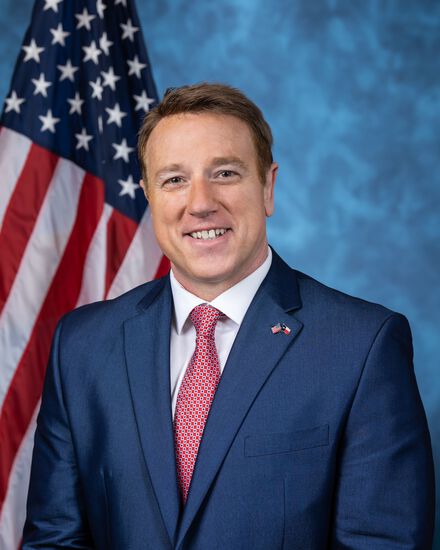
Rep. Pat Fallon
Sponsored bills
Stop Inflationary Spending Act This bill requires the Congressional Budget Office (CBO) to provide inflation projections for bills that Congress considers using the budget reconciliation process. Specifically, the CBO must estimate the impact on inflation that will occur from implementing each reconciliation bill, including the impact on inflation that will occur during each of the first five years after the enactment of the bill.
Advancing FASD Research, Services, and Prevention Act or the FASD Respect Act This bill expands and establishes programs for fetal alcohol spectrum disorders (FASD). Specifically, it directs the Department of Health and Human Services, the National Institutes of Health, the National Center on Birth Defects and Developmental Disabilities, and the Health Resources and Services Administration to carry out and coordinate research, surveillance, and related activities to diagnose, prevent, and treat FASD. Furthermore, the bill establishes various grant programs to support FASD coalitions and develop systems of care; provide services for individuals affected by FASD and other conditions related to prenatal substance exposure; identify and implement best practices for educating children with FASD; and establish centers for excellence to build relevant capacity for preventing, treating, and responding to the needs of individuals with FASD. The bill also directs the Department of Education and the Department of Justice to develop and disseminate trainings and best practices related to FASD in schools and correctional facilities, respectively.
Unnecessary Agency Regulations Reduction Act of 2021 This bill requires the Office of Information and Regulatory Affairs to annually report a list of major rules (i.e., rules with a significant economic impact, cost to consumers, or adverse effects on competition) that it recommends should be consolidated or repealed because they are outdated, duplicative, or incur excessive compliance costs. Congress must review the list to determine, and recommend by joint resolution, any such rules to consolidate or repeal.
This resolution requires an analytical statement to be included in committee reports on whether, and the extent to which, the increased budget authority, outlays, or revenue produced by the enactment of a bill or joint resolution may have an inflationary impact on prices and costs in the operation of the national economy and the purchasing power of low- and middle-income families.
Dillon's Law This bill requires the Department of Health and Human Services to give preference when awarding certain grants for preventive health service programs to states that allow trained individuals to administer epinephrine and provide civil liability protections related to that administration.
Foreign Gain-of-Function Research Prevention Act of 2021 This bill prohibits the use of federal funds to conduct or support gain-of-function research involving potential pandemic pathogens by China, Russia, Iran, North Korea, or other foreign adversaries. Gain-of-function research is any research that is anticipated to confer an attribute on a pathogen to enhance its pathogenicity or transmissibility in mammals. If the Department of State finds that an entity has used funds for prohibited research, the entity may not receive any federal funding for a period of five years.
This bill prohibits the United States from rejoining the Joint Comprehensive Plan of Action (JCPOA) until the President makes specified certifications regarding Iran, including actions taken by Iran relating to its nuclear program. The JCPOA is an agreement, signed by Iran and several other world powers (including the United States), that places restrictions on Iran's nuclear program in exchange for certain sanctions relief. The United States withdrew from the JCPOA in 2018.
Ending Critical Race Theory in D.C. Public Schools Act This bill prohibits any employee of the District of Columbia Public Schools or the District of Columbia Public Charter Schools from compelling a teacher or student to adopt, affirm, adhere to, or profess ideas that promote race or sex stereotyping or scapegoating.
Compensation for Americans Act of 2021 This bill requires the Department of State to negotiate with China to secure compensation for China's distortion of information related to the spread of COVID-19. The bill also contains other China-related provisions, such as those imposing sanctions on certain Chinese individuals and entities. As part of such negotiations, the President shall (1) freeze Chinese assets subject to U.S. jurisdiction; (2) suspend the required review of any proposed acquisition of a U.S. entity by a Chinese entity; (3) impose sanctions on Chinese entities in certain industries, such as artificial intelligence and pharmaceuticals; (4) impose sanctions on various individuals, including Chinese government officials and Chinese citizens responsible for stealing intellectual property from U.S. entities; and (5) prohibit using federal funds to procure goods manufactured or sourced from a Chinese company, if such goods pose a supply chain risk to U.S. national security. The President may terminate such prohibitions and sanctions if China and the United States come to an agreement regarding compensation related to COVID-19. The Department of the Treasury shall establish a public repository with information about entities that are owned, financed, or controlled by the Chinese government. Other provisions in this bill include (1) imposing export controls on telecommunications equipment that would help China carry out censorship or surveillance, (2) banning researchers affiliated with China's military from obtaining visas, and (3) requiring U.S. World Bank representatives to end China's eligibility for World Bank assistance.