

Illegitimate Court Counteraction Act This bill imposes sanctions against foreign persons (individuals and entities) who assist the International Criminal Court (ICC) in investigating, arresting, detaining, or prosecuting certain individuals. The bill categorizes as protected persons (1) any U.S. individual, U.S. entity, or person in the United States, unless the United States is a state party to the Rome Statute of the ICC and provides formal consent to ICC jurisdiction; and (2) any foreign person that is a citizen or lawful resident of a U.S. ally that is not a state party to the Rome Statute or has not consented to ICC jurisdiction. If the ICC attempts to investigate, arrest, detain or prosecute a protected person, the President must impose visa- and property-blocking sanctions against the foreign persons that engaged in or materially assisted in such actions, as well as against foreign persons owned by, controlled by, or acting on behalf of such foreign persons. The President must also apply visa-blocking sanctions to the immediate family members of those sanctioned. Upon enactment, the bill rescinds all funds appropriated for the ICC and prohibits the subsequent use of appropriated funds for the ICC.
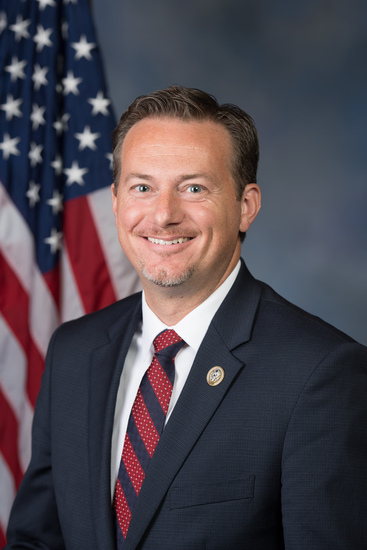
Rep. Michael Cloud
Sponsored bills
Maddy summaryThis bill requires the Congressional Budget Office (CBO) to publicly publish the models, data, and detailed methodology it uses to estimate the costs and effects of legislation. Specifically, it mandates that the CBO make available all fiscal models, data routines, and the underlying assumptions behind its cost estimates, allowing independent verification. This applies to all CBO analyses of proposed bills, including the specific data and computational details needed for others to replicate the results. The requirement applies to all users of CBO reports - lawmakers, researchers, and the public - except for data legally restricted from disclosure, which would still require a public list of variables and descriptive statistics.
Maddy summaryHR 729, the Teleabortion Prevention Act of 2025, prohibits healthcare providers from administering chemical abortions (using drugs to terminate pregnancy) via telehealth or remote means without being physically present during the procedure. It requires providers to physically examine the patient, be present at the location of the abortion, and schedule a follow-up visit within 14 days. The bill directly affects healthcare providers offering telemedicine abortion services, imposing fines up to $1,000 or up to 2 years in prison for violations. Exceptions apply for life-threatening medical emergencies, and the law explicitly excludes treatment for verified ectopic pregnancies. This bill targets the remote provision of abortion drugs, making in-person provider presence mandatory for such procedures.
Life at Conception Act This bill declares that the right to life guaranteed by the Constitution is vested in each human being at all stages of life, including the moment of fertilization, cloning, or other moment at which an individual comes into being. Nothing in this bill shall be construed to authorize the prosecution of any woman for the death of her unborn child.
Maddy summaryHR 685, the SAVE Moms and Babies Act of 2025, prohibits the FDA from approving new abortion drugs or allowing investigational use of existing ones. It restricts existing abortion drugs to in-person administration by certified healthcare providers in clinics or hospitals (not pharmacies), limits use to pregnancies under 70 days gestation, and requires providers to certify they can handle complications like severe bleeding or ectopic pregnancies. The bill mandates reporting of adverse events (such as hospitalizations or infections) to the FDA without patient identifiers and defines "abortion drug" broadly as any drug intended to terminate pregnancy, excluding specific medical exceptions. This directly affects FDA approval processes, healthcare providers prescribing these drugs, and drug manufacturers.
Maddy summaryHR 645, the National Constitutional Carry Act, would prevent all U.S. states and localities from requiring permits or imposing penalties for carrying firearms in public. It directly affects eligible U.S. citizens (including non-residents) who legally possess firearms under state and federal law, removing current permit requirements for public carry. The bill’s key provision amends federal law to invalidate any state or local law that criminalizes or discourages public firearm carry, except where private property owners clearly prohibit firearms or security screening occurs. This would override existing state permit laws, making permitless carry legal across all states and territories for qualified individuals.
Maddy summaryThis bill prohibits U.S. federal funds from being used to support the United Nations Population Fund (UNFPA). It bans all contributions - direct or indirect - from any department or agency, including the State Department, that might reach the UNFPA. The law directly affects how federal agencies manage international aid budgets and prevents taxpayer money from flowing to the UNFPA. It does not alter existing funding for other UN programs or create new requirements.
Maddy summaryThis bill prohibits federal funding from being provided to Planned Parenthood Federation of America or its related clinics. It redirects funds previously allocated to Planned Parenthood to other eligible providers like community health centers, hospitals, and clinics that offer women's health services. These services include contraception, cancer screenings, prenatal care, STI testing, and family planning - particularly in underserved areas. The bill explicitly states it does not reduce overall federal funding for women's health care or affect existing abortion-related funding restrictions.
Maddy summaryHR 7 prohibits federal funds from being used for abortions or health insurance plans covering abortion, with exceptions for pregnancies resulting from rape, incest, or when a woman's life is endangered. It blocks federal premium tax credits under the Affordable Care Act for health plans covering abortion (except in specified cases) and requires clear disclosure of abortion coverage and related surcharges in plan materials. The bill allows individuals or employers to purchase separate abortion coverage using non-federal funds, such as out-of-pocket payments, without affecting federal subsidies. It directly affects federal health programs, ACA marketplace plans, and health insurance issuers offering coverage that includes abortion services.
Birthright Citizenship Act of 2025 This bill limits birthright citizenship by redefining what it means to be subject to the jurisdiction of the United States. Currently, a person born in the United States and subject to U.S. jurisdiction is entitled to citizenship. Under the bill, a person is subject to U.S. jurisdiction if he or she is born to a parent who is (1) a U.S. citizen or national, (2) a lawful permanent resident residing in the United States, or (3) a non-U.S. national ( alien under federal law) with a lawful immigration status who is performing active service in the Armed Forces. The bill does not affect the citizenship or nationality status of any person born before the bill's enactment date.