

Maddy summaryHRES 431 is a symbolic resolution recognizing the Arctic Council’s role as a key forum for international cooperation on Arctic issues. It reaffirms the U.S. commitment to active participation in the Council, highlights the importance of Indigenous involvement, and urges sustained diplomatic engagement - including support for the U.S. Arctic Ambassador role - amid geopolitical shifts like Russia’s suspension from Council activities. The resolution does not create new laws or funding but expresses support for existing U.S. leadership in Arctic diplomacy.
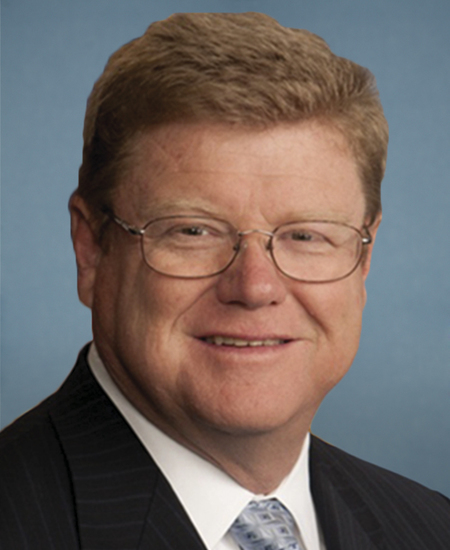
Rep. Mark E. Amodei
Sponsored bills
Maddy summaryHR 2243, the LEOSA Reform Act, updates the Law Enforcement Officers Safety Act to clarify and expand firearm carry rights for qualified current and retired law enforcement officers. It modifies training requirements to allow officers to meet standards set by their former agency, their state, any local agency in their state, or a certified instructor within the state. The bill also adds exceptions for transportation property and public spaces when applying state laws, and permits qualified officers to carry concealed firearms in certain federal facilities (Security Level I/II civilian public access facilities). These changes aim to provide clearer, more flexible standards for firearm carry while maintaining existing safety frameworks.
Maddy summaryHR 3328 establishes a new U.S. Ambassador-at-Large for Arctic Affairs within the State Department, appointed by the President with Senate approval. The position coordinates U.S. foreign policy across federal agencies on Arctic issues including environmental protection, indigenous engagement, resource management, security, and scientific research. The ambassador reports directly to the Secretary of State and oversees efforts related to the eight Arctic Council nations and the defined Arctic region (including northern U.S. territories and Arctic waters). This bill creates a dedicated diplomatic role to streamline U.S. coordination on Arctic matters rather than changing existing laws or affecting specific constituencies directly.
Maddy summaryThe Certainty for Our Energy Future Act ends tax credits for new wind and solar energy projects that begin construction after December 31, 2030, effective January 1, 2026. It also denies clean energy tax benefits to companies controlled by governments of China, Russia, Iran, or North Korea. The bill uses existing IRS guidelines to define when construction begins for projects, avoiding new bureaucratic rules. Treasury must issue implementation guidance within 180 days, with country-related restrictions taking effect 180 days after that guidance is published.
Maddy summaryHR 3158, the Help Hoover Dam Act, authorizes the Secretary of the Interior to use recovered non-reimbursable funds (including those in account XXXR5656P1) for Hoover Dam operations, maintenance, cleanup, and capital improvements within the Boulder Canyon Project. It directly affects the dam's management and contractors identified under the 2011 Hoover Power Allocation Act. The bill amends the 1928 Boulder Canyon Project Act to streamline spending of existing recovered funds without creating new policy or public impact. (This is a procedural funding amendment, not a substantive policy change.)
Maddy summary# Summary of the SHIPS for America Act This comprehensive legislation focuses on strengthening the U.S. maritime industry, shipbuilding capacity, and maritime workforce to enhance national security and economic competitiveness. ## Key Areas of Focus 1. **Shipbuilding & Maritime Infrastructure** - Establishes a United States Center for Maritime Innovation to accelerate adoption of commercial technologies - Creates a National Shipbuilding Research Program - Requires an annual survey of anticipated commercial vessel construction - Includes provisions for streamlined environmental reviews of maritime infrastructure 2. **Workforce Development** - Establishes the United States Merchant Marine Career Retention Program to maintain mariner qualifications - Creates Centers of Excellence for Domestic Maritime Workforce Training and Education - Implements military-to-maritime transition programs - Establishes a Maritime Career and Technical Education Advisory Committee 3. **Education & Training** - Expands educational assistance for merchant mariners - Creates eligibility for Naval Postgraduate School for merchant mariners - Establishes maritime education programs from K-12 through higher education - Provides for international exchanges for mariners and naval architects 4. **National Security & Strategic Readiness** - Requires reports on National Defense Reserve Fleet utilization - Includes measures to de-risk the maritime sector from Chinese influence - Enhances shipbuilding capacity for national security needs - Establishes programs to ensure sufficient mariner workforce for national defense 5. **Funding Mechanisms** - Authorizes appropriations from the Maritime Security Trust Fund - Includes funding for workforce programs, education, and shipbuilding initiatives - Establishes specific funding levels for various programs over multiple fiscal years The legislation aims to create a sustainable domestic maritime industrial base that supports both commercial shipping and national defense requirements, with a particular emphasis on developing and retaining a skilled U.S. maritime workforce.
Canadian Snowbird Act This bill authorizes the Department of Homeland Security to admit into the United States qualifying Canadian citizens as long-term nonimmigrant visitors. A qualifying Canadian citizen is an individual who (1) is at least 50 years old, (2) maintains a Canadian residence, (3) owns a U.S. residence or has rented a U.S. accommodation for the duration of the individual's stay, (4) is not inadmissible or deportable, (5) will not engage in employment or labor for hire in the United States other than for a non-U.S.-based person or entity by whom the Canadian citizen was employed in Canada or for whom the Canadian citizen performed services in Canada, and (6) will not seek certain forms of assistance or benefits. A qualified individual may be admitted for up to 240 days during any single 365-day period. The spouse of such an individual may be admitted under the same terms, except that the spouse is not required to separately satisfy the requirement for owning or renting a residence in the United States. An individual admitted into the United States under this bill shall have nonresident alien tax status.
Maddy summaryHRES 337 is a symbolic House resolution honoring linemen for their critical role in maintaining power infrastructure and responding to emergencies. It recognizes them as first responders who work in dangerous conditions 24/7 to keep electricity flowing, supporting schools and businesses during storms. The resolution formally supports designating April 18, 2025, as "National Lineman Appreciation Day" to publicly acknowledge their contributions. As a non-binding resolution, it has no direct policy impact or effect on affected individuals.
Maddy summaryThis bill, HR 2936 (the ABC-ED Act), aims to reduce emergency department crowding by requiring real-time tracking of hospital bed capacity and related metrics like patient wait times. It allows federal grants to modernize public health data systems that monitor emergency department boarding rates, bed availability, and ambulance offload times, with results displayed on a public dashboard (while protecting privacy). The bill also adds two new Medicare Innovation Center pilot programs: one focused on improving care for older adults (through staffing, infrastructure, and senior care coordination) and another for psychiatric crisis care (including dedicated units and faster facility transfers). Finally, it mandates a one-year study by the Government Accountability Office to evaluate best practices for these data systems and their impact on emergency department efficiency.
Maddy summaryThis bill amends the Elementary and Secondary Education Act to explicitly include accounting education as part of a well-rounded K-12 curriculum. It requires schools to develop and strengthen programs teaching accounting, including increasing access to high-quality accounting courses for students from groups historically underrepresented in accounting careers. The key provision inserts specific language into existing law, directing schools to promote accounting career awareness and expand course availability through grade 12. This directly affects K-12 students, particularly those from underrepresented backgrounds, by making accounting education a recognized component of career-focused learning.