Veterinary Medicine Loan Repayment Program Enhancement Act This bill modifies the requirements for calculating taxable income to exclude from gross income payments under the federal veterinary medicine loan repayment program or any state loan repayment or forgiveness program that is intended to provide for increased access to veterinary services in such state.
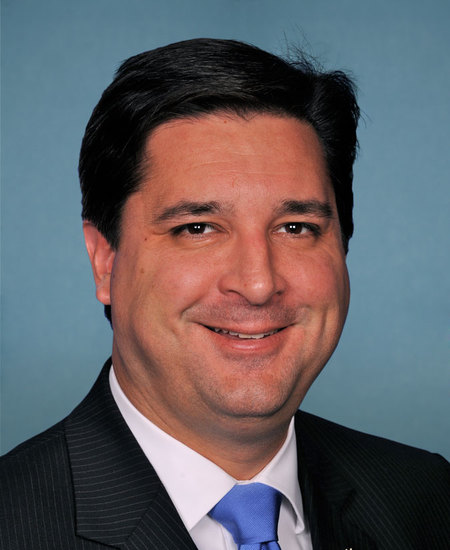
Rep. David Rouzer
Sponsored bills
This resolution condemns Iranian state-sponsored terrorist attacks against U.S. citizens and officials and Iranian dissidents and expresses support for the people of Iran who are engaged in legitimate and peaceful protests against the Iranian regime.
Willie O'Ree Congressional Gold Medal Act This bill provides for the award of a Congressional Gold Medal to Willie O'Ree or, if unavailable, to a member of his family, in recognition of his contributions and commitment to hockey, inclusion, and recreational opportunity.
Emmett Till and Mamie Till-Mobley Congressional Gold Medal Act of 2021 This bill provides for the posthumous presentation of a Congressional Gold Medal in commemoration of Emmett Till and Mamie Till-Mobley. After the award the medal shall be given to the National Museum of African American History and Culture.
This bill directs the Department of State to include additional information in its annual reports concerning Taiwan's participation at the World Health Organization's World Health Assembly (WHA) as an observer. The report shall describe changes and improvements to the State Department's plan to support Taiwan's observer status at the WHA, following any meetings at which Taiwan did not participate under such status. (China has opposed Taiwan's participation in the WHA.)
Heartbeat Protection Act of 2021 This bill makes it a crime for a physician to knowingly perform an abortion (1) without determining whether the fetus has a detectable heartbeat, (2) without informing the mother of the results, or (3) after determining that a fetus has a detectable heartbeat. It provides an exception for an abortion that is necessary to save the life of a mother whose life is endangered by a physical (but not psychological or emotional) disorder, illness, or condition. A physician who performs a prohibited abortion is subject to criminal penalties—a fine, up to five years in prison, or both. A woman who undergoes a prohibited abortion may not be prosecuted for violating or conspiring to violate the provisions of this bill.
Just and Unifying Solutions To Invigorate Communities Everywhere Act of 2021 or the JUSTICE Act This bill addresses policies and issues regarding policing practices and law enforcement accountability. The bill funds state and local grants, incentivizes state and local reporting on the use of certain policing practices, creates new federal offenses for certain misconduct, and establishes best practices and training requirements. The bill funds state and local grants, including to support the use of body-worn cameras, to implement information sharing systems for disciplinary records of law enforcement officers, and to prohibit officers from engaging in sexual acts under color of the law. Further, it requires state and local governments that receive grants under the Edward Byrne Memorial Justice Assistance Grant program to report information related to use-of-force incidents and the use of no-knock warrants. At the federal level, the bill establishes new criminal offenses related to falsifying police reports and engaging in sexual acts under color of law. The bill directs the Department of Justice to develop training on de-escalation tactics, behavioral health crises, alternatives to the use of force, and the duty to intervene when another officer uses excessive force. Finally, the bill establishes and funds the National Criminal Justice Commission. Among other tasks, the commission must develop best practices for policing tactics and procedures.
Born-Alive Abortion Survivors Protection Act This bill establishes requirements for the degree of care a health care practitioner must provide in the case of a child born alive following an abortion or attempted abortion. Specifically, a health care practitioner who is present must (1) exercise the same degree of care as would reasonably be provided to any other child born alive at the same gestational age, and (2) ensure the child is immediately admitted to a hospital. Additionally, a health care practitioner or other employee who has knowledge of a failure to comply with the degree-of-care requirements must immediately report such failure to law enforcement. A health care practitioner who fails to provide the required degree of care, or a health care practitioner or other employee who fails to report such failure, is subject to criminal penalties—a fine, up to five years in prison, or both. An individual who intentionally kills or attempts to kill a child born alive is subject to prosecution for murder. The bill bars the criminal prosecution of a mother of a child born alive under this bill and allows her to bring a civil action against a health care practitioner or other employee for violations.
Shellfish Aquaculture Improvement Act of 2021 This bill limits the ability of an aquaculture worker to bring a civil action against an employer for employment-related injuries. Specifically, the bill limits recovery for injuries sustained by an aquaculture worker if (1) state workers' compensation is available to such individual; and (2) at the time of injury, the individual was engaged in aquaculture in a place where the individual had lawful access. An aquaculture worker is an individual employed by commercial enterprises involved in the controlled cultivation and harvest of aquatic plants and animals, including the cleaning, processing, or canning of fish and fish products, the cultivation and harvesting of shellfish, and the controlled growing and harvesting of other aquatic species.
States' Education Reclamation Act of 2021 This bill abolishes the Department of Education (ED) and repeals any program for which it has administrative responsibility. The Department of the Treasury shall provide grants to states, for FY2021-FY2029, for elementary, secondary, and postsecondary education purposes permitted by state law. The level of funding is set at the amount provided to states for federal elementary and secondary education programs and the amount provided for federal postsecondary education programs, respectively, for FY2021, minus the funding provided for education programs that the bill transfers to other federal agencies. States must contract for an annual audit of their expenditures or transfers of grant funds. Program administrative responsibility and delegation of authority are transferred as follows: ED's job training programs to the Department of Labor, each special education grant program under the Individuals with Disabilities Education Act to the Department of Health and Human Services (HHS), ED's Indian education programs to the Department of the Interior, each Impact Aid program under the Elementary and Secondary Education Act of 1965 to the Department of Defense, the Federal Pell Grant program and each federal student loan program to Treasury, and programs under the jurisdiction of the Institute of Education Sciences or the D.C. Opportunity Scholarship Program to HHS.