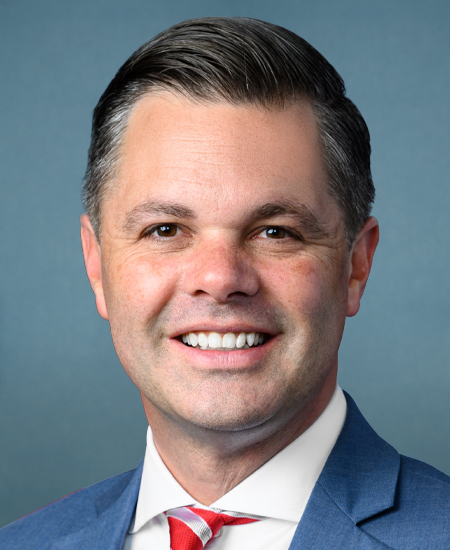
Key legislators
Who's moving education in Iowa
Showing 3 of 3
bills
All education bills
HR 632 prohibits federal funding (directly or indirectly) for colleges and universities that host or are affiliated with campus health clinics providing abortion drugs or abortions to students or employees. Institutions must annually certify to federal education and health agencies that no such services are offered at their campus sites. The bill defines "abortion drugs" broadly as any medication intended to terminate pregnancy (excluding cases for live birth, miscarriage management, or ectopic pregnancy treatment). This policy directly affects institutions receiving federal funds, requiring them to ensure campus health services comply with the prohibition to maintain eligibility.
HR 2080, the "Crucial Communism Teaching Act," requires high schools to teach students about communism's historical and current impacts. The bill mandates that students learn communism caused over 100 million deaths globally, understand its dangers, and recognize that 1.5 billion people "still suffer under communism." It directs the Victims of Communism Memorial Foundation to develop a high school curriculum and oral history resources ("Portraits in Patriotism") featuring victim stories, with specific focus on modern examples like Xinjiang human rights abuses and China's actions in Hong Kong and Taiwan. The curriculum must be integrated into social studies, government, history, and economics classes, and updated to cover both historical and current communist regimes.
This joint resolution seeks to block a Federal Communications Commission (FCC) rule that aimed to expand internet access for schools through the E-Rate program, specifically addressing the "homework gap" by increasing funding for student connectivity. The rule, published in the Federal Register on August 20, 2024, would have modified how schools and libraries access broadband under the E-Rate program. If passed, the resolution would cancel this rule, preventing it from taking effect under federal disapproval procedures. This is a procedural action targeting a specific FCC regulatory change, not a new policy.