Issue · Criminal Justice

Criminal Justice

Every criminal justice bill, vote, and legislator stance in Iowa, automatically classified by Maddy, our AI policy reader.

Total bills
402
2025-2026 Regular Session
Top supporter
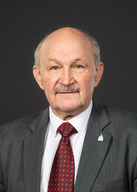
Jerome Amos
75% support rate
Top opponent
Sarah Garriott
22% support rate
Ranked legislators
10
5 support · 5 oppose
Key legislators

Who's moving criminal justice in Iowa

Legislators moving criminal justice in Iowa
Legislator Party Stance Support rate Votes
Jerome Amos
Jerome Amos House · District 62
D
Support
75% 33
Ruth Ann Gaines
Ruth Ann Gaines House · District 33
D
Support
71% 24
Bill Dotzler
Bill Dotzler Senate · District 31
D
Support
71% 48
Megan Srinivas
Megan Srinivas House · District 30
D
Support
68% 47
Jeff Taylor
Jeff Taylor Senate · District 2
R
Support
67% 41
Sarah Garriott
Sarah Garriott Senate · District 14
D
Oppose
22% 41
Eddie Andrews
Eddie Andrews House · District 43
R
Oppose
24% 46
Dave Jacoby
Dave Jacoby House · District 86
D
Oppose
25% 38
Matt Blake
Matt Blake Senate · District 22
D
Oppose
25% 44
Eric Gjerde
Eric Gjerde House · District 74
D
Oppose
26% 49
Showing 221–230 of 402 bills

All criminal justice bills

died · Iowa · House Mar 31, 2025

HF 365: A bill for an act establishing a cause of action for murder in the first degree by causing the death of another by delivering, dispensing, or providing fentanyl or a fentanyl-related substance, and making penalties applicable.

HF 365 would create a new criminal charge of murder in the first degree for anyone who unlawfully delivers, dispenses, or provides fentanyl or fentanyl-related substances that directly causes another person's death through injection, inhalation, absorption, or ingestion. This law would apply specifically to individuals who distribute these drugs, making the act a class "A" felony punishable by life imprisonment without parole. The bill explicitly states that a victim's own drug use or consent cannot be used as a defense against this charge. It does not affect users or those who possess fentanyl for personal use, only those who supply it to others resulting in death.
died · Iowa · House Mar 19, 2025

HF 842: A bill for an act relating to theft, forgery, and fraud involving a gift card, and providing penalties.

HF 842 would make it a crime to steal, alter, or fraudulently obtain gift cards or their access information with intent to defraud. Penalties range from a serious misdemeanor (for $500 or less value) to a class C felony (over $5,000), depending on the amount involved. Authorities could combine multiple offenses within six months for sentencing. The bill directly targets individuals committing gift card fraud, not cardholders or retailers.
Sub-Topics Sentencing
in committee · Iowa · House Mar 7, 2025

HF 201: A bill for an act relating to harassment by the dissemination, publication, distribution, or posting of personal information, and making penalties applicable.

HF 201 creates a new criminal offense for sharing someone's personal information without consent to harass them. It prohibits purposefully distributing details like home addresses, phone numbers, email, social media, or work locations with intent to threaten, intimidate, or alarm the person or encourage others to do so. Violations are classified as aggravated misdemeanors, punishable by fines up to $8,540 or up to two years in jail. This law directly affects individuals who share others' private details online or offline to cause harm, providing a specific legal remedy for this form of harassment.
in committee · Iowa · House Mar 11, 2025

HSB 172: A bill for an act relating to the penalty for a second or subsequent violation of motor vehicle financial liability coverage requirements.

This bill increases penalties for drivers who repeatedly fail to maintain required motor vehicle insurance coverage. Specifically, it makes a second or subsequent violation of Iowa's financial liability coverage law within five years a class "D" felony (previously a misdemeanor), punishable by up to five years in prison and fines up to $10,245. Peace officers must arrest drivers without proof of coverage who have prior convictions for this violation, and may impound vehicles or remove registration plates. Drivers can still avoid charges by providing proof of coverage to the court before their hearing, leading to dismissal of the citation. The law applies to all drivers, regardless of vehicle registration or residency status.
Sub-Topics Corrections Courts
in committee · Iowa · Senate Mar 3, 2025

SF 364: A bill for an act modifying the periods of time to bring certain civil actions by victims of sexual abuse and other sexual offenses that occurred when the victim was a minor, entitling certain cases to a preference in trial order, and including effective date provisions.

SF 364 extends the statute of limitations for civil lawsuits by victims of sexual abuse or other sexual offenses that occurred when they were minors. It allows these cases to be filed within 10 years of discovering both the injury and its connection to the abuse, or until the victim turns 18, whichever is later - replacing the previous 5-year window for minor victims. The bill also revives previously time-barred cases, permitting new filings within three years of the bill’s effective date. Additionally, it entitles these cases to priority in court scheduling and includes a sunset provision for certain provisions, repealing them July 1, 2031.
Sub-Topics Courts
in committee · Iowa · Senate Feb 12, 2025

SSB 1010: A bill for an act relating to city civil service employees and related procedures and including effective date provisions.

This bill (SSB 1010) modifies civil service procedures for city employees in Iowa, primarily affecting police and fire department staff in cities with populations over 8,000. It prohibits cities from creating citizen review boards to oversee police conduct (Section 1) and strengthens disciplinary standards by requiring cities to prove misconduct by a "preponderance of evidence" and justify punishment as "proportionate, reasonable, and just" (Sections 3, 4, 9). The bill also mandates disclosure of exculpatory evidence during disciplinary hearings (Section 5) and ensures public hearings for appeals (Section 8), while clarifying that civil service commissions must consider factors like employee history and policy compliance when reviewing cases. These changes apply to all cities with established civil service commissions under Iowa law.
in committee · Iowa · House Feb 20, 2025

HF 231: A bill for an act relating to reckless driving and excessive speed, and making penalties applicable.

This bill changes Iowa's definition of reckless driving to include speeding 21 miles per hour or more over the limit, lowering the current threshold of 25 MPH for felony charges when causing death or serious injury. It directly affects drivers who exceed speed limits by 21+ MPH, making such speeding automatically reckless driving (a misdemeanor) rather than a simple speeding violation. Key provisions set 21 MPH over as the new threshold for reckless driving, triggering enhanced penalties: causing death becomes a class C felony (up to 10 years in prison), while causing serious injury becomes a class D felony (up to 5 years). The bill updates existing penalties under Code sections 321.277 and 707.6A without altering the base misdemeanor fines for speeding.
Sub-Topics Corrections
in committee · Iowa · House Mar 5, 2025

HSB 286: A bill for an act relating to homelessness including unauthorized use of public land, sanctioned camping, drug-free homeless service zones, and funding for homeless services, and providing penalties.

This bill establishes rules for cities and counties to create designated "sanctioned camping" zones for people experiencing unsheltered homelessness. It requires these zones to provide assigned spaces, safety measures, sanitation (including water and showers), and access to health services, while banning alcohol and drugs. Local governments must follow specific standards when creating these zones, and residents or businesses can seek legal action if requirements aren't met. The bill also prohibits local policies that block enforcement of rules against unauthorized public sleeping/camping, requiring first-time violations to be addressed with a warning and service offer before potential misdemeanor penalties.
Sub-Topics Homelessness
in committee · Iowa · Senate Feb 20, 2025

SF 342: A bill for an act establishing the criminal offense of unlawful electronic transmission of sexually explicit visual material, and providing penalties.

SF 342 establishes a new criminal offense for adults (18+) who knowingly send unsolicited sexually explicit images or videos via electronic means. It specifically prohibits sending images depicting genitals, pubic areas, people engaging in sex acts, or male genitals in an erect state without consent. Violators face a serious misdemeanor charge punishable by up to one year in jail, fines of $430-$2,560, mandatory sex offender registration, and a minimum 10-year prison term with parole eligibility. This bill directly affects individuals who electronically transmit unsolicited explicit material meeting the defined criteria.
Sub-Topics Probation & Parole
in committee · Iowa · Senate Feb 26, 2025

SSB 1120: A bill for an act relating to services and support for youth, including treatment, physical assessments, and behavioral health evaluations; exemptions from children’s residential facility certification; the director of juvenile court services and chief juvenile court officers; and suspension of Hawki eligibility for public institution inmates.

This bill establishes standards for psychiatric medical institutions caring for youth under 21 with significant mental health conditions. It requires facilities to provide comprehensive care through a team of qualified professionals (including those with master's degrees and clinical experience), develop personalized medical care plans based on full evaluations, and meet specific licensing requirements. The bill directly affects psychiatric institutions, their staff, and youth receiving inpatient behavioral health services. Key provisions include defining "serious emotional disturbance," setting staff qualifications, and mandating care plans to reduce inpatient needs. These changes aim to improve safety and treatment quality for youth in residential facilities.
Sub-Topics Juvenile Justice
Showing 221 to 230 of 402 bills
Previous 1 22 23 24 41 Next