Issue · Budget & Taxes

Budget & Taxes

Every budget & taxes bill, vote, and legislator stance in Iowa, automatically classified by Maddy, our AI policy reader.

Total bills
84
2025-2026 Regular Session
Top supporter
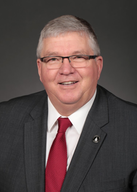
Julian Garrett
86% support rate
Top opponent
Liz Bennett
30% support rate
Ranked legislators
10
5 support · 5 oppose
Key legislators

Who's moving budget & taxes in Iowa

Legislators moving budget & taxes in Iowa
Legislator Party Stance Support rate Votes
Julian Garrett
Julian Garrett Senate · District 11
R
Strong +
86% 19
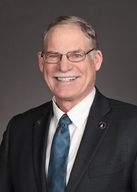
Dan Dawson
Dan Dawson Senate · District 10
R
Support
73% 45
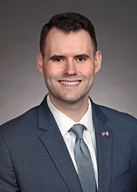
Ken Rozenboom
Ken Rozenboom Senate · District 19
R
Support
73% 55
Dan Zumbach
Dan Zumbach Senate · District 34
R
Support
72% 56
Dennis Guth
Dennis Guth Senate · District 28
R
Support
72% 52
Liz Bennett
Liz Bennett Senate · District 39
D
Oppose
30% 54
Janet Petersen
Janet Petersen Senate · District 18
D
Oppose
31% 53
Bill Dotzler
Bill Dotzler Senate · District 31
D
Oppose
33% 57
Zach Wahls
Zach Wahls Senate · District 43
D
Oppose
33% 22
Janice Weiner
Janice Weiner Senate · District 45
D
Oppose
33% 57
Showing 1–10 of 84 bills

All budget & taxes bills

in committee · Iowa · Senate Apr 30, 2026

SSB 3196: A bill for an act relating to salaries of state elected officials, and including applicability and future repeal provisions.

This bill establishes fixed annual salaries for Iowa state elected officials, including members of the General Assembly and key executive officers, effective January 2027. It sets specific pay amounts for regular assembly members and leadership roles through 2032, with a provision to revert to previous salary levels starting in 2033. The legislation also defines expense allowances, travel reimbursement rules, and per diem rates for legislative sessions, while explicitly repealing these new salary provisions after December 31, 2032.
in committee · Iowa · Senate Feb 19, 2026

SSB 3136: A bill for an act relating to the permissible uses of certain school district property tax revenue for urban renewal projects and including effective date provisions.

This bill prohibits using school district property taxes (specifically foundation taxes under Iowa law) to fund urban renewal projects approved on or after January 1, 2025, that include stadiums or arenas primarily for professional sports teams. It directly affects school districts collecting these taxes and municipalities developing urban renewal projects. The key provision blocks the use of designated tax revenue for stadium construction, planning, or operation within such projects. The restriction applies only to new projects approved after 2025, not existing ones. The bill takes effect immediately upon enactment.
Sub-Topics Property Tax Revenue
introduced · Iowa · House Mar 19, 2026

HF 2304: A bill for an act relating to indirect costs charged to state-funded grants, and including applicability provisions.

HF 2304 sets a statewide 5% cap on indirect costs (administrative expenses like office space or general management) charged to state-funded grants, effective July 1, 2026. It directly affects grantees - including nonprofits, local governments, schools, and for-profit organizations - and state departments managing grants by requiring separate budgeting of direct and indirect costs, prohibiting cost reclassification to bypass the cap, and mandating documentation for audits. The bill requires grant budgets to detail indirect cost calculations and retain records for ten years, with departments enforcing compliance through pre-award reviews and payment controls. Grantees must also adjust allocations if indirect costs exceed the limit, with disallowed costs recoverable through future payments or repayment.
in committee · Iowa · Senate Feb 11, 2026

SSB 3105: A bill for an act creating a state corporate income tax deduction for net controlled foreign corporation tested income, and including retroactive applicability provisions.

This bill updates Iowa's corporate tax code to allow a deduction for income earned by corporations from foreign operations (now termed "net controlled foreign corporation tested income" or NCTI under federal law), replacing outdated references to the previous federal term "GILTI." It directly affects Iowa corporations with foreign subsidiaries that pay taxes on foreign earnings. The key mechanism removes the specific reference to "GILTI" in tax code section 422.35(12) and aligns the deduction with the current federal definition of NCTI under IRC section 951A. The deduction applies retroactively to tax years beginning January 1, 2026.
in committee · Iowa · Senate Mar 19, 2026

SF 2386: A bill for an act relating to indirect costs charged to state-funded grants, and including applicability provisions.

SF 2386 sets a 5% cap on administrative costs (indirect costs) charged to state-funded grants in Iowa, effective July 1, 2026. It applies to all state departments awarding grants and grant recipients, including nonprofits, schools, and local governments. The bill requires grants to separately list direct and indirect costs in budgets, mandates documentation for all indirect cost calculations, and prohibits reclassifying indirect costs as direct costs to bypass the cap. Departments must enforce the limit during grant approval and monitoring, and disallowed costs must be recovered.
Sub-Topics State Budget
in committee · Iowa · Senate Apr 15, 2026

SF 2292: A bill for an act creating a state corporate income tax deduction for net controlled foreign corporation tested income, and including retroactive applicability provisions.

SF 2292 updates Iowa's corporate tax code to maintain a deduction for net controlled foreign corporation tested income (NCTI), aligning with recent federal tax law changes. It replaces the outdated reference to "global intangible low-taxed income" (GILTI) with NCTI under federal Section 951A, ensuring Iowa businesses can still claim this deduction. The bill directly affects Iowa corporations with foreign operations that previously relied on this deduction under state law. It applies retroactively to tax years beginning January 1, 2026, to correct a technical gap caused by federal legislation.
in committee · Iowa · House Feb 6, 2026

HF 2342: A bill for an act providing for the future repeal of tax credits.

HF 2342 sets specific future dates for repealing various Iowa tax credit programs. The bill specifies that existing tax credits (like those for renewable chemicals, sustainable aviation fuel, and job creation) will end between 2028 and 2041, with most repeals occurring by 2032. It directly affects taxpayers and businesses currently claiming or planning to claim these credits, as they will no longer be available after the designated dates. The bill includes a key exception preserving credits issued or earned before January 1, 2032, ensuring existing agreements and carryforwards remain valid.
in committee · Iowa · Senate Feb 16, 2026

SF 2321: A bill for an act repealing the education savings account program.

This bill repeals Iowa's education savings account program, which provided state-funded vouchers to families for nonpublic school expenses like tuition, tutoring, and learning materials. It removes the program from state law (repealing Section 257.11B) and adjusts related funding calculations in school finance codes to exclude students who previously used these accounts. The program directly affected families enrolling children in nonpublic schools who received these state-funded payments. The bill makes no new funding changes but eliminates the program's structure and its impact on school district cost formulas.
in committee · Iowa · House Feb 18, 2026

HF 2577: A bill for an act relating to property taxes and local government funding by modifying the methodology for determining actual value of property, certain levy rates, bonding procedures, assessment protests, and assessment limitations of certain classes of property, and including retroactive applicability provisions.

HF 2577 modifies Iowa's property tax system to limit annual increases in taxable property values. For residential, commercial, and industrial properties, it prohibits value increases exceeding the prior year's value (2027-2029) or an inflation-linked factor (2030+), unless specific changes occur like ownership shifts, boundary adjustments, or major improvements over 5% of current value. The bill requires assessors to base values on fair market value using standard appraisal methods while restricting consideration of business financial data for commercial/industrial properties. These changes directly affect property owners and local governments relying on property tax revenue for funding. The bill also includes retroactive provisions for certain tax years.
Sub-Topics Property Tax Revenue
in committee · Iowa · Senate Feb 11, 2026

SSB 3103: A bill for an act relating to matters under the purview of the economic development authority, the utilities commission, and the department of education, including creation of the headquarters expansion and development for growth and employment program, and the business incentives for growth program training fund; repeal of the new jobs tax credit program; the major economic growth attraction program; load forecasting and analysis of electric transmission system expansion plans; creation of the electric transmission system expansion planning and analysis and load forecasting fund; the industrial new jobs training program; and including effective date provisions.

SSB 3103 creates the "EDGE Program" (Headquarters Expansion and Development for Growth and Employment), offering tax incentives to businesses that retain or locate corporate headquarters in Iowa. To qualify, businesses must have global presence, generate over 50% revenue outside Iowa, operate in specific sectors (like tech or bioscience), and meet wage/benefit requirements. The bill repeals several existing programs, including the New Jobs Tax Credit and Major Economic Growth Attraction Program, while establishing a new fund for electric transmission system planning. It directly affects eligible businesses seeking state incentives and the Economic Development Authority, which will administer the program.
Sub-Topics Tax Credits Tax Incentives Tags Economic Development
Showing 1 to 10 of 84 bills
1 2 3 9 Next