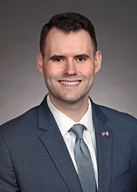
HF 992 increases the fee for duplicate or proof of interstate fuel tax permits from 50 cents to $1.00 per document. This affects commercial vehicles operating across state lines that use fuel purchased outside Iowa, requiring them to carry proof of tax payment for Iowa fuel taxes. The bill modifies existing law that mandates these vehicles to possess such proof while operating in Iowa. The change directly impacts businesses and drivers managing interstate fuel use compliance, without altering the underlying tax requirements or penalties for non-compliance.
HF 960 expands Iowa's sales tax exemption to cover all purchases of central office or transmission equipment used by telecom companies providing commercial services, removing the prior requirement that such equipment be "primarily" used for those services. It directly affects local carriers, cable operators, municipal utilities, cooperatives, and other telecom providers that offer commercial telecommunications services. The key change broadens the existing tax exemption to include all qualifying equipment purchases, meaning these businesses will pay no sales tax on such equipment (and no use tax under Iowa law). This policy change simplifies the exemption without adding new regulations or costs to the state.
House File 1010 establishes an annual authorization fee for certain postsecondary educational institutions in Iowa. This bill requires the college student aid commission to collect a nonrefundable fee from entities that are authorized by the commission but do not currently pay a registration fee. These include institutions exempt from certain registration requirements or those offering educational courses, excluding some driver education providers. The annual fee is $2,000 for entities with a primary location in Iowa and $3,500 for those located outside of Iowa. The commission may increase these fees by up to three percent annually, commencing with the fiscal year beginning July 1, 2025.
HF 970 allocates $1 million for Iowa's Double Up Food Bucks program, which helps SNAP recipients buy fresh produce at farmers markets and grocery stores. It requires grant recipients to match funds dollar-for-dollar and ensures the funds remain available beyond the fiscal year. The bill also seeks federal approval to restrict SNAP-eligible foods to healthy items like fruits, vegetables, whole grains, and lean proteins. This food eligibility change would take effect only after the USDA approves the modification. The program funding becomes effective upon federal approval of the food rules.
HF 986 establishes new funds and initiatives to enhance financial literacy and prevent financial exploitation for the public. It creates a Financial Literacy and Investor Education Fund and a Financial Exploitation Prevention Fund, which are partially funded by reallocating a portion of agent registration fees. The bill also establishes a Senior Health Insurance Information Program Fund to provide educational materials on health insurance for older Iowans. These provisions aim to educate Iowans on financial topics and assist potential victims of financial exploitation.
SF 657 modifies the state's tax credit system by creating new credits, changing existing ones, and eliminating some tax incentive programs. It establishes penalties for failing to comply with these tax credit rules and specifies when the changes take effect, including retroactive application to prior tax years. This bill directly affects businesses and individuals who claim tax credits under the state's finance code. Signed into law by the Governor on June 6, 2025, it changes how taxpayers access and qualify for state tax incentives.
SF 660 establishes a regulatory framework for legal sports wagering within the state and allocates state funds to support tourism initiatives. It directly affects licensed sports betting operators, state tourism agencies, and businesses in the hospitality sector. Key provisions include creating licensing requirements for sports wagering entities, setting tax rates on bets, and directing new revenue toward tourism marketing and infrastructure projects. The bill was signed into law by the Governor on June 11, 2025, following unanimous passage in the Senate.
SF 628 allocates specific state transportation funds to renovate the Waterloo maintenance garage for Department of Transportation (DOT) employees. It directs money from the road use tax fund, primary road fund, and statutory allocations fund toward this facility upgrade. The bill directly affects DOT maintenance staff working at the Waterloo location by improving their workplace. Signed by the Governor in June 2025, it became law to fund this specific infrastructure project.
HF 1044 is an appropriations bill that provides funding for multiple Iowa state agencies and offices, including the Department of Administrative Services, Auditor of State, Ethics Board, governor's offices, and the Department of Revenue. It allocates budget authority for the operation and regulation of these state entities, covering their administrative needs and existing functions. The bill directly affects the agencies listed by authorizing their use of state funds for day-to-day operations and regulatory activities. It does not create new policies or programs but ensures continued funding for current state government functions. The bill passed both chambers and was signed into law by the governor on June 11, 2025.
HF 1040 allocates $12.9 million for Iowa's Economic Development Authority (EDA) and related agencies for fiscal year 2025-2026 to support statewide economic growth. It directs funds toward workforce recruitment, business development (including grants for women-owned startups), tourism marketing, and community economic programs, while requiring recipient businesses to hire U.S. citizens or authorized workers. The bill also eliminates the repeal of Iowa's housing renewal pilot program and appropriates additional funds for the World Food Prize ($650,000) and tourism advertising ($1.02 million). These provisions directly affect state agencies, local communities, and businesses receiving EDA financial assistance.